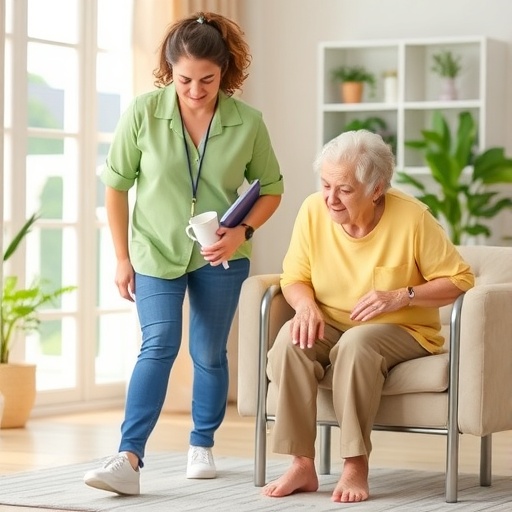
In an era where the global population is aging rapidly, the prevention of falls among older adults residing at home remains a critical public health priority. A groundbreaking randomized, parallel-group trial described in a recent study protocol promises to shed new light on the comparative efficacy of two often underappreciated interventions: registered dietitian services and occupational therapy. This research is poised to influence how support services for fall prevention are structured, especially for vulnerable populations relying on home-delivered meals.
Falls among older adults represent a significant source of morbidity and mortality, often leading to hospitalization, loss of independence, and increased healthcare costs. Despite advancements in fall prevention strategies, many interventions have primarily focused on physical therapy and environmental modifications. Meanwhile, assistance in nutrition and daily function through occupational therapy, though critical, has received comparatively less attention. The new study seeks to fill this knowledge gap by directly comparing these two modalities to understand their distinct and potentially synergistic roles.
The trial employs a rigorous randomized, parallel-group design which involves careful allocation of participants into two groups receiving either registered dietitian services or occupational therapy. Such a methodological framework ensures that differences in fall risk outcomes between the groups can be attributed with higher confidence to the interventions themselves, reducing bias and enhancing the validity of the findings. This design also allows for parallel monitoring and evaluation over the same timeline, an efficient approach to integrate multifaceted interventions in a real-world context.
Central to the study is the population of home-delivered meal recipients. This demographic is particularly susceptible to falls due to a combination of factors including frailty, malnutrition, and reduced access to social and health supports. The inclusion criteria target this group to harness a high-impact setting for fall risk reduction efforts. Home-delivered meal programs provide not only nutrition but also an opportunity for intervention delivery, making recipients an optimal subject group to evaluate the comparative benefits of dietary and functional therapies.
Registered dietitians offer more than simple nutrition advice; their expertise encompasses comprehensive assessment and intervention plans targeting malnutrition, muscle weakness, and overall physical resilience—key factors in fall risk reduction. Tailored dietary plans aimed at improving protein intake, vitamin D levels, and overall caloric sufficiency have shown promising effects on musculoskeletal health, balance, and cognitive function, all of which are critical in minimizing falls. This trial aims to quantify these benefits relative to those obtained through occupational therapy.
Occupational therapy, on the other hand, emphasizes enabling individuals to perform daily activities safely and effectively. This includes home safety assessments, adaptive equipment recommendations, and individualized strategies to enhance mobility, balance, and coordination. The occupational therapy intervention also targets psychosocial factors such as confidence and anxiety around falls, which can exacerbate movement limitations. By juxtaposing occupational therapy against dietitian-led interventions, the study explores the multidimensional nature of fall prevention.
An innovative aspect of this protocol is the integration of comprehensive outcome assessments encompassing not only fall incidence but also secondary measures such as quality of life, nutritional status, functional ability, and healthcare utilization. These multidimensional endpoints will provide an enriched data set to understand how these interventions impact the broader health ecosystem, which is crucial for healthcare policymakers and practitioners aiming for holistic improvements in elder care.
The trial foresees the use of advanced statistical models to analyze the longitudinal data, accounting for potential confounding factors including baseline health status, comorbidities, and socio-economic variables. Such analytical sophistication recognizes the complexity inherent in geriatric populations and enhances the precision of conclusions drawn. The prospective nature of the study, coupled with its randomized design, establishes a high evidentiary benchmark.
Importantly, this study addresses real-world applicability. Interventions are delivered in home settings, capturing environmental and social variables often neglected in clinical trials. This practical orientation ensures that the eventual findings will be directly translatable to community health programs. Furthermore, the selection of home-delivered meal recipients underscores the potential for integrating fall prevention services into existing social support frameworks, maximizing reach and cost-effectiveness.
Another consideration is the potential synergistic effect of combining nutrition and occupational interventions, as malnutrition often exacerbates functional decline. Although the study compares these two interventions separately, its outcomes may inform future integrated program development. This could redefine the interdisciplinary approach to fall prevention and elder care, fostering collaboration between dietitians, occupational therapists, and other healthcare providers.
The anticipated impact of this research extends beyond fall prevention. Enhancing nutrition and functional capability in the elderly can reduce frailty, improve mental health, and prolong independent living. Thus, findings have implications for a broad array of geriatric syndromes and chronic diseases. Moreover, reduction in falls directly correlates with decreased hospitalizations and long-term care admissions, which could translate into substantial healthcare cost savings.
Stakeholders including healthcare providers, insurers, policymakers, and aging advocacy groups will be eagerly awaiting the results of this trial. The study protocol’s articulation in a premier geriatrics journal highlights its potential to shape clinical guidelines and health policies. Furthermore, it exemplifies the evolving paradigm in geriatric research that prioritizes patient-centered, interdisciplinary approaches tailored to community-based realities.
In conclusion, this pioneering trial protocol represents a decisive step forward in fall risk prevention research among vulnerable older adults. By rigorously evaluating the relative impacts of registered dietitian versus occupational therapy services, it challenges traditional silos in elder care and paves the way for integrated, evidence-based strategies. The outcomes promise to redefine best practices for clinicians and contribute to safeguarding the dignity and independence of aging populations.
As the global community confronts the challenges of demographic shifts, innovative studies such as this highlight the vital importance of nuanced, multifactorial interventions. The trial underscores how preventive care, when carefully tailored and methodically assessed, can profoundly transform health outcomes and quality of life in older adults receiving essential community services. The scientific and societal implications of this research will resonate well beyond its immediate focus on falls.
Moving forward, dissemination of detailed trial results will be crucial to maximize their impact. Robust evidence supporting one or both interventions could influence funding priorities and service delivery models. It also invites further research into optimized combinations or sequences of care addressing the complex interplay among nutrition, physical function, and environmental safety.
The study exemplifies a broader shift toward proactive, preventative geriatric healthcare that leverages clinical expertise, social support structures, and individualized interventions. This holistic viewpoint is essential to meet the evolving needs of an aging society and to foster healthier, safer, and more engaged older populations worldwide.
Subject of Research:
Effectiveness of registered dietitian and occupational therapy services on reducing fall risk among home-delivered meal recipients.
Article Title:
Study protocol for a randomized, parallel-group trial to compare the effectiveness of registered dietitian and occupational therapy services on fall risk among home-delivered meal recipients.
Article References:
Juckett, L.A., Joshi, S., Hyer, J.M. et al. Study protocol for a randomized, parallel-group trial to compare the effectiveness of registered dietitian and occupational therapy services on fall risk among home-delivered meal recipients. BMC Geriatr (2026). https://doi.org/10.1186/s12877-026-07376-z
Image Credits: AI Generated
Tags: aging population health interventionscomparative efficacy of dietitian and occupational therapyfall prevention in older adultsfall prevention strategies at homehome-delivered meals and elderly carenutrition interventions for older adultsoccupational therapy benefits in agingoccupational therapy for fall reductionrandomized trial on fall preventionreducing hospitalization from fallsregistered dietitian services for fall risksynergy between nutrition and occupational therapy