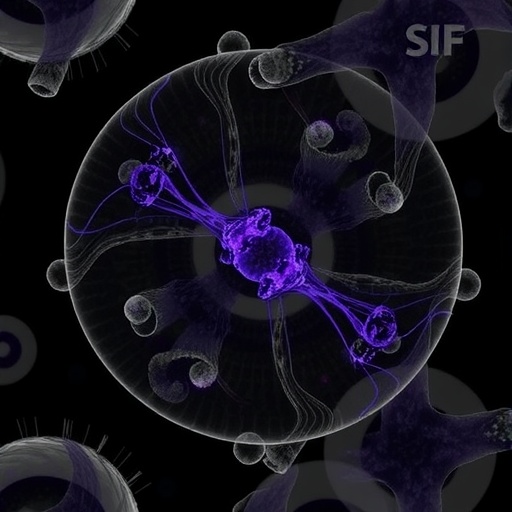
Unveiling the Hidden Architecture: Megadalton Cytoplasmic Lattices as Protein Reservoirs in Mammalian Oocytes
A groundbreaking study has divulged the enigmatic structural and molecular composition of cytoplasmic lattices (CPLs) in mammalian oocytes, resolving a long-standing puzzle in reproductive biology. These lattices, previously identified as abundant proteinaceous assemblies in oocyte cytoplasm, have now been revealed as massive macromolecular complexes that function as vital storage depots for proteins crucial during early embryogenesis. The latest findings stem from an innovative integration of cryo-electron microscopy and advanced artificial intelligence (AI)-driven modeling, which together provide unprecedented molecular resolution of native CPLs isolated from mouse oocytes.
The research delineates CPLs not as amorphous aggregates but as intricately organized structures composed of at least thirteen distinct proteins forming a megadalton-scale assembly. This supramolecular complex harbors multiple maternal effect factors including PADI6—a peptidyl arginine deiminase implicated in chromatin regulation—and components of the subcortical maternal complex (SCMC), well-known for their indispensable roles in early developmental stages. This multi-protein assembly highlights the capacity of oocytes to stockpile and safeguard proteins within stable, yet dynamic, frameworks.
Remarkably, the study discovered that commonly characterized cytoskeletal proteins, such as α- and β-tubulin, are integral constituents of CPLs, incorporated not as polymerized microtubules but in their unpolymerized dimeric forms. This finding overturns prior assumptions that tubulin’s presence in oocytes is primarily for cytoskeletal scaffolding, and instead implicates these tubulin dimers as stored reserves, poised for future developmental requirements. Their sequestration within CPLs could ensure tightly regulated availability during critical windows of embryonic cell division and morphogenesis.
In addition to structural and cytoskeletal components, the CPLs encapsulate an extensive repertoire of ubiquitination machinery—a pivotal regulatory system involved in protein turnover and epigenetic modulation. Key ubiquitin pathway elements reside within the CPLs, including UHRF1, an epigenetic regulator and E3 ubiquitin ligase; ubiquitin-conjugating E2 enzymes; and substrate adaptor proteins that confer specificity to ubiquitin-mediated protein tagging. The incorporation of these factors into CPLs suggests a sophisticated molecular strategy whereby oocytes pre-assemble regulatory proteins to modulate early developmental pathways post-fertilization.
The implications of these discoveries are profound. By directly embedding crucial maternal proteins and regulatory complexes into ultra-stable supramolecular lattices, mammalian oocytes adopt an elegant mechanism for preserving protein integrity and availability during periods when new protein synthesis is minimal or absent. This protein reservoir concept addresses a vital question in developmental biology: how maternal stores endure and function flawlessly through oocyte maturation and early embryogenesis to support robust embryonic progression.
Methodologically, the research team harnessed state-of-the-art cryo-electron microscopy to visualize the native CPL structures at near-atomic resolution. The structural data, combined with AI-powered protein modeling algorithms, enabled confident protein identification and architectural mapping of the complex assembly. This dual approach exemplifies the power of integrating cutting-edge imaging with computational tools to solve intricate biological mysteries that have eluded characterization for decades.
Prior to this study, the molecular identity of CPLs had remained elusive despite their recognized abundance and presumed functional importance. The present work conclusively establishes CPLs as bona fide megadalton complexes constituted by a defined set of proteins critical for reproduction, overturning earlier conceptions that regarded CPLs as amorphous protein storage sites or nonspecific aggregates.
The elucidation of CPL structure opens new avenues for understanding infertility and early developmental defects linked to disruptions in stored maternal factors. Since CPL-associated proteins are implicated in critical embryonic processes, mutations or alterations in CPL composition potentially underlie certain unexplained cases of reproductive failure or embryonic lethality, offering a molecular framework for future diagnostic and therapeutic strategies.
Furthermore, the inclusion of ubiquitination components within CPLs points to a previously unappreciated layer of epigenetic and post-translational regulation being preconfigured in the oocyte cytoplasm. This insight prompts a reconsideration of the temporal and spatial dynamics of ubiquitination during early developmental transitions and suggests CPLs may serve as hubs coordinating protein modification cascades immediately upon fertilization.
Collectively, these findings paint the CPLs as highly specialized storage complexes that buffer the oocyte against proteostatic stress and ensure temporal precision in deploying maternal factors essential for the embryo’s genesis and vitality. The molecular resolve provided by this study not only enhances our mechanistic comprehension of female gamete biology but also sets a precedent for investigating analogous protein assembly systems in other cell types.
In sum, the deciphering of cytoplasmic lattices as megadalton storage complexes marks a milestone in reproductive cellular biology. It bridges a critical knowledge gap, connecting protein storage architecture with functional outcomes in mammalian embryogenesis. This work stands to reshape foundational concepts of maternal contribution to embryonic development and inspire a new wave of research into fertility preservation and developmental regulation.
Subject of Research:
Molecular architecture and protein composition of cytoplasmic lattices in mammalian oocytes.
Article Title:
Cytoplasmic lattices are megadalton storage complexes in mammalian oocytes.
Article References:
Kılıç, Z.I., van Loenhout, J., Chaillet, M. et al. Cytoplasmic lattices are megadalton storage complexes in mammalian oocytes. Nature (2026). https://doi.org/10.1038/s41586-026-10513-8
Image Credits: AI Generated
Tags: AI-driven molecular modelingcryo-electron microscopy in reproductive biologycytoplasmic lattices in oocytescytoskeletal proteins in oocyte CPLsearly embryogenesis protein reservoirsmaternal effect proteins in oocytesmegadalton protein complexesPADI6 function in oocyte developmentprotein storage in mammalian oocytesproteinaceous assemblies in mammalian reproductionsubcortical maternal complex componentssupramolecular oocyte structures