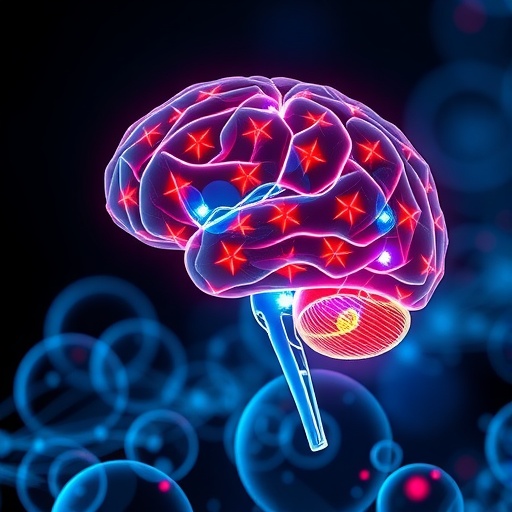
In a groundbreaking advance poised to reshape how artificial intelligence (AI) systems mimic human cognition, researchers from the Netherlands have proposed a novel computational architecture that more faithfully replicates the intricate workings of the human brain. This pioneering approach challenges conventional deep learning frameworks by integrating the often-overlooked subcortical pathways alongside the traditional cortical layers, thus presenting a more nuanced and biologically realistic model of neural processing.
Conventional AI architectures predominantly emulate the cerebral cortex—the brain’s outermost layer responsible for complex perceptual, cognitive, and decision-making functions—through deep hierarchical networks. These deep learning models process information in a linear, stepwise fashion across multiple layers. While powerful, these architectures fail to capture the dynamic interplay between the cortex and deeper brain regions known as subcortical structures. These regions underpin functions such as motor control, emotional regulation, and rapid stimulus-response learning, yet their role is conspicuously absent in most contemporary neural networks.
The research team’s new computational model harmonizes these two critical neural pathways: the hierarchical cortical network and the parallel, “shallow” subcortical route. This dual-pathway system mirrors how the brain processes information both sequentially and in parallel, enabling faster and more flexible responses. By introducing this hybrid architecture, the researchers address key limitations inherent to existing deep learning and predictive coding models, offering a framework that is not only more biologically plausible but also functionally superior.
Building on the “Shallow Brain Hypothesis” they proposed in 2023, the scientists argue convincingly that cognitive processing is not solely the domain of deep, cortex-driven hierarchies. Instead, rapid, subcortical pathways provide a shallow yet effective conduit for basic stimulus-response behaviors. Their current work advances this theory by implementing and testing a model that integrates both these cerebral modalities, opening new avenues for understanding brain function as well as AI design.
This integrative model was rigorously tested on decision-making tasks using two prevalent AI frameworks: convolutional neural networks (CNNs), which excel at hierarchical feature extraction, and hierarchical predictive coding models, which embody the brain’s capacity to generate and update predictions about sensory input. The results were striking—while the cortical pathway adeptly managed complex, higher-order tasks, the subcortical pathway rapidly drove simpler, reflexive decisions. This synergy elucidates how different brain circuits complement one another, enhancing overall computational efficiency.
The implications for artificial intelligence are profound. Current AI systems often emphasize deep, layered processing that can lead to heavy computational demands and delayed responses for straightforward inputs. Incorporating shallow, parallel processing routes akin to subcortical pathways could engender AI that is both more responsive and computationally economical. Moreover, such architectures hold promise for adaptive systems capable of dynamically prioritizing different processing streams based on task demands, thereby improving versatility and robustness.
Neuroscientifically, the study underscores the indispensability of subcortical structures, which have historically received less attention compared to cortical areas in computational models. These deeper brain regions, including the basal ganglia and thalamus, are indispensable for rapid behavioral adaptations and emotional processing. The new architecture explicitly encodes these interactions, offering a more faithful representation of neuroanatomical and functional connectivity—a critical step for computational neuroscience.
Furthermore, the introduction of parallel cortical and subcortical paths challenges prevailing assumptions about the brain’s information processing hierarchy. It suggests a more distributed computational landscape in which shallow pathways can bypass long cortical routes for speed-critical signals, while complex cognition continues to rely on deep-layered analysis. This reconceptualization could shift how we model executive functions, attention, and sensorimotor integration in both biological and artificial systems.
The model’s success in blending convolutional networks with predictive coding frameworks also exemplifies interdisciplinary innovation. CNNs provide the spatial and hierarchical architecture needed to simulate cortical processing of sensory stimuli. Meanwhile, predictive coding models capture the brain’s hallmark ability to anticipate and minimize sensory prediction errors. The harmonious integration of these methods within a parallel architecture suggests new directions for creating AI systems that learn and react more like biological organisms.
Beyond scientific implications, this development may influence practical applications ranging from autonomous robotics to neuromorphic computing. By mimicking the brain’s hybrid approach to processing, future AI could achieve faster recognition and decision-making times, superior adaptability in dynamic environments, and more human-like interactions. Such systems would represent a significant leap forward in imbuing machines with cognitive flexibility and resilience.
The study, published in the journal Current Research in Neurobiology, is supported by the Human Brain Project, a large-scale European initiative dedicated to advancing brain research and AI through biological insights. This endorsement reflects the growing consensus that bridging neuroscience and artificial intelligence can accelerate discoveries in both fields and fuel a new generation of intelligent technologies.
The co-authors highlight their model as a promising alternative that naturally aligns with observed brain functions and may inspire future neural network designs. They envision that embracing a shallow brain-inspired architecture will stimulate novel algorithmic strategies, inform computational neuroscience, and ultimately lead to AI systems harmonizing speed, complexity, and adaptability.
As the quest to decode the brain’s computational blueprint intensifies, this research marks an important milestone. It vividly illustrates that replicating brain function requires moving beyond linear, cortex-only models and embracing the parallel, multi-layered reality of neural processing. The insight that shallow subcortical networks operate alongside deep cortical hierarchies could rewrite the playbook for both neuroscience and AI, heralding a new era of intelligent machine design intimately informed by the biological brain.
Subject of Research: Computational models of brain architecture integrating cortical and subcortical processing pathways.
Article Title: A computational architecture incorporating shallow brain networks: integrating parallel cortical and subcortical processing.
News Publication Date: 6-Feb-2026
Web References: 10.1016/j.crneur.2026.100155
Keywords
Neuroscience, Brain, Brain structure, Human brain, Computer modeling, Biological models, Computational neuroscience, Artificial neural networks, Artificial intelligence
Tags: AI mimicking human cognitionbiologically realistic neural architecturebrain-inspired AI modelscomputational neuroscience advancescortical and subcortical integrationdual-pathway brain modelhierarchical and parallel neural processingimproved stimulus-response learning AImotor control and emotional regulation in AInovel brain-inspired computational frameworksrapid adaptive decision-making in AIsubcortical pathways in neural networks