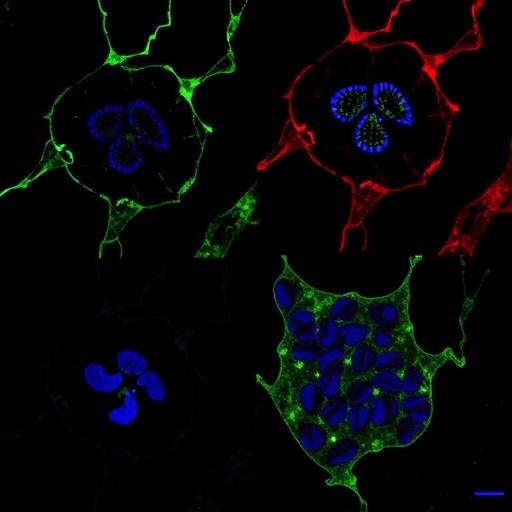
In a groundbreaking study set to redefine our understanding of bladder cancer biology, researchers have unveiled a novel molecular mechanism that shields cancer cells from a deadly form of cell death known as ferroptosis. The study, led by Niu, Yang, Yao, and colleagues, reveals that the protein NT5DC2 directly inhibits ferroptosis by stabilizing another key enzyme, ACSL3, within bladder cancer cells. This discovery could unlock new therapeutic avenues aimed at exploiting the vulnerabilities of cancer cells that have long evaded conventional treatments.
Ferroptosis is a recently characterized mode of regulated cell death that hinges on iron-dependent lipid peroxidation, diverging fundamentally from apoptosis or necrosis. While apoptosis relies on caspase activation for cell dismantling, ferroptosis culminates in overwhelming oxidative damage to cellular membranes driven by iron-catalyzed reactions. Cancer cells, notorious for hijacking survival mechanisms, have continuously evolved diverse strategies to evade ferroptosis, enabling unchecked proliferation and resistance to chemotherapy. The elucidation of NT5DC2’s protective role highlights a sophisticated molecular safeguard that may be crucial in bladder cancer pathogenesis.
At the heart of this mechanism lies ACSL3, an acyl-CoA synthetase that plays a pivotal role in lipid metabolism by catalyzing the formation of acyl-CoA from free fatty acids. Previous studies have connected ACSL enzymes to ferroptosis sensitivity, but ACSL3’s direct stabilization by NT5DC2 had not been characterized until now. Stabilization promotes sustained enzyme activity, effectively modulating the lipid composition of cellular membranes and rendering them less prone to peroxidation—a critical step in ferroptotic cell death.
The research team employed a combination of sophisticated biochemical assays, genetic silencing, and in vivo bladder cancer models to unravel the interaction between NT5DC2 and ACSL3. Their data show that NT5DC2 binds with high affinity to ACSL3, preventing its ubiquitination and subsequent proteasomal degradation. This protective interaction extends the half-life of ACSL3, ensuring a persistent enzymatic function that enriches membrane lipids with saturated or monounsaturated fatty acids — molecular species less susceptible to peroxidative assault.
Notably, knockdown experiments targeting NT5DC2 resulted in a pronounced increase in ferroptotic markers, accompanied by a marked reduction in tumor growth in murine models. Conversely, overexpression of NT5DC2 fortified bladder cancer cells against ferroptosis-inducing agents, underscoring the protein’s role as a master regulator of ferroptotic resistance. These findings suggest that NT5DC2 is not simply a bystander but a critical determinant of cancer cell fate under oxidative stress conditions.
Moreover, the study delved into the clinical implications by examining NT5DC2 expression levels in patient-derived bladder tumor samples. High NT5DC2 expression correlated strongly with poorer survival outcomes and elevated resistance to chemotherapeutic regimens. This correlation positions NT5DC2 as a promising prognostic biomarker for aggressive bladder cancer phenotypes and as a potential predictive marker for ferroptosis-targeted therapies.
The mechanistic insights offered by this investigation also suggest that disrupting the NT5DC2-ACSL3 axis could sensitize bladder tumors to ferroptosis-based interventions. Ferroptosis inducers, some of which are already under clinical evaluation, might see amplified efficacy when combined with agents that decrease NT5DC2 expression or function. Such combinatorial strategies could overcome the formidable resistance barriers characteristic of refractory bladder cancers.
Furthermore, the research opens up intriguing questions about the broader role of NT5DC2 beyond bladder cancer. Given its interaction with ACSL3—a protein expressed in various tissues implicated in metabolic regulation—NT5DC2 might influence ferroptosis sensitivity across multiple cancer types or other pathological conditions involving oxidative lipid damage. This prospect warrants extensive exploration to facilitate the development of pan-cancer therapeutics.
The detailed molecular mapping presented in this study exemplifies the power of integrating proteomics, genomics, and functional assays to uncover critical protein networks that dictate cell survival or death. By elucidating how NT5DC2 modulates the stability of a key metabolic enzyme, the authors provide a compelling example of metabolic regulation intersecting with cell death pathways—a vibrant area of cancer biology ripe for therapeutic exploitation.
Importantly, the methodological rigor with which the team validated their findings—from CRISPR-Cas9-mediated gene editing to cutting-edge lipidomics profiling—adds robustness to their conclusions. This multi-angled approach ensures that the proposed NT5DC2-ACSL3 axis is not an artefact but a bona fide molecular mechanism shaping tumor resilience against ferroptosis.
From a translational perspective, therapeutic targeting of NT5DC2 presents both opportunities and challenges. NT5DC2 inhibitors, once developed, could synergize with existing ferroptosis inducers to amplify tumoricidal effects. However, given the protein’s potential roles in normal physiology, ensuring selective toxicity toward cancer cells will be a critical consideration during drug development. Future work will need to dissect NT5DC2’s tissue-specific functions to minimize adverse effects.
Beyond therapeutics, this study underscores the growing relevance of ferroptosis research in oncology. Once thought to be a niche cell death pathway, ferroptosis is increasingly recognized as a central node in cancer resistance and immunogenic signaling. Unraveling how cancer cells manipulate ferroptotic machinery, such as through NT5DC2’s stabilization of ACSL3, enhances our capacity to conceptualize novel anticancer strategies that circumvent traditional drug resistance mechanisms.
Additionally, the discovery has invigorated discussions around metabolic plasticity in cancer. By stabilizing lipid metabolizing enzymes, proteins like NT5DC2 allow tumors to dynamically remodel their cellular environment, facilitating adaptation to oxidative stress and therapeutic pressures. Such metabolic rewiring signifies a hallmark of cancer biology, opening windows for innovative interventions that disrupt these survival circuits.
In conclusion, the elucidation of NT5DC2’s role in ferroptosis suppression via ACSL3 stabilization marks a pivotal advance in bladder cancer research. This newly identified axis not only deepens our molecular understanding of tumor resilience but also spotlights a viable target for next-generation anticancer therapies. As the landscape of targeted treatments evolves, exploiting ferroptosis represents a promising frontier—one that could transform outcomes for patients afflicted with this challenging malignancy.
The work by Niu et al. exemplifies how detailed molecular insights marry conceptual novelty with clinical applicability, setting the stage for future investigations into ferroptosis modulation and metabolic intervention in cancer. Their findings resonate with the broader scientific imperative to decode the complex dance between cell death pathways and tumor survival, ultimately paving pathways to more effective and durable cancer treatments.
Subject of Research: Bladder cancer, ferroptosis inhibition, molecular regulation of cell death, NT5DC2 and ACSL3 interaction
Article Title: NT5DC2 inhibits ferroptosis by stabilizing ACSL3 in bladder cancer
Article References:
Niu, S., Yang, P., Yao, Y. et al. NT5DC2 inhibits ferroptosis by stabilizing ACSL3 in bladder cancer. Cell Death Discov. (2026). https://doi.org/10.1038/s41420-026-03091-1
Image Credits: AI Generated
DOI: https://doi.org/10.1038/s41420-026-03091-1
Tags: ACSL3 enzyme functionacyl-CoA synthetase role in cancerbladder cancer cell survivalFerroptosis inhibition mechanismsferroptosis resistance in canceriron-dependent lipid peroxidationlipid metabolism in cancer cellsmolecular targets for cancer therapynovel cancer treatment strategiesNT5DC2 in bladder cancerovercoming chemotherapy resistanceregulated cell death pathways