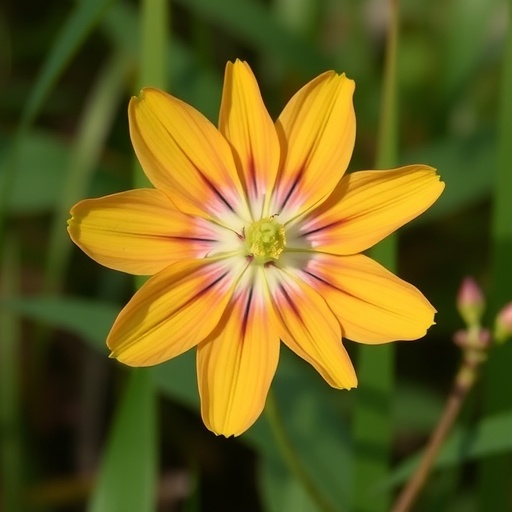
Polyploidy, defined as the entire duplication of a genome, stands as one of the most potent evolutionary mechanisms driving plant diversity and adaptation. Despite its recognized significance, the tangible outcomes of polyploidy within natural populations remain enigmatic, especially in systems where diploid and polyploid individuals co-occur. A groundbreaking study delves into this dynamic by investigating the mountain endemic plant Orychophragmus taibaiensis, a rare species exhibiting both diploid and tetraploid forms naturally. This work, integrating population genomics, cytotype mapping, and transcriptome analysis, provides unprecedented insight into the evolutionary ramifications of genome doubling in an ecological and evolutionary context.
Historically, polyploidy has shaped the evolutionary trajectory of countless plant lineages, facilitating diversification events, ecological adaptation, and phenotypic innovation. While extensive research has focused on allopolyploidy, the hybridization-driven formation of polyploids from distinct species, autopolyploidy—where genome duplication occurs within a single species—has garnered less attention. This disparity results partly from the difficulty of locating and studying autopolyploid populations coexisting with their diploid progenitors in natural environments. The Orychophragmus genus, and specifically O. taibaiensis, offers a unique natural laboratory in which the effects of autopolyploidy can be rigorously examined.
The study’s authors began by establishing a comprehensive phylogeny encompassing all six species within the Orychophragmus genus. Through integration of genomic and transcriptomic datasets, they generated a robust framework elucidating the relationships among these lineages. Within this framework, they contrasted the demographic histories of O. taibaiensis—an endemic species restricted to mountainous habitats—and its widespread relative, O. violaceus. Comparative analyses revealed that O. taibaiensis experienced more severe population bottlenecks and exhibited signs of weaker purifying selection compared to its widespread congeners, observations that align with its higher accumulation of deleterious mutations.
Sampling 94 individual plants across natural populations, the research team identified two discrete cytotypes within O. taibaiensis: diploid individuals with 2n = 24 chromosomes, and tetraploid individuals with 2n = 48 chromosomes. These cytotypes displayed largely parapatric distributions, partitioned by local mountain ridges, suggesting microgeographic isolation that could facilitate differential evolutionary trajectories. Multiple genomic signatures confirmed the tetraploids arose through autopolyploidy rather than hybridization, an invaluable model for studying genome doubling effects uninfluenced by interspecific genetic mixing. Molecular dating inferred that diploid and tetraploid lineages diverged roughly 328,000 years ago, indicating a substantial period for independent evolutionary processes.
Significantly, ecological niche analyses uncovered that tetraploid populations tended to inhabit relatively warmer and drier environments compared to their diploid counterparts. These subtle ecological distinctions hint at potential adaptive divergence linked to genome duplication, whereby polyploidy may confer advantages or facilitate exploitation of novel niches. Such findings enhance understanding of how genomic complexity can shape ecological breadth and resilience in natural populations.
At the molecular level, the tetraploids exhibited genome-wide relaxation of purifying selection pressure, coupled with a notably higher fraction of deleterious mutations. This phenomenon is consistent with the concept that additional gene copies can mask harmful alleles, temporarily buffering individuals from the detrimental effects of such mutations. However, this masking likely diminishes the efficacy of purifying selection over time, potentially leading to the chronic accumulation of genetic load—a paradoxical evolutionary trade-off with substantial implications for long-term lineage survival.
Transcriptomic comparisons via RNA sequencing revealed thousands of differentially expressed genes between diploid and tetraploid plants in leaf and root tissues. These genes primarily involved pathways related to signaling cascades, defense mechanisms, gene expression regulation, and circadian rhythm maintenance. Noteworthy genes, including SNI1, CERK1, EXT3, and RECA2, were highlighted as central players in the transcriptional reprogramming accompanying autopolyploidization. These shifts not only reflect the immediate impact of doubling the genome but also illustrate how regulatory networks can be extensively rewired in polyploids to accommodate and leverage increased genomic content.
This study advances the conceptualization of genome doubling beyond a simple quantitative increase in DNA content. Instead, polyploidy is framed as a biological watershed event fundamentally remodeling the interplay between mutation, selection, and gene regulation. The short-term consequence of mutation masking may facilitate the initial establishment and expansion of nascent polyploid lineages in fluctuating natural environments, yet the downside may reside in their long-term evolutionary trajectory shaped by the accumulation of slightly deleterious alleles.
Beyond its academic significance, the research carries considerable practical and agricultural relevance. Given the pervasive presence of polyploidy in crop species, understanding how autopolyploid lineages emerge, persist, and adapt in nature provides vital clues for breeders and conservationists. Insights gleaned from Orychophragmus may inform strategies to predict the evolutionary stability of mixed-ploidy crop populations and improve germplasm utilization aimed at enhancing resilience to environmental stressors through genome-scale adaptation.
The findings underscore the necessity for further in-depth exploration of autopolyploid systems, especially those occurring naturally, to unravel the complex dynamics governing polyploid evolution. By combining multi-omics approaches and ecological surveying in wild populations, researchers can better dissect the genomic architecture underlying adaptive capacity and evolutionary innovation driving biodiversity. This work paves the way for a refined understanding of how polyploidy continues to shape the botanical world in real-time.
In conclusion, the investigation into the evolutionary history and genomic consequences of genome doubling in Orychophragmus taibaiensis not only fills critical gaps in polyploid research but also establishes a new empirical model for studying the evolutionary potential and ecological implications of autopolyploidy. Its revelations resonate widely across plant biology, evolutionary genetics, and applied horticultural sciences, heralding a more nuanced appreciation for the intricacies of plant genome evolution under natural conditions.
Subject of Research: Evolutionary history and genomic consequences of polyploidization in natural populations of Orychophragmus taibaiensis
Article Title: Evolutionary history and genomic consequences of polyploidization in natural populations of Orychophragmus taibaiensis
News Publication Date: 8-Nov-2025
Web References: Horticulture Research Journal
References: DOI: 10.1093/hr/uhaf314
Image Credits: Horticulture Research
Keywords: polyploidy, autopolyploidy, genome doubling, evolutionary biology, plant genomics, Orychophragmus taibaiensis, mutation masking, purifying selection, transcriptomics, ecological adaptation
Tags: autopolyploidy vs allopolyploidycytotype mapping in natural populationsdiploid and tetraploid coexistenceecological adaptation of polyploid plantsevolutionary impact of polyploidygenome duplication in plantsmountain endemic plant evolutionOrychophragmus taibaiensis geneticsphenotypic innovation through polyploidyplant population genomicspolyploidy in wildflowerstranscriptome analysis in polyploids