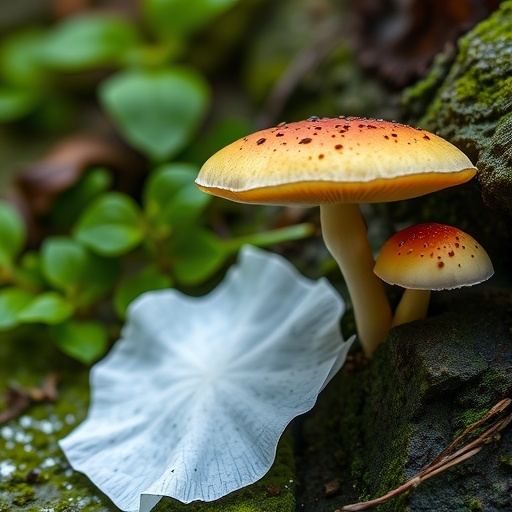
A team of researchers from the University of São Paulo (USP) and São Paulo State University (UNESP) in Brazil have unveiled a pioneering method to produce a thermostable enzyme derived from a fungus cultivated on agricultural residues, offering a sustainable alternative for cellulose pulp bleaching in the paper industry. Their research introduces xylanase, an enzyme sourced from the fungus Aspergillus caespitosus, cultivated on common agricultural byproducts such as sugarcane bagasse and wheat bran. This enzyme demonstrates exceptional thermal stability and potential for eco-friendly application, eclipsing the current reliance on highly toxic chlorine-based bleaching agents.
Traditionally, cellulose pulp bleaching relies on chlorine dioxide and similar chlorine-based oxidizers. While effective, these chemicals generate significant environmental hazards by contaminating wastewater and emitting harmful gases into the atmosphere, which pose direct risks to human health and ecosystems. The fungal xylanase developed by the Brazilian team not only reduces dependence on such deleterious chemicals but also converts agricultural waste—often discarded or underutilized—into a valuable biotechnological resource, embodying principles of the circular bioeconomy.
The selection of Aspergillus caespitosus is of particular interest. First identified in the United States in 1944 and isolated at USP in 2001, this soil fungus exhibits a robust capacity for producing xylanase, an enzyme critical for degrading xylan, a component of hemicellulose integral to plant cell walls. In eucalyptus and other plant sources typically used in paper production, xylanase specifically targets residual xylan fractions associated with lignin after industrial cooking. This enzymatic activity enhances pulp brightness and facilitates more efficient subsequent bleaching stages, underscoring its industrial significance.
Production of the enzyme utilizes solid-state fermentation, a process where the fungus grows on solid substrates without free-flowing water, ensuring greater yields and efficiency. The researchers focused on two substrates: sugarcane bagasse, a fibrous residue from sugar extraction, and wheat bran, a byproduct of wheat milling. Both substrates are advantageous due to their abundance, low cost, and suitability for fungal growth and enzyme production. Pretreatment with sodium hydroxide improves the suitability of bagasse by loosening cellulose fibers and removing hemicellulose and lignin, thereby enhancing fungal colonization and enzyme synthesis. Wheat bran, in contrast, requires no pretreatment due to its readily accessible carbon content.
The enzyme’s thermal stability is a standout attribute. While most fungal enzymes denature at temperatures above 40°C, the xylanase from Aspergillus caespitosus retains activity at temperatures approaching 60°C. This property is vital, as pulp bleaching operates under elevated temperature conditions. The enzyme is thus suited for integration into the final bleaching stages, where temperatures naturally decline from initial high values but remain too warm for less stable enzymes. Here, it acts synergistically with conventional chemicals to diminish chlorine dioxide usage, thereby cutting the toxic chemical load and emission footprint of pulp bleaching operations.
The researchers are advancing efforts to immobilize the enzyme on chemical supports, aiming to enhance reusability and thermal tolerance further. One particularly promising technique involves conjugating the enzyme to magnetic nanoparticles coupled with nanocellulose. This sophisticated approach not only facilitates enzyme recovery and reuse through magnetic separation but also stabilizes the enzyme’s structure under industrial conditions. Such innovations hint at broader applications beyond pulp bleaching, extending to sectors like bioethanol production and other bioprocess industries seeking sustainable enzymatic solutions.
Contextually, this work aligns with Brazil’s strategic interests. As a global leader in eucalyptus pulp production, the country stands to benefit enormously from cleaner bleaching technologies, reducing industrial environmental impact while adding value to widely available agricultural byproducts. This integration of biotechnology, waste valorization, and industrial application showcases a model for sustainable economic development grounded in biodiversity and technological innovation.
From a biochemical perspective, xylanase’s role extends beyond simple substrate degradation; it facilitates delignification by removing hemicellulose chains complexed with lignin. By cleaving these polysaccharide structures, xylanase exposes lignin to more effective removal by chemical bleaching agents, enhancing pulp whiteness and quality with less chemical input. The enzymatic process also reduces bleaching chemical consumption, lowering both operational costs and environmental liabilities associated with chlorinated organic pollutants.
The study, published in the reputable journal BioResources and funded by the São Paulo Research Foundation (FAPESP), is a testament to interdisciplinary collaboration. Combining expertise in mycology, biochemical engineering, and industrial process optimization, the research bridges fundamental science with applied technology, pushing the envelope of green biotechnological solutions in large-scale industrial contexts.
Beyond the scientific advances, the project exemplifies the valorization of fungal biodiversity native to Brazil. Isolating and harnessing fungal strains adapted to local environmental conditions leverages the country’s rich natural capital for sustainable development. This approach not only reduces dependency on imported enzymes but also opens avenues for novel discoveries in enzyme technology tailored for high-temperature industrial applications, setting a precedent for future endeavors in enzyme innovation.
In conclusion, this groundbreaking enzyme production methodology establishes a viable, sustainable alternative for the pulp bleaching industry. By replacing harmful chemical agents with a thermostable, fungus-derived xylanase produced on agro-waste substrates, the process reduces environmental footprints, optimizes resource utilization, and enhances the economic value of agricultural residues. The ongoing development of enzyme immobilization techniques promises to further improve efficiency and cost-effectiveness, potentially revolutionizing not only paper manufacturing but also other sectors requiring robust enzymatic catalysis at elevated temperatures.
Subject of Research: Development and application of a thermostable fungal xylanase enzyme for eco-friendly cellulose pulp bleaching using agro-residue substrates.
Article Title: Agro-residue Valorization for Thermostable Xylanase Production by Aspergillus caespitosus and its Eco-friendly Application in Pulp Biobleaching
News Publication Date: 8-Jan-2026
Web References:
BioResources Journal
FAPESP – São Paulo Research Foundation
INCT Bioetanol
References:
De Andrades, D., Polizeli, M. L. T. M., et al. (2026). Agro-residue Valorization for Thermostable Xylanase Production by Aspergillus caespitosus and its Eco-friendly Application in Pulp Biobleaching. BioResources, 21(1), 1690-1705.
Image Credits: Diandra de Andrades/FFCLRP-USP
Keywords
Fungi, Biotechnology, Lignocellulose, Industrial production, Xylanase, Aspergillus caespitosus, Pulp bleaching, Thermostable enzymes, Agro-residue valorization, Circular bioeconomy, Paper industry, Sustainable biotechnology
Tags: Agricultural Waste ValorizationAspergillus caespitosus applicationsbiotechnological enzyme developmentchlorine-free pulp bleaching alternativescircular bioeconomy in paper industryeco-friendly paper bleaching methodsenvironmental impact of paper bleaching chemicalsfungal enzymes in paper manufacturingsugarcane bagasse enzyme productionsustainable cellulose pulp bleachingthermostable xylanase enzymewheat bran as fungal substrate