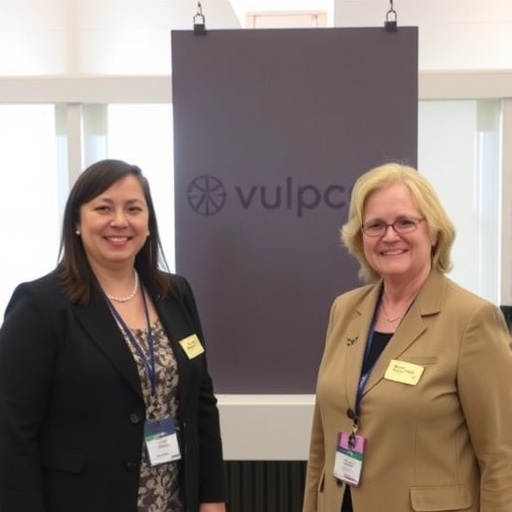
In a groundbreaking leap for cancer therapeutics, the VCU Massey Comprehensive Cancer Center has triumphantly concluded the first funding cycle of its collaborative endeavor with the Sanford Burnham Prebys Medical Discovery Institute (SBP), based in La Jolla, California. This cooperative program, a keystone initiative within Massey’s Molecules to Medicine (M2M) framework, marks a consequential advance in translational oncology research by propelling the identification and development of targeted small-molecule agents against novel oncogenic mechanisms. The partnerships formed here exemplify a cutting-edge strategy poised to transform foundational molecular biology discoveries into viable, patient-centered cancer treatments.
This inaugural funding phase awarded two pioneering projects, each granted $50,000 to accelerate discovery efforts and therapeutic validation processes. These projects, helmed by senior investigative scientists at Massey and co-developed in partnership with SBP, underscore the vital integration of state-of-the-art biochemical screening methodologies and medicinal chemistry within academic research settings. By leveraging these cross-institutional synergies, the program seeks to fast-track the drug discovery pipeline from molecular target validation through to preclinical candidate nomination with unprecedented efficiency.
Dr. Robert A. Winn, the Director and Lipman Chair in Oncology at Massey, emphasizes that this collaborative venture inaugurates a novel epoch in translational cancer research. He highlights that the engagement with SBP’s world-renowned assay development and high-throughput compound screening capabilities equips Massey investigators with enhanced tools to expediently translate biological insights into precision oncology agents. This strategic alignment is anticipated to markedly shorten the temporal gap between laboratory breakthroughs and clinical application, addressing the urgent need for novel therapeutics targeting recalcitrant cancer phenotypes.
The two selected projects represent innovative molecular paradigms that target critical and previously underexplored pathways within cancer cells. The first project, titled “Targeting Hsp27-CerS1 Interaction in Solid Tumors,” is spearheaded by Dr. Can Senkal, whose expertise in cellular, molecular, and genetic medicine informs this endeavor. This project focuses on disrupting the interaction between Heat Shock Protein 27 (Hsp27) and Ceramide Synthase 1 (CerS1), a regulatory node implicated in tumor cell survival and apoptosis resistance. By intervening at this juncture, the project aims to destabilize cancer cell proteostasis and potentiate cell death mechanisms selectively within solid tumors.
Complementing this effort, the second project is under the leadership of Dr. Anthony Faber, who occupies the Natalie N. and John R. Congdon, Sr. Endowed Chair in Cancer Research. His work employs a sophisticated cell-based screening platform designed to identify ferroptosis-inducing compounds that impede selenocysteine incorporation. Ferroptosis, an iron-dependent form of regulated cell death characterized by lipid peroxidation, has emerged as a promising vulnerability in malignancies resistant to classical apoptotic pathways. By targeting the unique mechanism of selenocysteine incorporation into essential selenoproteins, this approach could irreversibly compromise cancer cell antioxidant defenses and survival.
The integration of novel assay technologies with high-throughput screening paradigms at the Prebys Center for Drug Discovery provides the backbone for these endeavors. This center’s unique capacity for rapid assay development, coupled with robust medicinal chemistry programs, allows investigators to validate small molecules with clinical-grade rigor. Such infrastructure is critical for generating candidate compounds that meet the stringent requirements for advancement into clinical trials, while simultaneously furnishing comprehensive preliminary data packages for robust National Institutes of Health (NIH) and National Cancer Institute (NCI) grant submissions.
M2M’s overarching vision seamlessly aligns with precision medicine principles, aiming to bridge the translational gap by fostering multidisciplinary collaborations between basic researchers, pharmacologists, and medicinal chemists. The initiative’s operational leadership, including Dr. Said M. Sebti and Dr. Shamik Ghosh, acknowledges that this partnership enhances the breadth and depth of therapeutic discovery capabilities at VCU Massey. It introduces breakthrough assay modalities and industry-standard screening processes traditionally accessible only at dedicated drug discovery entities.
Furthermore, this trailblazing program is catalytic in nature, designed not only to identify new pharmacological agents but also to establish robust research pipelines that encourage sustained innovation and therapeutic exploration. By successfully marrying the scientific rigor of academia with the accelerated workflow standards of pharmaceutical discovery, this collaboration exemplifies a new model for addressing the perennial challenge of drug development in oncology. The resulting acceleration from bench to bedside promises to deliver novel therapies with greater efficiency and clinical relevance.
The focus on molecular targets such as the Hsp27-CerS1 axis and the ferroptosis pathway reflects a strategic investment in mechanistically nuanced approaches that exploit unique vulnerabilities within cancer cells. These strategies expand beyond conventional chemotherapy and targeted agents by addressing proteostasis and regulated cell death modalities that have hitherto been difficult to manipulate pharmacologically. This underscores a paradigm shift in drug discovery, wherein molecular precision and pathway selectivity are paramount to achieving therapeutic breakthroughs.
As this collaboration unfolds, it is expected that the resultant data sets and generated compounds will significantly contribute to the global oncology research landscape. Through comprehensive validation and iterative medicinal chemistry optimization at SBP, these projects lay the groundwork for clinical trials targeting solid tumors refractory to existing interventions. The merging of discovery science with translational application embodied in this partnership sets a laudable precedent for future academic-industry alliances aiming to combat cancer with innovative small-molecule therapeutics.
In sum, the VCU Massey and Sanford Burnham Prebys collaborative program is an emblematic initiative that redefines drug discovery within an academic framework. By converging advanced biochemical research with practical drug development methodologies, it facilitates a new frontier in cancer treatment innovation. The program not only accelerates the generation of promising therapeutic candidates but also galvanizes the research community to pursue bold hypotheses grounded in molecular oncology, propelling the field toward transformative patient outcomes.
Subject of Research: Novel small-molecule cancer therapeutics targeting Hsp27-CerS1 interaction and ferroptosis pathways.
Article Title: Advancing Cancer Therapy: VCU Massey and Sanford Burnham Prebys Collaborative Drug Discovery Initiative.
News Publication Date: April 8, 2026.
Web References:
https://mediasvc.eurekalert.org/Api/v1/Multimedia/5b177769-fa05-4974-9e57-1693c81fff5c/Rendition/low-res/Content/Public
Image Credits: VCU Massey Comprehensive Cancer Center
Keywords: Drug discovery, Molecular targets, Cancer therapeutics, Small-molecule agents, Hsp27-CerS1 interaction, Ferroptosis, Selenocysteine incorporation, Translational oncology, High-throughput screening, Medicinal chemistry, Precision medicine, Solid tumors.
Tags: academic-industry partnerships in drug developmentbiochemical screening in cancer researchcancer drug discovery fundingcancer research funding initiativesmedicinal chemistry in oncologyMolecules to Medicine programpreclinical cancer candidate nominationSanford Burnham Prebys collaborationsmall-molecule cancer therapeuticstargeted oncogenic mechanismstranslational oncology researchVCU Massey Comprehensive Cancer Center