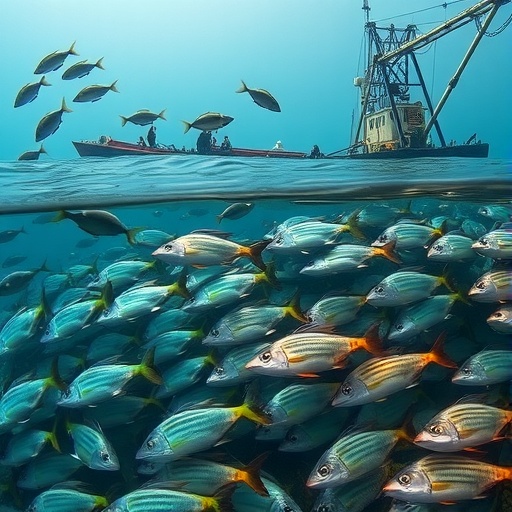
A groundbreaking global inventory has revealed the extensive and largely underestimated impact of bottom trawl fisheries on marine biodiversity. For the first time, researchers have compiled a comprehensive account of the fish species caught through bottom trawling, exposing a staggering toll on oceanic ecosystems that has remained invisible until now. The study, conducted by scientists at the University of British Columbia (UBC), aggregates over 9,000 records spanning more than a century of trawling activity, documenting more than 3,000 species and predicting the actual figures to be nearly double that estimate. This unprecedented dataset provides a crucial lens through which to evaluate the far-reaching consequences of this destructive fishing method.
Bottom trawling—where heavy nets are dragged along the ocean floor—has long been recognized as one of the most damaging fishing practices due to its indiscriminate nature and capacity to obliterate seafloor habitats. Despite its pervasiveness, there has been an alarming lack of detailed knowledge about precisely which species are swept up in the process and how these catches influence marine biodiversity overall. This new inventory thus fills a critical gap by cataloguing the remarkable diversity of marine fauna affected by this form of fishing, highlighting not only the volume but the ecological significance of the species caught.
Among the most striking revelations of the study is the introduction of conservation risk data from the International Union for Conservation of Nature (IUCN) Red List to the trawling catch inventory. It was found that approximately one out of every seven species caught and assessed is classified as threatened or near threatened with extinction. The inclusion of critically endangered species such as the giant guitarfish, endangered zebra shark, and vulnerable seahorses underscores the immediate threat bottom trawling poses to species already teetering on the cusp of disappearance. This revelation dramatically changes the narrative from viewing bycatch as mere “trash” to recognizing it as a major vector for species extinction.
Even more concerning is the magnitude of unknowns revealed by the study. About 25% of species caught are either listed as data deficient or have never been assessed by conservation authorities, indicating significant gaps in our understanding of marine life affected by bottom trawling. This data void presents a serious challenge to sustainable fisheries management, as policies are often based on incomplete or unreliable information. Consequently, vast regions of the ocean are being subjected to destructive practices without adequate consideration of their ecological ramifications, creating conditions ripe for ecosystem destabilization.
The research also highlights the indiscriminate nature of bottom trawling’s impact across entire fish families. It systematically sweeps through groups ranging from commercially vital species like jacks and croakers, which are essential to global food systems, to evolutionarily unique and rare species including the giant guitarfish and plough-nosed chimera. This broad-spectrum catch threatens to wipe out entire branches of the evolutionary tree, disrupting not only fisheries but the foundational balance of marine biodiversity. Such pressure on phylogenetically distinct species jeopardizes evolutionary heritage and complicates recovery efforts.
A troubling aspect revealed by the study is the underreporting and misclassification of smaller fish species. These species are often obscured under generalized terms such as “trash fish” or “mixed fish,” effectively erasing their presence from catch statistics. This categorization masks the true scale of biodiversity loss and hinders accurate ecological assessments. Moreover, the analysis shows that although 95% of these species are not targeted intentionally, approximately 64% are retained by fisheries, intensifying the inadvertent depletion of non-commercial species with unknown ecological roles.
The ramifications for marine ecosystem function are profound. Removing thousands of species without clear understanding of their ecological roles risks disrupting complex food webs, nutrient cycles, and habitat structures. Bottom trawling does not discriminate by ecosystem function or conservation status; it indiscriminately removes organisms that are integral to maintaining the health and resilience of marine habitats. This unchecked extraction can initiate cascading effects, potentially leading to ecosystem collapse and undermining the long-term viability of fisheries themselves.
Given that nearly 99% of bottom trawling occurs within national jurisdictions, the responsibility for managing and mitigating its impacts lies firmly with coastal governments. The researchers emphasize the urgent need for precautionary measures, advocating for extensive bans on bottom trawling in large oceanic zones, especially within marine protected areas designated for biodiversity conservation. This approach would align with internationally endorsed conservation frameworks that seek to reduce human pressures on vulnerable marine ecosystems.
The study’s authors also call for a transformation in how bottom trawl catches are documented and reported. Current systems are insufficiently detailed and fail to capture the true species diversity removed from ocean habitats. Enhanced monitoring protocols, incorporating species-level data and conservation assessments, are vital to close information gaps and formulate science-based management plans. Without such reforms, the invisible and devastating biodiversity losses will continue to be overlooked.
From a broader ecological perspective, this research challenges the traditionally narrow focus on target species in fisheries management, urging a shift toward ecosystem-based approaches that recognize the interconnectedness of marine life. The findings underscore that sustainable fisheries cannot be achieved without comprehensive protections for bycatch species and their habitats. The integration of evolutionary distinctiveness and extinction risk into fisheries assessments is essential to preserving marine biodiversity in the face of expanding fishing pressures.
Importantly, the study underscores that marine biodiversity conservation must be a foundational pillar within global efforts to sustainably manage seafood production. The persistence of thousands of threatened and data-deficient species caught in bottom trawl fisheries highlights an urgent need for coordinated policy action, scientific research, and public awareness. Without such concerted efforts, bottom trawling remains a critical driver of biodiversity loss, undermining ocean health and the sustainability of fisheries that billions of people depend upon.
In conclusion, this landmark global inventory provides an unprecedented and sobering quantification of the ecological damage wrought by bottom trawling. It reveals a complex and alarming picture of species loss, extinction risk, and information deficits, reshaping our understanding of marine fisheries’ true costs. The findings serve as a rallying cry for governments, scientists, and conservationists to collaborate on protecting marine biodiversity through rigorous regulation, improved monitoring, and biome-wide management strategies. Only through such transformative action can the immense biodiversity trapped in the nets of bottom trawl fisheries be safeguarded for future generations.
Subject of Research: Marine fish biodiversity impacted by bottom trawl fisheries
Article Title: Global diversity of marine fishes caught in bottom trawl fisheries
News Publication Date: 10 March 2026
Web References:
https://link.springer.com/article/10.1007/s11160-026-10043-6
http://dx.doi.org/10.1007/s11160-026-10043-6
Image Credits: Sarah Foster, University of British Columbia
Keywords: Aquatic ecology, Ecosystems, Ecology, Marine biology, Biodiversity, Marine biodiversity, Fisheries management
Tags: biodiversity loss from bottom trawl fishingbottom trawling impacts on marine biodiversitydestructive fishing methods ocean floorendangered fish species caught by trawlingfish species affected by bottom trawlingglobal inventory of bottom trawl fisherieslong-term data on trawl fisheriesmarine ecosystem consequences of trawlingoceanic ecosystem threats bottom trawlingseafloor habitat damage from trawlingsustainable fishing challenges bottom trawlingUniversity of British Columbia trawling study