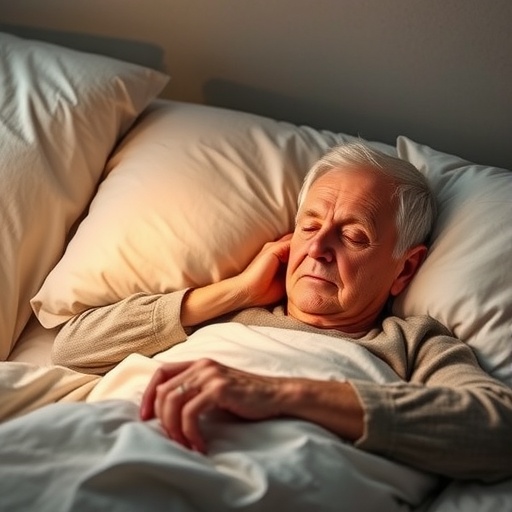
In recent years, the scientific community has been increasingly attentive to the multifaceted challenges faced by aging populations around the world. One pressing issue that has gained heightened scrutiny is frailty among older adults—a complex syndrome characterized by reduced physiological reserve and increased vulnerability to adverse health outcomes. A groundbreaking study recently published in BMC Geriatrics provides novel insights into how social and behavioral factors, specifically perceived ageism and sleep quality, interact intricately to influence frailty in community-dwelling older adults. This research elucidates an essential, yet underexplored, nexus that bridges psychological experiences and physical health in aging, opening new avenues for intervention and policy formulation.
Frailty is recognized as a state where diminished strength, endurance, and physiological function heighten the risk of dependency and mortality. While many studies have historically focused on biomedical parameters contributing to frailty, the recent work by Ye, Li, Chen, et al., takes a more holistic approach by investigating psychosocial stressors—primarily ageism—and their compounded effects alongside poor sleep quality. Ageism, defined as prejudice or discrimination based on a person’s age, profoundly impacts older adults’ mental health, social participation, and overall well-being. However, its direct interaction with sleep patterns and subsequent consequences for frailty had remained elusive until now.
The methodology behind this cross-sectional study involved a comprehensive assessment of community-dwelling older adults with the aim to delineate the interactive dynamics between perceived ageism and sleep quality in relation to frailty status. The population sample encapsulated a diverse demographic, ensuring that social determinants such as socioeconomic status, educational background, and lifestyle factors were thoroughly controlled. Such rigorous participant selection and detailed data collection set a new standard for epidemiological studies exploring psychosocial determinants of aging-related health outcomes.
Central to the research’s analytical framework was the concept that perceived ageism may exacerbate stress responses, thereby interfering with sleep architecture. The biological plausibility of this hypothesis rests on established knowledge that chronic stress activates the hypothalamic-pituitary-adrenal (HPA) axis, increasing cortisol secretion and disrupting circadian rhythms. Poor sleep quality, characterized by difficulties initiating or maintaining sleep, non-restorative sleep, and altered sleep stages, has been robustly linked with impaired immune function, metabolic dysregulation, and cognitive decline—all of which are key contributors to the frailty phenotype.
One of the pivotal findings of the study was the interaction effect: older adults who reported high levels of perceived ageism combined with poor sleep quality had significantly greater odds of being frail than those experiencing only one or neither of these factors. This interaction underscores a synergistic relationship whereby the psychological burden of ageism intensifies the detrimental consequences of inadequate sleep. The recognition of such a synergistic interplay challenges simplistic, linear causative models and reinforces the need for multifactorial risk assessments in geriatric care.
The researchers utilized validated instruments to measure perceived ageism and sleep quality, including self-report scales that capture subjective experiences along with standardized clinical evaluations for frailty. The multidimensional assessment encompassed physical performance metrics, muscle strength, and cognitive screening, offering a robust and granular depiction of participants’ health status. Advanced statistical analyses, including interaction modeling and regression techniques, were employed to isolate the independent and combined effects of the studied variables while controlling for potential confounders such as comorbidities and medication use.
From a neurobiological standpoint, this study illuminates how psychosocial stressors translate into tangible physiological deterioration. Continuous experiences of ageism may provoke sustained autonomic dysregulation and inflammatory responses, which sleep disturbances fail to mitigate. This biological cascade potentially leads to accelerated cellular senescence and muscular catabolism—hallmarks of frailty. Thus, beyond the traditional biomedical framework, there is an emerging appreciation for the brain-body axis as a critical mediator in the aging process.
Moreover, the societal implications of these findings are profound. Perceived ageism is often a silent, pervasive phenomenon that older individuals endure across various settings, including healthcare, employment, and social interactions. Its insidious nature not only compromises mental health but now is shown to have deep-seated physiological repercussions by enhancing vulnerability to frailty. Public health initiatives must, therefore, prioritize anti-ageism campaigns and foster environments where older adults are respected and valued—endeavors that could indirectly improve sleep quality and health outcomes.
Clinically, this research advocates for integrated screening protocols in geriatric populations that assess both psychosocial factors and sleep health as part of routine evaluations. Early identification of those at risk could enable targeted interventions that address these interlinked dimensions, such as cognitive-behavioral therapy for insomnia tailored to older adults experiencing age-discrimination stress. Pharmacologic treatments may be adjunctive but are not sufficient alone to counter the compounded effects identified.
The study also underscores the necessity for interdisciplinary approaches combining gerontology, psychiatry, sleep medicine, and social sciences to holistically address frailty. Future research trajectories could include longitudinal analyses to determine causality, mechanistic studies to uncover molecular pathways, and intervention trials testing strategies to reduce ageism and improve sleep quality concurrently. Such efforts would deepen our comprehension and expand effective measures to preserve functional independence in aging populations.
In an era where populations globally are aging at unprecedented rates, the insights derived from this research are both timely and actionable. By delineating the exacerbating role of perceived ageism on sleep-related frailty, the study calls upon healthcare systems, policymakers, and society at large to rethink how age-related vulnerabilities are approached. The paradigm shift from purely biomedical models to ones that incorporate social and behavioral determinants promises to enhance quality of life and longevity among the elderly.
Technological innovations such as wearable sleep trackers, digital platforms for mental health support, and community-based programs combating ageist stereotypes could be instrumental in translating these findings into practical outcomes. The scalable nature of such solutions also aligns well with public health demands, offering avenues to mitigate frailty at population levels effectively.
Ethically, the findings re-emphasize the need to provide dignity, equity, and respect for older adults. Recognizing the harmful impact of ageism on physical health lends moral urgency to societal reforms aimed at inclusion and age-friendly policies. Ageism is not merely a social ill but a tangible health hazard with far-reaching consequences that must be addressed decisively.
Ultimately, the 2026 study by Ye, Li, Chen, and colleagues represents a seminal work that enriches our understanding of frailty by unveiling complex psychosocial-biological interactions. Their findings serve as a clarion call to integrate perceptions, experiences, and behaviors with clinical indicators in aging research and practice. It is a compelling reminder that health is a holistic construct, shaped by the confluence of mind, body, and society across the life course.
As the scientific narrative evolves, this research will undoubtedly catalyze greater attention to how societal attitudes impact biological aging and health resilience. The newly identified interface between perceived ageism and sleep deterioration as determinants of frailty may pave the way for novel prevention and treatment paradigms. In doing so, it brings hope for improved well-being and functional longevity for older adults worldwide—an imperative in our rapidly aging global community.
Subject of Research: Interaction between perceived ageism and poor sleep quality on frailty in older adults.
Article Title: Interaction between perceived ageism and poor sleep quality on frailty among community-dwelling older adults: a cross-sectional study.
Article References:
Ye, B., Li, Y., Chen, L. et al. Interaction between perceived ageism and poor sleep quality on frailty among community-dwelling older adults: a cross-sectional study. BMC Geriatr (2026). https://doi.org/10.1186/s12877-026-07436-4
Image Credits: AI Generated
Tags: age-related discrimination health effectsageism and elderly frailtyaging population health challengesfrailty syndrome in community-dwelling seniorsholistic approaches to aging healthimpact of sleep quality on older adultsinterventions for frailty preventionmental health impact of ageismphysiological decline in aging populationspsychosocial factors in agingsleep disturbances and frailty risksocial determinants of elderly health