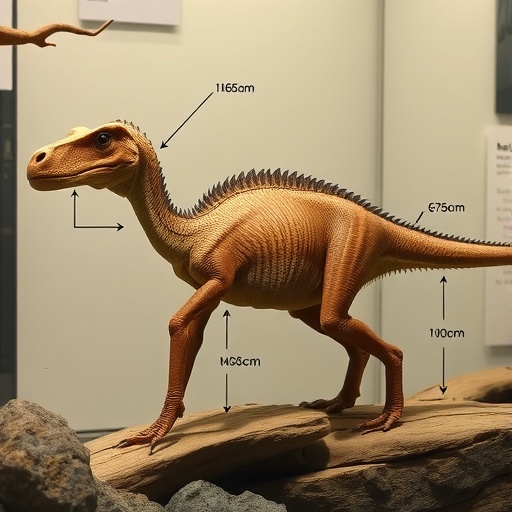
The transition from aquatic to terrestrial life marks one of the most transformative episodes in vertebrate evolutionary history, catalyzing the rise of two dominant clades of land vertebrates: amniotes and lissamphibians. These groups represent divergent evolutionary solutions to the challenges posed by life on land, particularly regarding respiratory adaptations and body size limitations. While both trace their lineage back to a large-bodied common ancestor, their evolutionary trajectories unfolded in remarkably different ways, influenced heavily by respiratory mechanisms that shaped their physiology, ecology, and diversity.
Lissamphibians, which encompass modern amphibians such as frogs, salamanders, and caecilians, have retained relatively small body sizes throughout their evolutionary history. Their weights range narrowly from just a few grams to roughly 10.8 kilograms. This striking size limitation is likely connected to the unique architecture of their respiratory system, relying heavily on cutaneous (skin-based) gas exchange alongside buccal pumping—a method where air is actively moved into the lungs by movements of the mouth cavity. While highly effective in aquatic or moist environments, this respiratory strategy is inherently constrained on land due to inefficient carbon dioxide elimination. The slower diffusion rates of CO₂ through skin surfaces necessitate a high surface area-to-volume ratio, favoring smaller body sizes to optimize gas exchange and maintain homeostasis.
Conversely, amniotes—including mammals, reptiles, and birds—display an extraordinary range of body masses, from a mere 0.2 grams in tiny lizards to an astounding 180,000 metric tons represented by extinct sauropod dinosaurs. This group’s success and ecological dominance since the Early Permian period—around 299 million years ago—are largely attributed to their advanced respiratory system. Amniotes evolved costal lung ventilation, wherein ribcage movements actively expand and contract the lungs, facilitating efficient air flow and rapid CO₂ removal. This mechanism significantly reduces the physiological constraints on body size by improving respiratory efficacy, enabling larger body masses and greater metabolic demands.
Central to current hypotheses on vertebrate terrestrialization is the proposed association between the evolution of respiratory mechanisms and body size diversification. The idea that costal lung ventilation freed amniotes from evolutionary constraints restricting body size has long been suggested but remained difficult to substantiate through empirical data. Addressing this gap, a team at the Institute of Vertebrate Paleontology and Paleoanthropology (IVPP), Chinese Academy of Sciences, conducted a comprehensive investigation leveraging an extensive dataset of 344 fossil species dating from the Middle Devonian to the Early Permian—spanning the critical window of vertebrate transition from water to land.
Their study employed evolutionary model fitting to analyze changes in body size, skull morphology, and respiratory traits with unprecedented resolution. The results revealed that both amniote and lissamphibian stem lineages independently moved toward smaller body sizes following a large-bodied common ancestor. However, lissamphibian precursors exhibited much stronger constraints in this downsizing process, reflecting the limitations imposed by their ancestral buccal lung ventilation and dependence on cutaneous respiration. Meanwhile, amniote-lineage vertebrates experienced a relaxation of size constraints, evolving to surpass previous maximum size thresholds as their respiratory system advanced.
Notably, the research corroborates that buccal lung ventilation was indeed the ancestral respiratory mode for all early land vertebrates, inherited by lissamphibian ancestors. The hallmark characteristics of costal lung ventilation—such as ribs exhibiting curvature along the mesiodistal axis and elongated cervical vertebrae—emerged early in the stem amniote lineage. These morphological adaptations suggest that the progenitors of modern reptiles and mammals had already developed more sophisticated ventilatory mechanics, integral to their success in terrestrial habitats.
This evolutionary divergence in respiratory mode had profound physiological consequences. Lissamphibian ancestors retained buccal pumping and increased reliance on CO₂ excretion through the skin, anchoring them to a strategy that inherently favors small body sizes. By contrast, the adoption of costal lung ventilation in amniotes not only allowed for larger bodies but also led to secondary morphological innovations, particularly in cranial architecture. Freed from the functional constraints imposed by buccal pumping, amniotes developed deeper skulls that facilitated the functional partitioning of jaw musculature. This anatomical refinement enhanced static pressure capabilities during tooth occlusion, an essential prerequisite for herbivory.
The emergence of herbivory within amniote lineages was a game-changing event, opening access to new ecological niches through the ability to process plant matter efficiently. As a result, various herbivorous and predatory amniote groups expanded in body size and ecological complexity during the Early Permian, marking a critical phase in shaping terrestrial ecosystems. These dietary shifts, coupled with respiratory and morphological adaptations, underscore the tight interplay between physiology, environmental exploitation, and evolutionary trajectories.
Today, these ancient physiological and morphological legacies are clearly reflected in the disparity of body sizes and ecological roles observed in living terrestrial vertebrates. While amniotes encompass everything from diminutive lizards weighing mere grams to massive elephants and whales, lissamphibians remain strongly predisposed to small sizes due to their cutaneous respiration-based gas exchange. This constraint limits their capacity for ecological diversification and large body size compared to amniotes, echoing patterns established hundreds of millions of years ago.
The findings from this groundbreaking study provide compelling evidence that the decoupling of phenotypic constraints linked to respiratory adaptations fundamentally shaped the divergent evolutionary pathways of the two major land vertebrate clades. Such deep evolutionary divergences laid down the structural and physiological frameworks of modern terrestrial vertebrate communities long before the extensive diversification of extant species. By illuminating the respiratory and morphological innovations that underpinned body size evolution, this research enhances our understanding of the complex drivers behind vertebrate adaptation to land environments.
In summary, the research by Yilun Yu and colleagues bridges a crucial gap in evolutionary biology, demonstrating how respiratory strategies influenced body size limits and ecological potential among early terrestrial vertebrates. Their work not only elucidates the origins of key vertebrate adaptations but also situates respiratory evolution as a foundational axis around which the grand diversification of land vertebrates unfolded. This study highlights the integral role of physiological innovations in overcoming environmental challenges and enabling the vast disparity observable among today’s terrestrial animals.
As amniotes continue to dominate terrestrial ecosystems, it is clear that their evolutionary success traces back to ancient, finely tuned respiratory adaptations. Meanwhile, lissamphibians remain emblematic of the constraints inherited from their aquatic ancestors. Together, these lineages tell a compelling story of adaptation, constraint, and opportunity during life’s monumental transition from water to land.
Subject of Research: Evolution of body size, skull shape, and respiratory traits in early land vertebrates during terrestrialization
Article Title: Decoupled phenotypic constraints framed by respiratory adaptation in the rise of land vertebrates
News Publication Date: 1-April-2026
Web References: https://doi.org/10.1126/sciadv.aeb0801
Image Credits: Image by YU Yilun et al.
Keywords: Evolution, Paleontology, Vertebrate terrestrialization, Body size evolution, Respiratory adaptation, Amniotes, Lissamphibians, Costal lung ventilation, Buccal pumping, Cutaneous gas exchange
Tags: amniote respiratory adaptationsbody size variation in early terrestrial vertebratesbuccal pumping in amphibianscarbon dioxide elimination in terrestrial animalscutaneous gas exchange limitationsecological impact of respiratory strategiesevolutionary physiology of land vertebrateslissamphibian respiratory mechanismsrespiratory evolution in vertebratessize constraints in lissamphibianstransition from aquatic to terrestrial lifevertebrate evolutionary history