The integration of artificial intelligence (AI) within clinical environments is rapidly reshaping the landscape of healthcare delivery, particularly through its impact on electronic health record (EHR) management. Recent research has unveiled the nuanced effects of adopting AI-assisted scribing technologies, revealing their potential to alleviate the administrative burden on physicians, streamline documentation workflows, and enhance clinical productivity. These advancements hold transformative implications not only for practitioner workload but also for patient care efficiency and system-wide healthcare optimization.
The core challenge addressed by AI scribing tools lies in the voluminous documentation required by modern medical practice, which often detracts from direct patient interaction. Traditional EHRs, while essential for record-keeping and compliance, impose significant time demands on clinicians, contributing to burnout and inefficiencies. AI scribes, leveraging natural language processing and machine learning algorithms, automate the transcription and organization of clinical notes, thus enabling physicians to concentrate more fully on clinical decision-making and patient engagement.
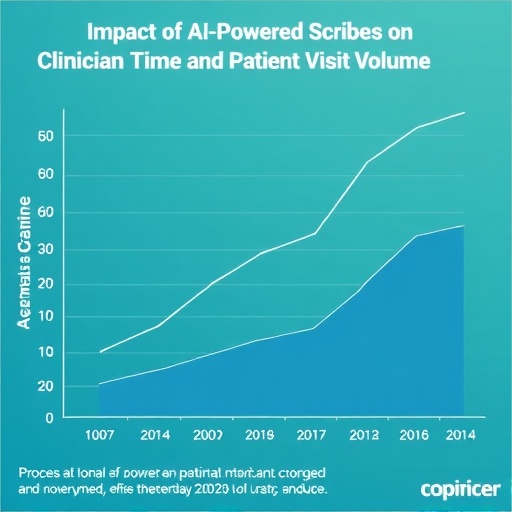
A seminal study recently published in JAMA has empirically quantified the impact of AI scribe adoption on physician workflows. The researchers conducted a rigorous analysis comparing pre- and post-implementation metrics across multiple healthcare settings. Key findings indicate a moderate reduction in total EHR time, encompassing both active documentation and ancillary electronic tasks. This reduction signals a shift in the digital workload, allowing providers to reclaim crucial minutes otherwise spent navigating complex interfaces and manual data entry.
Parallel to time savings, documentation time specifically was observed to decline modestly with AI scribe integration. This is a significant metric as documentation accuracy and completeness remain paramount for clinical care and legal standards. By offloading routine documentation duties to AI systems capable of capturing and structuring clinical encounters in real-time, the technology not only expedites note generation but also standardizes narrative content, thereby enhancing record fidelity and accessibility.
In addition to efficiency gains, the study revealed a modest uptick in weekly patient visit volumes for clinicians utilizing AI scribing assistance. This augmentation suggests that the time saved is being effectively reallocated to direct patient care, which may contribute to improved access and throughput within health systems. This aspect underscores the dual benefit of AI scribes: enhancing physician efficiency while potentially elevating healthcare delivery capacity.
The underlying technical architecture of AI scribes typically involves sophisticated speech recognition modules integrated with contextual understanding models. These systems transcribe physician-patient dialogues with increasing accuracy, disambiguate medical terminology, and format outputs compliant with clinical documentation standards. Importantly, they incorporate iterative learning mechanisms, adapting to individual provider styles and specialty-specific lexicons to refine their performance continuously.
However, the deployment of AI scribes is not without its challenges. Ensuring data privacy and security remains a critical priority, given the sensitive nature of health information. The integration process also necessitates comprehensive training and workflow adjustments to harmonize human-AI collaboration. Furthermore, continuous monitoring of AI outputs is essential to identify and correct potential errors or omissions, safeguarding against the propagation of inaccuracies within medical records.
The implications of AI-assisted documentation extend beyond immediate physician workflows. By enhancing the quality and timeliness of clinical records, AI scribes may support downstream applications such as clinical decision support, population health analytics, and interoperability between care settings. These secondary benefits could accelerate broader healthcare innovation, driving more informed and personalized medical interventions.
From an economic perspective, the modest improvements in efficiency and patient throughput could translate into meaningful cost savings for health institutions. Reduced administrative labor and enhanced clinician productivity may alleviate systemic strains, enabling resource reallocation toward critical clinical functions and innovation investments. These financial considerations are crucial for the sustainable adoption of emerging AI technologies in healthcare environments.
Ethical considerations also emerge in the context of AI scribe deployment. Transparent disclosure of AI involvement in documentation, assurance of clinician oversight, and validation of AI-generated content are essential to maintain trust between patients and providers. Additionally, the equitable distribution of AI benefits, avoiding disparities across institutions and patient populations, remains a vital policy goal.
The study’s insights contribute to a growing body of evidence supporting the integration of artificial intelligence as a tool for augmenting, rather than replacing, clinical expertise. The symbiotic relationship between clinicians and AI scribing technology holds promise for redefining the dynamics of healthcare delivery, with potential to alleviate burnout, improve record accuracy, and enhance patient care experiences.
In conclusion, AI scribe adoption represents a pivotal advancement in healthcare informatics, characterized by measurable reductions in electronic health record time and documentation burdens, accompanied by modest increases in clinical productivity. As these technologies continue to evolve, ongoing research and iterative refinement will be essential to maximize their benefits and address implementation challenges across diverse healthcare settings.
Subject of Research: Artificial intelligence application in clinical documentation and electronic health record management
Article Title: [Not provided]
News Publication Date: [Not provided]
Web References: [Not provided]
References: (doi:10.1001/jama.2026.2253)
Keywords: Artificial intelligence, Electronic medical records, Information processing
Tags: AI in clinical decision supportAI-assisted clinical documentationAI-powered medical scribesautomation of medical note-takingclinician time management in healthcareenhancing physician productivity through AIhealthcare workflow optimizationimpact of AI on electronic health recordsimproving patient visit volume with AImachine learning for medical transcriptionnatural language processing in healthcarereducing physician burnout with AI