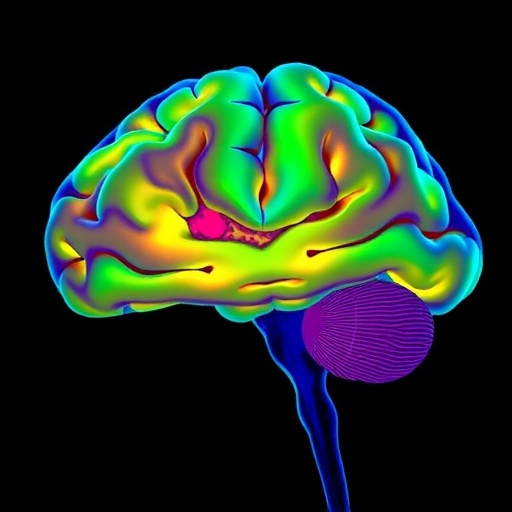
The hippocampus, a pivotal brain structure responsible for memory formation and navigation, has long been understood as a hub for spatial memory consolidation through patterns of neural reactivation during sleep. Yet, the complex interplay between the brain’s spatial and emotional memory systems has remained enigmatic, particularly given the anatomical and functional divisions along the hippocampus’s dorsoventral axis. While the dorsal hippocampus (dHPC) predominantly processes spatial information, it is largely disconnected from key emotional centers such as the amygdala. In contrast, the ventral hippocampus (vHPC) is intimately linked to emotion-related circuits. How these two hippocampal subdivisions synchronize during sleep to unify spatial and emotional aspects of episodic memory has eluded neuroscientists—until now.
In a groundbreaking study published in Nature Neuroscience, Morici et al. (2026) meticulously unravel the cooperative dynamics between the dorsal and ventral hippocampus during sleep, providing crucial insights into how emotional experiences are integrated with spatial memory. By deploying simultaneous electrophysiological recordings in rats engaged in a spatial alternation task framed by either aversive or rewarding emotional contexts, the researchers delivered compelling evidence that coordinated sharp-wave ripples (SWRs) during non-rapid-eye-movement (NREM) sleep orchestrate neural assembly reactivation propagating along the dorsoventral hippocampal axis.
Sharp-wave ripples—high-frequency oscillatory events thought to underlie memory consolidation through neural replay—are traditionally associated with the dorsal hippocampus’s role in spatial reactivation. However, Morici et al. reveal a nuanced mechanism whereby SWRs are not isolated events confined to spatial coding circuits but are network-wide phenomena that engage ventral hippocampal assemblies responsive to emotional stimuli. This joint reactivation suggests a sophisticated form of memory processing during sleep that melds contextual information with the affective valence of experiences.
A distinctive finding from the study highlights that following an aversive task, the reactivation patterns during sleep more faithfully reproduce the original neural ensemble firing observed during wakefulness, particularly within the ventral hippocampus. This fidelity is driven by increased recruitment of vHPC neurons responsive to the shock, alongside enhanced spatial replay activity in the dorsal hippocampus, strengthening the argument that emotional experiences amplify the reconstruction of episodic memories during sleep. Such modulation was less pronounced following rewarding tasks, illustrating how negative emotional valence might uniquely influence the consolidation process.
The technical approach employed by the authors deserves attention: by simultaneously recording from both dorsal and ventral sites, the study overcomes the common limitation of examining hippocampal subregions in isolation. This method allowed the researchers to characterize cross-regional interactions and temporal coordination during SWRs with high precision. Using analyses of neural ensemble spiking patterns and their sequence fidelity, the research illuminated how emotional and spatial information converge within the hippocampus rather than being processed in parallel but segregated pathways.
The implications of these findings ripple beyond basic neuroscience into clinical and psychological domains. Understanding how emotional and spatial information are integrated at the neural circuit level during sleep has potential relevance for disorders characterized by impaired emotional memory, such as post-traumatic stress disorder (PTSD). In PTSD, maladaptive reactivation and consolidation of traumatic memories could involve dysregulation within the dorsoventral hippocampal network described by Morici and colleagues. Targeting these mechanisms might open avenues for therapeutic intervention aimed at disrupting pathological memory consolidation during sleep.
Moreover, the study’s insights add nuance to the classical model of hippocampal function that compartmentalizes spatial and emotional processing. The demonstration of coordinated SWR-associated reactivation challenges the dichotomy between dorsal and ventral subregions and highlights a dynamic and integrative process where episodic memories are enriched through the convergence of multiple neural representations. This reframing prompts a reevaluation of memory consolidation theories and encourages the exploration of hippocampal subfield interactions in other cognitive domains.
From a broader perspective, this research underscores the critical role of sleep as an active neurophysiological state during which the brain orchestrates the stabilization and integration of complex memories. The coordinated dorsal-ventral replay suggests that sleep-dependent consolidation is not merely a process of reactivation but involves precise temporal coordination across anatomically distinct hippocampal segments. Such synchronization might serve to route integrated information effectively to neocortical and limbic targets, enhancing the emotional salience and contextual richness of episodic memory traces.
This study also advances the methodological frontier in systems neuroscience by leveraging simultaneous multi-site, multi-regional recordings combined with sophisticated neural decoding and pattern matching algorithms. These techniques provide a window into the microcircuit dynamics underlying behaviorally relevant neural phenomena, bridging the gap between cellular-level activity and system-level memory functions. Future work integrating optogenetic modulation or chemogenetic tools could elucidate causal roles and mechanisms underpinning these observed reactivation patterns.
Importantly, Morici et al. also reported that reactivation synchrony during SWRs was enhanced after experiences bearing negative emotional valence compared to positive reinforcement tasks. This differential effect supports burgeoning evidence that aversive stimuli inherently command stronger memory consolidation. From an evolutionary standpoint, this prioritization makes adaptive sense: memories of harmful or threatening situations must be robustly encoded to improve survival chances. The hippocampus’s capacity to amplify such emotionally salient experiences during sleep may reflect a fundamental biological imperative.
The study’s findings raise intriguing questions about the downstream consequences of dorsoventral hippocampal coordination. How are these integrated memory traces transmitted to downstream areas such as the prefrontal cortex or the amygdala? Are there distinct phases of memory replay during sleep that selectively engage emotional versus spatial networks, or do they operate simultaneously in a unified stream? Moreover, how do neuromodulatory systems influence the strength and content of reactivation, especially under different motivational or stress states? These questions outline fertile ground for continuing research driven by this study’s landmark discoveries.
In sum, Morici and colleagues provide a compelling advance in our understanding of how the brain synthesizes the spatial and emotional dimensions of experience during sleep. Their demonstration that coordinated dorsoventral hippocampal reactivation during SWRs represents a neural substrate by which episodic memories are enriched with affective meaning will undoubtedly influence theoretical models of memory and guide experimental approaches across neuroscience disciplines. This work elegantly illustrates the brain’s remarkable capacity for integrating multifaceted information even as the organism rests, a testament to the complexity of memory consolidation processes underpinning cognitive and emotional functioning.
As memory continues to hold the secrets to identity and consciousness, decoding the underlying physiological processes becomes paramount. This study delivers not only a mechanistic window into hippocampal processing during sleep but also sets a new standard for how to dissect neural circuitry’s role in bridging cognition and emotion. The implications extend from basic science to therapeutic innovation, promising a future where memory disorders can be better understood and potentially alleviated by manipulating sleep-related hippocampal dynamics informed by these insights.
Ultimately, the finding that the hippocampus functions as an integrated dorsoventral network during sleep—melding spatial maps with emotional context—reframes a classic brain region as a nexus of memory richness. Sleep is not merely downtime but a stage where the brain weaves together the fabric of lived experience, emotion, and place into the durable tapestry we call episodic memory.
Subject of Research: Neural mechanisms underlying hippocampal integration of spatial and emotional memory during sleep.
Article Title: Dorsoventral hippocampus neural assemblies reactivate during sleep following an aversive experience.
Article References:
Morici, J.F., Silva, A., Lima-Paiva, I. et al. Dorsoventral hippocampus neural assemblies reactivate during sleep following an aversive experience. Nat Neurosci (2026). https://doi.org/10.1038/s41593-026-02252-w
Image Credits: AI Generated
DOI: https://doi.org/10.1038/s41593-026-02252-w
Tags: aversive sleep memory processingdorsal hippocampus spatial processingdorsoventral hippocampus memory reactivationelectrophysiological recordings hippocampusemotional memory integration during sleepepisodic memory unification during sleephippocampal sharp-wave ripples NREM sleephippocampus-amygdala connectivityneural assembly reactivation ratsspatial alternation task memoryspatial and emotional memory consolidationventral hippocampus emotional circuits