


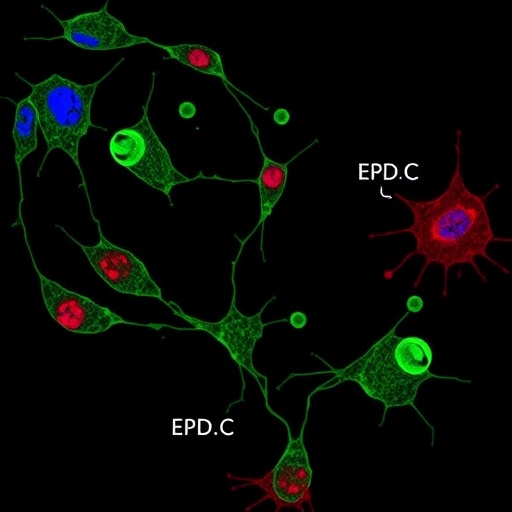
A groundbreaking study emerging from a collaborative consortium of scientists at the Henan Academy of Innovations in Medical Science, Zhengzhou University, and Shenzhen University School of Medicine marks a pivotal advance in the understanding and potential treatment of allergic asthma. Published recently in Life Science Alliance, this research harnesses the power of epigenetic reprogramming to rescue the function of regulatory T cells (Tregs) compromised during asthmatic inflammation, presenting a transformative strategy to modulate immune responses and mitigate chronic airway disease.
Allergic asthma, characterized by chronic inflammation, heightened bronchial reactivity, and excessive mucus production, owes much of its pathology to the dysregulation of immune cell balance within the respiratory tract. Central to this imbalance is the loss of activity of Tregs, a specialized subset of lymphocytes responsible for maintaining immune tolerance and suppressing deleterious inflammation. Until now, the precise molecular underpinnings driving the decline in Treg function in asthma remained elusive, posing a significant barrier to therapeutic innovation.
The study introduces a paradigm shift by focusing on the senescence-like state adopted by Tregs within the chronically inflamed asthmatic lung. Senescence, a distinct cellular dormancy linked with aging and chronic inflammation, impairs Treg suppressive capability, thus allowing unchecked inflammatory cascades. Intriguingly, the research team identified that this dysfunctional state is associated with epigenetic repression of crucial genes responsible for Treg identity and function, namely FOXP3, a master transcription factor, and IL-10, a pivotal anti-inflammatory cytokine.
A key breakthrough revolves around the Dectin-1 receptor, a surface protein expressed on Tregs, which has previously been recognized for its pathogen recognition and immune-modulatory roles but remained unexplored as a target for reversing Treg senescence. By engaging Dectin-1, the authors demonstrate that it is possible to reprogram Tregs epigenetically, thereby restoring the expression of FOXP3 and IL-10 and rejuvenating their immunosuppressive activity.
The investigational agent, a small peptide named KQS-1, acts as a potent Dectin-1 agonist. In vitro assays with Tregs derived from asthmatic patients established that KQS-1 stimulates enduring transcriptional activation of FOXP3 and IL10, overturning the previously observed epigenetic silencing. Remarkably, this reprogramming effect persists even after removal of the peptide, indicating a durable and stable restoration of Treg functionality, a feature patterning potential for long-term therapeutic benefit.
In vivo experiments utilizing a murine model of allergic asthma further corroborated the therapeutic promise of KQS-1. Treatment with this peptide significantly attenuated airway inflammation, as evidenced by histological analyses showing diminished infiltration of inflammatory cells and suppressed mucosal thickening. These results not only verify the in vitro findings but also underscore the translational relevance of targeting the Dectin-1 pathway to modulate immune homeostasis in complex disease settings.
The mechanistic insights gleaned from this study highlight the interplay between immune senescence, epigenetic modulation, and receptor-mediated signaling pathways in determining Treg fate in chronic inflammatory conditions. KQS-1’s ability to ‘re-educate’ senescent-like Tregs offers a novel intervention point that could be exploited beyond asthma to treat an array of immune-mediated disorders characterized by Treg dysfunction.
Crucially, this work exemplifies the potential of epigenetic therapies, which act at the gene regulation level without altering the genetic code, offering reversible and targeted approaches to disease modulation with potentially fewer side effects than traditional immunosuppressants. By restoring the natural checks and balances of the immune system, such therapies may achieve more precise and durable benefits.
The implications of this research are far-reaching, suggesting new horizons for the management of allergic diseases and opening opportunities for combination therapies that integrate immunological targeting with epigenetic modulation. The identification of Dectin-1 as a critical switch for Treg functionality illuminates a previously unappreciated molecular nexus with vast therapeutic potential.
This pioneering study bridges fundamental immunology and clinical application, providing a proof-of-concept that could inspire the development of next-generation biologics aimed at harnessing endogenous regulatory mechanisms within the immune system. As allergic asthma continues to affect millions worldwide, strategies like Dectin-1-mediated epigenetic reprogramming chart promising new courses toward effective, durable treatments.
Moving forward, it will be essential to delineate the safety, optimal dosing, and long-term effects of KQS-1 in diverse preclinical and clinical settings. Moreover, investigating the applicability of this approach to other Treg-associated diseases, such as autoimmune disorders and chronic inflammatory conditions, could vastly expand its therapeutic footprint.
The study marks a milestone in immunotherapy research by demonstrating that reversing cellular senescence through targeted receptor engagement can reinstate critical gene expression programs and restore immune cell function. This innovative approach exemplifies the potential of precision medicine strategies rooted in molecular and epigenetic biology to transform patient outcomes.
In summary, the work by Sun et al. uncovers a novel and efficacious strategy for combating allergic asthma. The reawakening of Treg suppressive function via Dectin-1 engagement and epigenetic reprogramming by KQS-1 offers hope for patients suffering from chronic respiratory inflammation and could herald a new era in the treatment of immune dysfunction.
Subject of Research: Animals
Article Title: Dectin-1 epigenetic reprogramming rescues senescent-like Treg function in allergic asthma
News Publication Date: 17-Mar-2026
Web References: http://dx.doi.org/10.26508/lsa.202503552
Image Credits: ©2026 Sun et al. Originally published in Life Science Alliance.
Keywords: Asthma, Regulatory T cells, Allergies
Tags: asthma treatment innovationsbronchial hyperreactivity and Tregschronic airway inflammation mechanismschronic inflammatory response in lungsepigenetic reprogramming in asthmaimmune tolerance in respiratory diseasesimmunomodulation strategies for asthmamucus overproduction in asthmareactivating dormant regulatory T cellssenescence-like state of T cellsTreg cell dysfunction in allergic asthmaTreg cell senescence and asthma pathology


