In a remarkable breakthrough that may revolutionize the treatment of Alzheimer’s disease, researchers at Kobe University have developed a pioneering approach targeting one of the most challenging biological entities: intrinsically disordered proteins. These proteins, which lack a fixed three-dimensional structure, have long defied conventional drug design methods. The Kobe University team, led by biochemical engineer MARUYAMA Tatsuo, has innovatively exploited the principle of molecular chirality—the property of molecules existing in mirror-image forms—to develop a novel molecular interceptor capable of halting the aggregation process fundamental to Alzheimer’s pathology.
The underlying challenge arises from the nature of amyloid-beta, a protein notorious for its role in Alzheimer’s disease. Amyloid-beta proteins unfold and lose their natural stability, becoming disordered. Such disordered proteins tend to interact aberrantly with other proteins, causing a cascade of structural disruption and aggregation into plaques. These plaques interfere directly with neuronal function, driving the cognitive decline characteristic of the disease. Traditional drug discovery paradigms falter here, as they depend largely on targeting well-defined, stable protein structures — a luxury unavailable when dealing with these flexible, shapeshifting amyloid-beta strands.
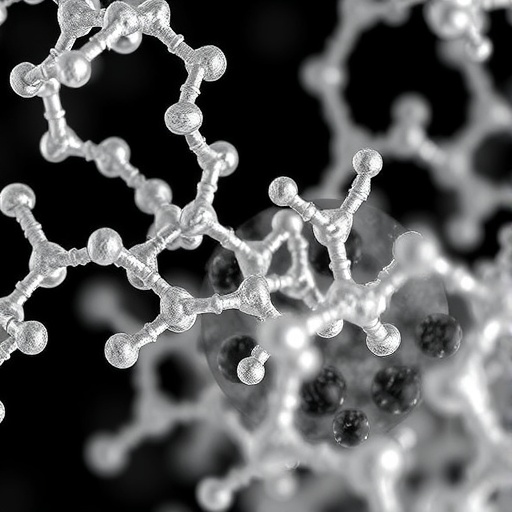
Inspired by principles rooted in materials science, Maruyama and colleagues investigated the possibility of intercepting amyloid-beta aggregation by designing small fragments composed of the mirror-image counterparts of the disease-causing proteins. The concept leverages chirality: just as left and right hands are mirror images fitting precisely with one another, the team hypothesized that left- and right-handed amino acid chains could specifically bind with high affinity, preventing pathological interactions. While proteins and amino acids in nature overwhelmingly adopt a single ‘handedness’—the left-handed form for amino acids—the researchers used artificially engineered right-handed chains to target the naturally left-handed amyloid-beta.
Their systematic exploration, published in Chemistry — A European Journal, utilized small model proteins to parse the molecular factors enabling effective binding between left- and right-handed chains. The findings illuminated specific mechanisms underpinning this chiral recognition, allowing the team to rationally design a short right-handed amino acid chain optimized to latch onto amyloid-beta. Tested under controlled experimental conditions, this interceptor protein outperformed a contemporary leading drug candidate in suppressing amyloid-beta aggregation, signifying a substantial stride forward in therapeutic potential.
Biological efficacy was further validated through cell culture experiments using mouse brain cells. The researchers first confirmed that the right-handed interceptor was non-toxic to neurons, a critical safety consideration. Subsequent application of amyloid-beta alone reduced cell viability by approximately 50%, mirroring disease-like neurotoxicity. However, when cells were simultaneously treated with the chiral interceptor, viability remained comparable to untreated controls, underscoring the therapeutic promise of this molecular design approach in preserving neuronal health by neutralizing toxic amyloid-beta species.
This advancement is not merely confined to Alzheimer’s pathology. Intrinsically disordered proteins implicated in other neurodegenerative disorders, including Parkinson’s disease, and various cancers have historically been labeled “undruggable” due to their structural plasticity. The successful implementation of chirality-guided molecular recognition elegantly circumvents this barrier, transforming an elusive class of proteins into accessible drug targets. Maruyama expresses hope that this rational and systematic strategy can replace the currently prevalent trial-and-error methods, accelerating the discovery of innovative therapeutics.
From a conceptual standpoint, the integration of chirality into drug design bridges a fundamental chemical principle with the most formidable challenges of molecular biology. This interdisciplinary synergy represents a paradigm shift in how disordered proteins can be modulated. Rather than searching for static binding sites, drug molecules can be engineered to exploit the dynamic, mirror-imaged nature of pathological proteins, enabling precise molecular recognition in an otherwise chaotic biochemical environment.
Looking forward, the team envisions further refinement of their peptide design to enhance stability and binding durability in vivo. While their in vitro results are compelling, translation to clinical therapies will necessitate comprehensive studies addressing pharmacodynamics, metabolic stability, and blood-brain barrier permeability. Nonetheless, the foundational insight into chiral interaction provides a versatile platform that could usher in a new generation of drugs targeting diseases once considered intractable.
This innovative work highlights the importance of embracing molecular asymmetry—a nuanced chemical feature often overlooked in therapeutic design. It exemplifies how well-established principles in chemistry can breathe new life into biological problem-solving, underscoring the value of interdisciplinary research. Moreover, it serves as a beacon of hope not only for patients affected by neurodegenerative diseases but also for the scientific community, inspiring further exploration into uncharted molecular territory.
Despite the complexity of amyloid-beta aggregation and the intricate pathology of Alzheimer’s disease, the elegant simplicity of the “left hand-right hand” analogy provides an intuitive visualization of the therapeutic mechanism. This conceptual accessibility might accelerate interest and collaboration among chemists, biologists, and clinicians, fostering a fertile environment for innovation. As scientists continue to decode the molecular language of disease, such approaches could redefine the boundaries of druggability.
In conclusion, the research spearheaded by Maruyama at Kobe University celebrates a turning point in addressing intrinsically disordered proteins via chirality-guided molecular recognition. Although early in its translational journey, this strategy propels the field beyond conventional molecular targeting, offering a blueprint to neutralize pathogenic proteins with precision and specificity. It encapsulates the promise of turning fundamental chemistry into transformative medicine.
Subject of Research: Cells
Article Title: A Chirality-Guided Molecular Recognition Strategy for Targeting Intrinsically Disordered Proteins
News Publication Date: 18-Mar-2026
Web References: 10.1002/chem.70889
Image Credits: Kobe University
Keywords: Alzheimer’s disease, amyloid-beta, intrinsically disordered proteins, chirality, molecular recognition, peptide design, neurodegeneration, drug development, biochemical engineering, chiral amino acids
Tags: Alzheimer’s disease treatment breakthroughamyloid plaque formation inhibitionamyloid-beta protein aggregationbiochemical engineering in neurodegenerative diseaseschallenges in drug design for disordered proteinscognitive decline prevention strategiesinnovative Alzheimer’s therapiesintrinsically disordered proteins targetingKobe University Alzheimer’s researchmolecular chirality in drug designnovel molecular interceptorsprotein aggregation blockers