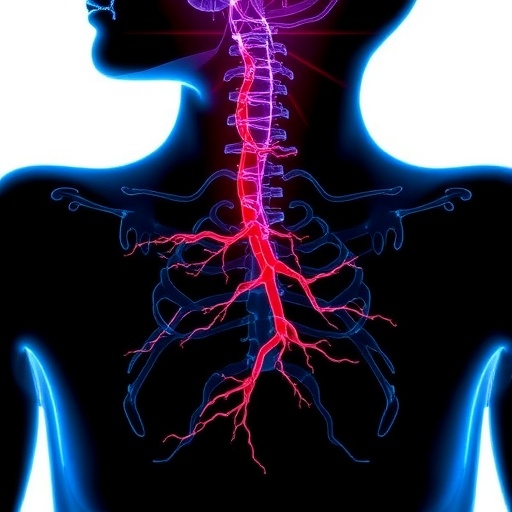
In a groundbreaking study set to redefine our understanding of tissue regeneration and repair, researchers have unveiled intricate mechanisms that govern the plasticity of esophageal progenitor cells. This remarkable discovery sheds light on how intrinsic cellular pathways and the surrounding microenvironment collaboratively orchestrate cellular behavior, ensuring the esophagus maintains its structural and functional integrity throughout life. The findings, published in Nature Communications, promise to transform therapeutic strategies for esophageal diseases and advance regenerative medicine.
The esophagus, a muscular tube critical for transporting food from the mouth to the stomach, experiences constant mechanical stress and environmental insults. To endure such challenges, its epithelial lining relies on a reservoir of progenitor cells capable of rapid replenishment and adaptation. While the regenerative capacity of esophageal progenitors is recognized, the precise factors that fine-tune their plasticity—allowing for dynamic responses to injury or homeostatic demand—have remained elusive until now.
The research team, comprising experts from diverse fields, employed state-of-the-art genetic tracing tools and high-resolution imaging to dissect the behavior of esophageal progenitors in vivo. Their comprehensive analyses revealed that intrinsic mechanisms, such as signaling cascades within the progenitor cells themselves, are finely modulated by extracellular cues from the tissue microenvironment. This dual regulation ensures a balanced response, preventing aberrant proliferation or premature differentiation.
One of the pivotal insights from the study is the identification of specific transcription factors that act as molecular switches within progenitor cells, controlling gene expression profiles linked to plasticity. These transcription factors respond sensitively to biochemical signals originating from neighboring stromal cells and extracellular matrix components, illustrating a sophisticated feedback network. Such internal-external interplay safeguards the progenitors’ capacity to either remain quiescent or activate upon injury.
Furthermore, the researchers highlighted how mechanical forces imposed by swallowing and esophageal motility influence progenitor behavior. Mechanotransduction pathways transduce physical stimuli into intracellular biochemical signals, thereby modulating progenitor cell states. This revelation underscores the significance of biomechanical factors in maintaining esophageal homeostasis, a concept applicable to other mechanically active epithelia.
Another critical aspect of the study involves the characterization of the niche microenvironment. The findings demonstrate that microenvironmental heterogeneity, including gradients of oxygen tension, nutrient availability, and presence of immune cells, dynamically affects progenitor plasticity. Such a nuanced microenvironment not only supports tissue regeneration but may also contribute to pathological states if dysregulated, such as in Barrett’s esophagus or esophageal cancer.
The integration of single-cell RNA sequencing data enabled a fine-grained view of progenitor subpopulations, exposing a spectrum of differentiation states and functional potentials. This heterogeneity within the progenitor pool allows for tailored regenerative responses depending on the nature and extent of tissue insult. Importantly, the study suggests that therapeutic manipulation of specific progenitor subsets could optimize repair while minimizing adverse effects.
The authors also explored how aging impacts the intrinsic and extrinsic regulators of progenitor plasticity. Age-related declines in microenvironment quality and signaling efficiency were shown to impair progenitor responsiveness, contributing to diminished esophageal repair capacity. This insight opens avenues for interventions aimed at rejuvenating the progenitor niche to counteract age-associated esophageal dysfunction.
Crucially, the study delineates several signaling pathways, including Wnt, Notch, and Hedgehog, as central to the control of esophageal progenitor dynamics. These pathways, known for their roles across various regenerative systems, were found to interconnect and produce context-dependent outcomes. The researchers demonstrated that selective modulation of these pathways could recalibrate progenitor activity, offering potential therapeutic benefits.
In one striking set of experiments, the team subjected esophageal tissue models to controlled injury and monitored real-time progenitor responses. The observations revealed rapid activation of stress response pathways coupled with remodeling of the extracellular matrix, facilitating progenitor migration and differentiation to restore the epithelium. These dynamic processes highlight the remarkable adaptability of esophageal progenitors.
The implications of these findings extend beyond fundamental biology. Pathologies such as gastroesophageal reflux disease (GERD), Barrett’s esophagus, and esophageal adenocarcinoma involve disruptions in epithelial regulation. Understanding the plasticity mechanisms governing progenitor cells provides a blueprint for developing precision therapies aimed at restoring healthy tissue architecture and preventing malignant transformation.
Moreover, the research offers promising prospects for tissue engineering. By harnessing knowledge about the intrinsic-extrinsic regulatory networks, bioengineered esophageal constructs could be designed with enhanced regenerative capabilities. Such advancements could revolutionize treatment options for patients requiring esophageal reconstruction following injury or cancer resection.
Collaboration was integral to the success of this multifaceted study. Combining expertise in molecular biology, bioengineering, computational modeling, and clinical gastroenterology allowed for an unprecedented holistic investigation. This interdisciplinary approach exemplifies the direction of contemporary biomedical research, where complex biological questions demand integrated solutions.
Looking forward, the authors propose that future studies examine how disease-associated mutations affect progenitor plasticity and microenvironment interactions. Additionally, longitudinal analyses in human tissues and organoid models could validate and extend the insights gained from animal studies, thereby enhancing translational applicability.
In conclusion, this transformative research uncovers the delicate balance between intrinsic cellular programs and microenvironmental cues that govern esophageal progenitor plasticity. By elucidating these fine-tuned mechanisms, the study not only advances fundamental science but also paves the way for innovative therapies targeting esophageal regeneration and disease. The esophagus emerges from this work as a dynamic organ whose cellular adaptability ensures resilience and sustained function amidst constant challenges.
Subject of Research: Plasticity regulation of esophageal progenitor cells governed by intrinsic molecular mechanisms and microenvironmental signals.
Article Title: Intrinsic mechanisms and microenvironmental cues fine-tune plasticity of esophageal progenitors.
Article References:
Descampe, L., Dassy, B., Charara, F. et al. Intrinsic mechanisms and microenvironmental cues fine-tune plasticity of esophageal progenitors. Nat Commun (2026). https://doi.org/10.1038/s41467-026-70957-4
Image Credits: AI Generated
Tags: cellular adaptation to mechanical stressepithelial progenitor cell behavioresophageal epithelial repair processesesophageal progenitor cell plasticityesophageal tissue regeneration mechanismsgenetic tracing in esophageal researchhigh-resolution imaging of progenitor cellsintrinsic cellular pathways in esophagusmicroenvironmental regulation of esophageal cellsregenerative medicine for esophageal diseasessignaling cascades in progenitor cellstissue microenvironment and cell behavior