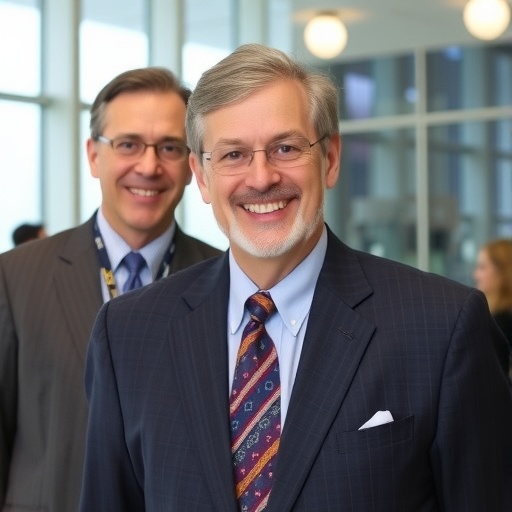
Lawrence Toll, Ph.D., a distinguished professor of biomedical science at Florida Atlantic University’s Charles E. Schmidt College of Medicine and a core member of the FAU Stiles-Nicholson Brain Institute, has been named a senior member of the National Academy of Inventors (NAI). This prestigious designation places Toll among a prominent group of innovators whose patented scientific contributions have significantly advanced various fields of technology, science, and human health. The 2026 induction of senior members marks the largest class in the NAI’s history, comprising 230 emerging inventors from 82 institutions worldwide, collectively holding over 2,000 U.S. patents.
The NAI’s senior member program, inaugurated in 2018, celebrates faculty members who have successfully transformed cutting-edge research into patented technologies with tangible societal or economic benefits. Currently, there are 945 senior members in the academy, holding more than 11,000 patents. This elevated level of recognition reflects the expanding momentum among leading research institutions dedicated to fostering innovation ecosystems that propel scientific discoveries from laboratories into widespread applications and commercial products.
Dr. Toll’s recognition acknowledges decades of groundbreaking research within neuropharmacology, with a primary focus on elucidating the biological underpinnings of pain mechanisms and substance use disorders. His pioneering work on opioid receptors, nociceptin (NOP) systems, and nicotinic acetylcholine receptor subtypes has not only deepened basic scientific understanding but also steered translational drug development toward novel treatments for chronic pain and addiction. Utilizing an integrated approach bridging molecular biology, receptor pharmacology, imaging techniques, behavioral paradigms, and medicinal chemistry, the Toll laboratory innovates at the forefront of identifying new therapeutic targets.
One of the most seminal contributions from Toll’s career includes the co-discovery in 1995 of nociceptin, the endogenous peptide ligand for the NOP receptor, a fourth opioid receptor class member. This discovery has opened expansive research avenues into pain modulation, reward pathways, and potential pharmacotherapies for complex neuropsychiatric conditions, vastly influencing experimental and clinical strategies. Additionally, his lab’s efforts in developing selective ligands targeting specific nicotinic acetylcholine receptor subtypes provide critical insights into addressing nicotine addiction and related substance dependencies.
With a prolific output encompassing over 130 scientific publications and nine issued or pending patents, Toll’s work consistently integrates fundamental mechanistic inquiry with translational implications. His sustained research funding from the National Institute on Drug Abuse over more than three decades underscores the significance and impact of his investigations. Through this support, Toll has advanced our comprehension of receptor dynamics and ligand interactions, laying the groundwork for drug discovery campaigns.
The designation as an NAI senior member underscores Toll’s dual role as both a scientist and technology innovator, emphasizing his contributions to biomedical sciences and the commercial landscape. According to Lewis S. Nelson, M.D., dean of FAU’s Schmidt College of Medicine, Toll’s achievements epitomize the merger of foundational research with therapeutic innovation, spotlighting the vital role of curiosity-driven science in generating real-world medical solutions that enhance global health.
Florida Atlantic University itself boasts an R1 research classification, a testament to its intense focus on high-impact scientific inquiry. FAU’s commitment to advancing discovery is embodied through faculty members like Toll, whose research leadership elevates the institution’s status on the global innovation stage. Gregg Fields, Ph.D., FAU vice president for research, emphasized how Toll exemplifies FAU’s research culture, inspiring both current and emerging scientists through his accomplishments in translating laboratory findings into meaningful healthcare technologies.
Toll’s academic journey reflects a distinguished trajectory, having completed his Ph.D. in biological chemistry at UCLA, followed by postdoctoral training at UCLA and Johns Hopkins University under renowned neuroscientist Solomon Snyder. His subsequent professional appointments include pivotal research roles at SRI International, leading to appointments in France at prestigious institutions such as CNRS and the University of Louis Pasteur. In 2011, prior to joining FAU, he directed neuropharmacology at the Torrey Pines Institute for Molecular Studies, further solidifying his status as an international leader in neuropharmacological research.
Expressing his honor at the NAI senior member recognition, Toll acknowledged the collaborative nature of his work and the collective dedication of his research team, which has driven advancements in understanding and treating pain, addiction, and related disorders. He conveyed enthusiasm about continuing to bridge basic science with therapeutic innovation, leveraging patented discoveries to develop novel treatments that address pressing public health challenges.
The upcoming Senior Member Induction Ceremony, held during the National Academy of Inventors’ 15th annual conference in Los Angeles from June 1 to 4, will formally celebrate Toll and the other members of the 2026 class. This event highlights the ongoing commitment of the global scientific community to nurturing innovation, honoring inventors whose contributions shape the future of medicine, technology, and society.
Lawrence Toll’s achievements resonate broadly with the biomedical and neuroscience fields, demonstrating how focused research into receptor systems and endogenous ligands can transform understanding and treatment of complex health conditions. His work exemplifies the critical interface between discovery science and impactful innovation, offering promising avenues for addressing urgently unmet medical needs relating to chronic pain and addiction, thus representing a remarkable journey from molecular insights to potential clinical breakthroughs.
Subject of Research: Neuropharmacology focused on opioid receptors, nociceptin (NOP) systems, nicotinic acetylcholine receptors, pain modulation, and addiction therapeutics.
Article Title: Renowned Neuropharmacologist Lawrence Toll Named Senior Member of National Academy of Inventors for Pioneering Work on Pain and Addiction
News Publication Date: Not specified in the source document.
Web References:
Florida Atlantic University Directory – Lawrence Toll
Charles E. Schmidt College of Medicine
FAU Brain Institute
National Academy of Inventors
Image Credits: Credit: Alex Dolce, Florida Atlantic University
Keywords: Neuropharmacology, nociceptin, NOP receptor, opioid receptors, nicotinic acetylcholine receptors, pain research, addiction, drug discovery, biomedical innovation, translational neuroscience, molecular neuropharmacology, chronic pain therapies.
Tags: academic innovation ecosystemsadvancing pain mechanism understandingbrain institute scientific advancementsCharles E. Schmidt College of Medicine inventionsFAU biomedical science innovationLawrence Toll PhD recognitionNational Academy of Inventors senior memberneuropharmacology research breakthroughsnociceptin system discoveriesopioid receptor scientific contributionspatented medical technologiessubstance use disorder research