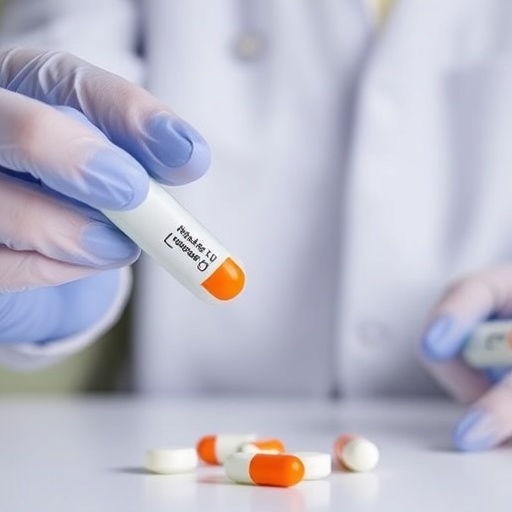
In an era where counterfeit medications pose a severe threat to global health, researchers have unveiled an innovative and cost-effective solution to differentiate authentic drugs from fraudulent ones. This breakthrough technology centers around a device that interrogates the dissolution properties of pills—transforming a simple dissolution process into a digital “fingerprint” capable of verifying drug legitimacy with remarkable accuracy.
The scale of the counterfeit drug crisis cannot be overstated, with the World Health Organization estimating that roughly 10% of medications worldwide, including critical treatments like cancer therapies and contraceptives, are either fake or substandard. Though predominantly a challenge in developing countries, counterfeit medicines have infiltrated other markets, including illicit weight-loss and anti-aging drug sectors in developed nations such as the United States. The consequences of these fraudulent products can be devastating; adulterated or diluted drugs, such as illicit Botox or GLP-1 inhibitors, have resulted in severe injuries and fatal outcomes.
To tackle this global issue, a team led by Professor William Grover at the University of California, Riverside, harnessed a clever yet inexpensive approach grounded in the fundamental principles of pharmaceutical dissolution. The principal insight is that drugs manufactured by legitimate producers feature highly controlled production processes, ensuring that each pill dissolves in water at a characteristic rate. In contrast, counterfeit drugs, produced under uncontrolled or illicit conditions, display dissolution profiles that significantly deviate, thus betraying their fraudulent nature.
At the heart of their detection system lies an infrared sensor, initially designed for robotic toys that track lines on surfaces but ingeniously repurposed to monitor pill dissolution in a water medium. As a pill dissolves in the water-filled vessel, microscopic particles are released, and the sensor records their distribution and timing—constituting a unique disintegration fingerprint. This fingerprint captures subtle variabilities in the pill-formulation matrix including the excipients, binders, and fillers that collectively dictate dissolution kinetics, providing a fingerprint specific to a manufacturer or brand.
Unlike traditional dissolution testing that requires expensive laboratory instruments, the Grover team’s device boasts an affordability factor that could drive broad accessibility. Manufacturing costs under $30—and potentially as low as $5—mean such a tool could be widely deployed in pharmacies, clinics, and even by regulatory bodies, particularly in resource-limited settings. The researchers have also made their designs open-source to spur adoption and further innovation in the field.
Innovatively, this device translates the dissolution process into a digital signature rather than relying solely on dissolution rate thresholds. The researchers demonstrated the efficacy of their system by analyzing over 30 different medications, encompassing antibiotics, vitamins, opioids, and common over-the-counter painkillers. They successfully identified 90% of the tested pills through their distinctive disintegration fingerprints, underscoring the method’s precision and robustness.
A compelling extension of their work involved distinguishing between branded and generic drug versions. Despite having identical active ingredients, differences in excipients and manufacturing processes cause subtle changes in dissolution behavior. The device easily differentiated between Bayer aspirin and its generic counterpart, illustrating the method’s sensitivity to manufacturing nuances and potential application in quality assurance.
The researchers further tested geographical variability by collecting samples from multiple U.S. and Canadian locations, revealing that pills from the same product shared similar fingerprints regardless of purchase point. However, subtle differences in formulations made for different national markets were detectable, opening opportunities to monitor cross-border product authenticity and supply consistency.
This technological advance carries significant public health implications. The Centers for Disease Control and Prevention (CDC) warns about risks associated with medications ordered from illegitimate online pharmacies, where counterfeit products abound. The device offers a practical safeguard by facilitating on-the-spot verification of drug authenticity, thereby reducing the likelihood of patients consuming ineffective or harmful counterfeit medicines.
Moreover, the technology’s potential extends beyond deliberate fraud. Manufacturing mishaps, such as batch contamination or ingredient mislabeling, can lead to substandard drugs with fatal consequences. The fingerprinting device could act as an early warning tool, identifying irregular pills resulting from honest errors before they reach consumers.
One of the most urgent applications envisioned by Grover and his team involves the detection of counterfeit antimalarials. Malaria, a life-threatening parasitic disease prevalent in tropical regions, is treatable with specific medications. However, counterfeiters exploit this necessity by producing pills that mimic authentic packaging but lack active compounds entirely, posing a lethal risk to vulnerable populations. The device’s ability to rapidly verify drug integrity could become a critical weapon against this sinister abuse.
Looking to the future, the researchers aim to refine their device and expand the disintegration fingerprint library, increasing the range of identifiable drugs and improving detection algorithms. Such developments could empower healthcare providers, border security, and regulatory agencies worldwide with a low-cost, scalable tool to combat the global menace of fake medications.
“The impact of fake drugs is as reprehensible as it gets—those who endanger lives by selling counterfeit medicines deserve relentless opposition,” Grover reflects. By transforming simple dissolution kinetics into a powerful forensic instrument, the team has planted a new flag in the fight against pharmaceutical fraud, promising safer medicines and better health outcomes across the globe.
Subject of Research: Low-cost detection of counterfeit and substandard solid-dosage pharmaceuticals through dissolution fingerprinting.
Article Title: Disintegration Fingerprinting: A Low-Cost and User-Friendly Tool for Identifying Substandard and Falsified Solid-Dosage Medicines
News Publication Date: 19-Mar-2026
Web References:
10.1021/acs.analchem.5c05418
Image Credits: William Grover/UCR
Keywords: Drug safety, counterfeit medications, pharmaceutical dissolution, disintegration fingerprinting, counterfeit drug detection, biomedical engineering, drug quality assurance, substandard pharmaceuticals, open-source diagnostic tool, antimalarial verification
Tags: anti-aging drug fraudauthentic drug verification technologycost-effective drug authenticationcounterfeit contraceptives riskcounterfeit medication detectiondigital drug fingerprintingglobal counterfeit drug crisisillicit weight-loss drug dangersimpact of fake cancer therapiespharmaceutical dissolution testingpharmaceutical quality control methodsWHO counterfeit drug statistics