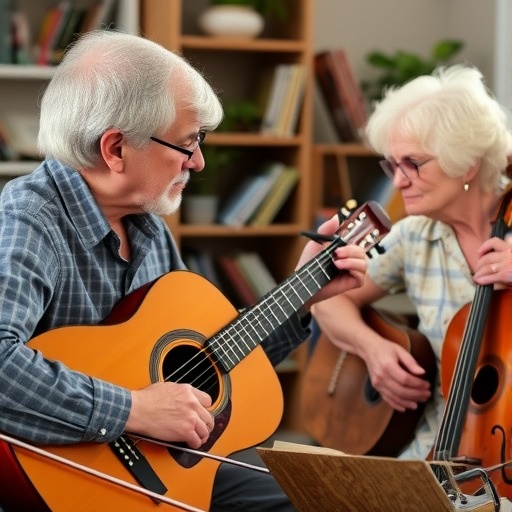
In an era where dementia continues to pose profound challenges to healthcare systems globally, innovative approaches offer new hope for alleviating the often debilitating neuropsychiatric symptoms associated with this condition. A compelling study recently published in BMC Geriatrics delves into the role of music-based care interventions as a therapeutic modality to combat neuropsychiatric symptoms in nursing home residents suffering from both dementia and chronic pain. This research not only highlights the burgeoning intersection between music therapy and geriatric care but also provides robust empirical evidence supporting its efficacy, marking a critical step forward in non-pharmacological treatment options.
Dementia affects millions worldwide, often accompanied by a spectrum of neuropsychiatric symptoms including agitation, depression, anxiety, and psychosis. These symptoms severely compromise the quality of life for patients and greatly burden caregivers and healthcare institutions. Traditional pharmacological treatments, while useful, often come with significant side effects and limited efficacy, particularly in nursing home environments where patients have complex comorbidities. This underscores the urgent need for alternative, non-invasive therapies that can be seamlessly integrated into routine care while minimizing adverse effects.
The study in question employs a cluster-randomized controlled design, lending high methodological rigor to the examination of music-based interventions. Nursing home residents with diagnosed dementia and reported pain were systematically assigned to either the music intervention group or to standard care clusters, allowing researchers to parse out the specific impacts of music on neuropsychiatric symptoms. The study’s secondary analysis focuses on the nuanced effects music therapy may exert beyond immediate behavioral changes, scrutinizing long-term modifications in symptom severity and patient well-being.
Central to this intervention is the tailored use of music programs, designed to resonate with participants’ personal histories and preferences—a factor believed to facilitate emotional engagement and cognitive stimulation. This approach is informed by a growing body of neuroscientific research demonstrating music’s capacity to activate brain regions involved in emotion regulation, memory retrieval, and neuroplasticity. By harnessing these mechanisms, music therapy may offer therapeutic benefits that extend beyond momentary distraction, potentially altering the neural pathways implicated in neuropsychiatric symptomology.
The findings from this secondary analysis are illuminating. Participants subjected to the music intervention exhibited statistically significant reductions in symptoms such as agitation and depression compared to the control group. Moreover, the study notes an improvement in pain management, a critical factor as pain is known to exacerbate behavioral and psychological disturbances in dementia patients. These results suggest that music therapy not only calms but may modulate the underlying perception of pain, thus offering a dual-action strategy for symptom management.
One of the remarkable aspects of this study is its focus on the integration of music therapy into everyday care routines within nursing homes. Instead of isolated sessions, music programs were embedded within standard caregiving practices, enhancing the feasibility and sustainability of the intervention. Caregivers received training in delivering music interventions, highlighting an important shift toward empowering healthcare workers with creative, low-cost tools that augment their caregiving repertoire and reduce reliance on pharmacological approaches.
The researchers also address the challenges intrinsic to conducting randomized controlled trials in nursing home settings. Issues such as participant attrition due to cognitive decline, variability in caregiver engagement, and the subjective nature of neuropsychiatric symptom assessments were meticulously managed through rigorous trial design and continuous monitoring. The cluster randomization approach minimized contamination risks between intervention and control groups, bolstering the validity of the results.
Importantly, this study contributes to a nuanced understanding of the biopsychosocial model in dementia care. By demonstrating that sensory and emotional stimuli provided by music can yield measurable improvements in neuropsychiatric symptoms, the research underscores the interconnectedness of mind, brain, and social environment. It encourages a holistic view, where psychiatric symptoms are not merely managed pharmaceutically but are approached through multisensory and psychosocial interventions that respect patient individuality.
Future directions suggested by the authors include exploring the differential effects of various genres and modalities of music, the frequency and duration of therapy sessions, and the potential synergistic impact of pairing music therapy with other non-pharmacological interventions like physical exercise or cognitive stimulation. Moreover, there is an imperative to expand investigations into diverse populations and settings, to validate generalizability and optimize intervention protocols.
The implications of this research for clinical practice and policy are profound. As the world’s population ages and dementia prevalence escalates, cost-effective and scalable treatments are essential. Music-based interventions, due to their accessibility, low risk, and multidimensional benefits, present an attractive solution that aligns with person-centered care principles. Policymakers and healthcare administrators might consider leveraging such interventions to improve outcomes, reduce hospitalization rates linked to behavioral crises, and enhance overall quality of life for residents.
Additionally, the study highlights the importance of caregiver involvement and support in implementing therapeutic innovations. Caregiver burden in dementia care is substantial, and tools that empower caregivers with effective strategies can mitigate stress and burnout, indirectly benefiting patient care. The positive reception of music therapy within this framework has the potential to foster a more compassionate and responsive care environment.
Neuroscientifically, the findings resonate with a growing appreciation for the sensory and emotional dimensions of neurodegenerative diseases. Music’s unique capacity to evoke memories and emotional responses—even in advanced dementia—suggests preserved neural circuits that can be therapeutically harnessed. This aligns with emerging research in neuroplasticity, suggesting that targeted sensory interventions might slow cognitive decline or ameliorate symptom expression by reinforcing adaptive neural networks.
To further elucidate the mechanisms at play, future research could incorporate neuroimaging and biomarkers to observe brain activity changes associated with music therapy. Such investigations would bridge clinical observations with biological substrates, offering more precise therapeutic targets and personalized intervention approaches.
Given the mounting evidence, the adoption of music-based care interventions may represent a paradigm shift in dementia care. This study’s robust design and meaningful findings provide a persuasive case for integrating creative modalities into standard nursing home practices, heralding a future where music is not merely entertainment but a foundational component of compassionate, effective clinical care.
In summary, the groundbreaking work conducted by Myrenget et al. sheds critical light on the vast potential of music therapy to transform neuropsychiatric symptom management for dementia patients enduring pain in nursing homes. Their research exemplifies how interdisciplinary collaboration—melding gerontology, neuroscience, psychology, and music therapy—can yield innovative and impactful healthcare solutions. As the scientific community continues to unravel dementia’s complexities, music emerges as a powerful, healing language, capable of bridging cognitive decline and emotional well-being in profound and measurable ways.
Subject of Research: The effects of music-based interventions on neuropsychiatric symptoms in nursing home residents with dementia and pain.
Article Title: The effect of a music-based care intervention on neuropsychiatric symptoms: secondary analysis of a cluster-randomised controlled study in nursing home residents with dementia and pain.
Article References:
Myrenget, M.E., Sandvik, R., Borchgrevink, P. et al. The effect of a music-based care intervention on neuropsychiatric symptoms: secondary analysis of a cluster-randomised controlled study in nursing home residents with dementia and pain. BMC Geriatr (2026). https://doi.org/10.1186/s12877-026-07301-4
Image Credits: AI Generated
Tags: agitation reduction through music therapycluster-randomized controlled trials in geriatricsdementia and chronic pain treatmentevidence-based music interventionsgeriatric neuropsychiatric symptom reliefimproving quality of life in dementia patientsinnovative dementia care strategiesmusic therapy for dementiamusic-based care in nursing homesneuropsychiatric symptom management in elderlynon-invasive dementia therapiesnon-pharmacological interventions for dementia