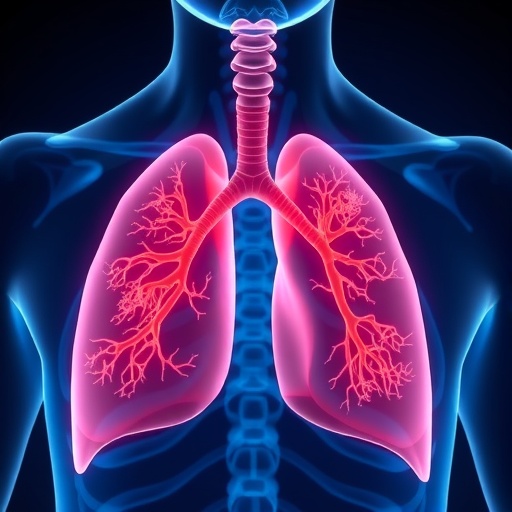
In a groundbreaking advance in pulmonary medicine, researchers have unveiled promising new insights into the biological mechanisms that could accelerate lung regeneration following severe surgical removal of lung tissue. This study, conducted by a team led by Hirsch et al., rigorously investigates the effects of a prolyl hydroxylase inhibitor, FG-4592, on compensatory lung growth (CLG) in an extreme murine model known as extended pneumonectomy (EP). EP involves the surgical removal of not only the entire left lung but also the critical right caval lobe, representing one of the most severe models of lung tissue loss currently used to mimic human pulmonary hypoplasia after surgical intervention.
Pulmonary hypoplasia, characterized by insufficient lung development, is a major challenge in pediatric and adult patients who have undergone lung resection for congenital anomalies such as lobar emphysema or sequestration. These conditions frequently result in substantial tissue loss and a diminished ability for the lung to regenerate effectively, severely compromising pulmonary function and patient outcomes. In this context, understanding and enhancing the mechanisms underpinning CLG is of paramount importance for developing therapeutic strategies that can promote lung regeneration and restore respiratory efficiency.
Previous work from Hirsch’s laboratory demonstrated that FG-4592, a pharmacological agent that inhibits prolyl hydroxylase and thereby stabilizes hypoxia-inducible factor (HIF), significantly accelerates CLG after unilateral left pneumonectomy (LP). The current study extends this research by challenging the regenerative capacity of the lung in a model that exhibits markedly impaired compensatory growth due to the combined removal of multiple lung lobes—a condition that more closely resembles the clinical scenario in patients with severe tissue loss.
The study’s methodology involved careful surgical removal of the left lung and the right caval lobe from mice, creating an extreme deficit in pulmonary tissue. Following this procedure, some animals received treatment with FG-4592 while others served as controls. The researchers deployed a robust array of molecular and histological techniques, including immunohistochemistry, gene expression analyses, and morphometric assessments, to quantify the degree and quality of compensatory lung growth as well as to dissect the underlying signaling pathways modulated by the drug.
One of the most striking findings stems from the observed downregulation of pigment epithelium-derived factor (PEDF) following FG-4592 administration. PEDF, a multifunctional glycoprotein known to exert anti-angiogenic and anti-inflammatory effects, had previously been implicated in limiting tissue regeneration within various organs. The reduction of PEDF in treated animals correlated strongly with enhanced markers of lung regeneration, including increased alveolarization and vascular remodeling, suggesting a crucial role for this factor as a molecular brake on lung tissue regrowth.
Mechanistically, the study provides compelling evidence that FG-4592’s stabilization of HIF optimizes the lung’s microenvironment to promote cell proliferation and angiogenesis, fundamental processes for effective compensatory growth. The hypoxia-induced signaling triggered by FG-4592 not only drives these biological phenomena but also appears to orchestrate a coordinated downregulation of PEDF, thereby releasing inhibitory signals and amplifying tissue regeneration dynamics.
Another significant aspect of the research is its focus on the extended pneumonectomy model itself. By pushing the limits of lung compensatory growth, this model unmasked critical biological bottlenecks that were not evident in simpler resection models. The diminished basal CLG seen after EP highlights the clinical challenge faced by patients with substantial lung tissue loss, emphasizing that regenerative therapies must be robust enough to overcome profound growth deficits.
Histological examinations further revealed that FG-4592-treated mice exhibited restoration of lung architecture, including greater alveolar surface area and increased capillary density. This morphological recovery is essential not only for improving respiratory mechanics but also for enhancing gas exchange efficiency, a key factor determining clinical recovery after major lung surgery. The ability to foster meaningful structural regeneration positions FG-4592 as a potential pharmacological cornerstone in post-resection lung therapy.
The translational significance of this research cannot be overstated. Currently, patients undergoing extensive lung resection face limited options for enhancing tissue regrowth aside from supportive care and mechanical ventilation. FG-4592 and similar prolyl hydroxylase inhibitors offer a promising avenue to pharmacologically harness endogenous regenerative pathways, potentially reducing morbidity and improving long-term pulmonary function. The study’s results may pave the way for clinical trials evaluating these agents in humans, particularly pediatric patients afflicted with congenital lung deficiencies.
Importantly, the investigation also addresses safety considerations by evaluating markers of inflammation and tissue fibrosis post-treatment. The absence of exacerbated inflammatory responses or fibrotic remodeling in FG-4592-treated animals supports the notion that the drug facilitates physiological regeneration rather than pathological remodeling, a critical distinction for advancing clinical applications.
The implications of PEDF downregulation merit further exploration, as modulating this factor might represent an adjunct or alternative therapeutic target. Future research pathways stemming from this work could include the development of PEDF inhibitors or gene therapy approaches aimed at transiently suppressing its expression to boost lung regeneration in conjunction with HIF-stabilizing agents.
Given the complexity of lung regeneration and the orchestration of cellular and molecular players involved, the study underscores the necessity of holistic approaches that address vascular, epithelial, and mesenchymal components. The integration of FG-4592 into such regenerative strategies reflects a sophisticated understanding of lung biology and represents an exciting frontier in pulmonary medicine innovation.
The role of hypoxia and HIF signaling in tissue regeneration is a rapidly evolving domain, and this work adds significant depth by demonstrating its functional impact in the context of severe lung injury. These insights reinforce the paradigm that controlled activation of adaptive responses to oxygen deprivation can be therapeutically leveraged to enhance organ repair and recovery.
In conclusion, Hirsch et al. provide compelling evidence that FG-4592-mediated downregulation of PEDF enhances compensatory lung growth in a challenging and clinically relevant murine model of extended pneumonectomy. This landmark study not only advances our understanding of lung regeneration biology but also opens new therapeutic horizons for patients suffering from congenital and acquired pulmonary hypoplasia. As pharmaceutical development in this area accelerates, the prospect of pharmacologically induced lung regrowth moves closer to reality, promising transformative impacts on respiratory medicine and patient care.
The research community eagerly anticipates further translational efforts and clinical evaluations building on these findings. Ultimately, integrating molecularly targeted drugs like FG-4592 into clinical protocols could revolutionize post-resection recovery, offering hope and improved quality of life for countless individuals impacted by severe lung diseases.
Subject of Research: Compensatory lung growth enhancement following extensive lung resection using prolyl hydroxylase inhibitor FG-4592 in a murine model of extended pneumonectomy.
Article Title: Downregulation of pigment epithelium-derived factor increases compensatory lung growth in mice after extended pneumonectomy.
Article References:
Hirsch, T.I., Tsikis, S.T., Fernandes, D. et al. Downregulation of pigment epithelium-derived factor increases compensatory lung growth in mice after extended pneumonectomy. Pediatr Res (2026). https://doi.org/10.1038/s41390-026-04832-9
Image Credits: AI Generated
DOI: 18 March 2026
Tags: compensatory lung growth in murine modelscongenital lung anomalies therapyextended pneumonectomy effectslobar emphysema lung regenerationlung regeneration after surgerylung tissue regeneration mechanismspharmacological enhancement of lung regrowthprolyl hydroxylase inhibitor FG-4592pulmonary hypoplasia treatment strategiesrespiratory function restoration after lung resectionsequestration lung tissue repairsevere lung tissue loss recovery