In a groundbreaking revelation poised to redefine our understanding of skin immunology, researchers have elucidated how the skin, beyond merely serving as a physical barricade, orchestrates systemic immune responses through a sophisticated biochemical dialogue. The converging efforts of scientists from top Chinese institutions—the Chinese Academy of Medical Sciences Institute of Dermatology, Tsinghua University’s School of Pharmaceutical Sciences, and Central South University—have unveiled a dual-activation mechanism of the transient receptor potential vanilloid 3 (TRPV3) channel in keratinocytes, shedding light on the long-standing enigma of how localized skin events precipitate robust, systemic antibody production.
At the crux of this discovery is the metabolic intermediate farnesyl pyrophosphate (FPP), an endogenous product of the mevalonate pathway within keratinocytes. Upon skin insult, whether by microbial invasion or ultraviolet light exposure, the unfolded protein response triggers the transcription factors SREBF, driving rapid intracellular accumulation of FPP. This metabolite directly engages TRPV3’s intracellular domains, specifically residues R416 and K581. The binding activates TRPV3 to permit calcium influx, effectively igniting a cascade of intracellular signaling pathways pivotal to immune communication.
Two distinct calcium-dependent signaling axes are engaged downstream of TRPV3 activation. The first involves the classical Ca²⁺-calmodulin-calcineurin-NFAT pathway, a well-characterized transduction route that culminates in transcriptional regulation of immune effector genes. Parallelly, the PYK2-RAS-ERK signaling module is activated, further amplifying the cellular response. These complementary pathways synergistically upregulate pro-inflammatory mediators IL-6 and CCL20 within keratinocytes, cytokines essential for modulating the adaptive immune landscape.
IL-6, beyond its pleiotropic roles, fosters differentiation of T follicular helper (Tfh) cells, a lynchpin for germinal center formation and B cell maturation. Simultaneously, CCL20 acts as a chemotactic agent, recruiting migratory dendritic cells to draining lymph nodes, setting the stage for antigen presentation and T-B cell collaboration. This concerted immune orchestration facilitates potent germinal center responses, characterized by robust production of pathogen-specific IgG antibodies alongside the generation of long-lived memory B cells and plasma cells, thereby encoding durable systemic immunity from an ostensibly localized skin event.
In a companion pharmacological study launched simultaneously, the team identified and characterized two aromatic plant-derived molecules—Carvacrol and Camphor—as titratable organic adjuvants capable of mimicking the endogenous activation of TRPV3 with unique modality. These compounds, renowned for their olfactory properties, engage TRPV3 through an activation mechanism distinct from the metabolic FPP pathway. Their administration alongside antigens in murine models resulted in significant dose-responsive amplification of antigen-specific IgG titers without inducing toxic side effects.
This sensory mode of TRPV3 activation by fragrant molecules underscores the channel’s molecular versatility as a nexus integrating metabolic and environmental cues. By eliciting calcium influx and upregulating cytokines IL-6, CCL20, and TNF, these organic agonists potentiate immune signaling through a non-redundant, context-dependent pathway, revealing an elegant biological convergence of internal metabolic alarms and external sensory inputs.
Professor Wanli Liu of Tsinghua University aptly encapsulated this novel paradigm, noting, “Our findings illustrate a sophisticated calibration system wherein endogenous metabolic intermediates and exogenous sensory modulators converge on TRPV3 to finely tune immune responses. The ability of simple, natural fragrant molecules to quantitatively augment antibody production opens transformative prospects in vaccine adjuvant development.”
Beyond the immediate implications for enhancing vaccine efficacy, especially for mucosal and anti-infective immunizations, these insights open therapeutic avenues for autoimmune pathologies like systemic lupus erythematosus (SLE). Dysregulated activation of this keratinocyte-TRPV3-IL-6-CCL20 axis likely contributes to the aberrant germinal center reactions and pathogenic autoantibody production observed in such disorders, positioning these molecules as attractive targets for immunomodulation.
Importantly, this dual-activation framework signifies a departure from conventional adjuvants, many of which provoke indiscriminate inflammation and adverse effects. The organic TRPV3 agonists present a strategy for localized, titratable enhancement of humoral immunity with precision—boosting systemic IgG responses while minimizing widespread inflammatory sequelae.
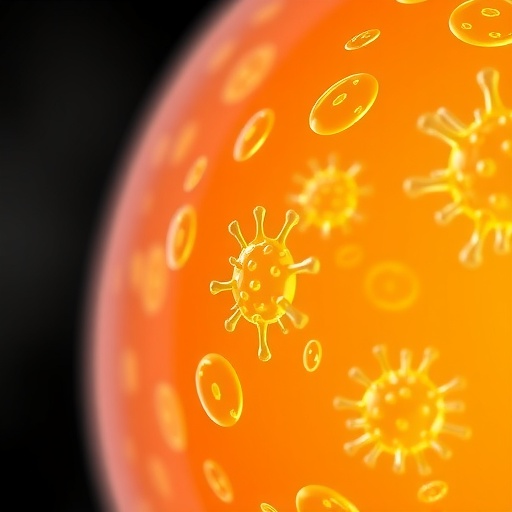
The hand-painted oil depiction of the epidermal microenvironment accompanying these studies artistically illustrates this multilayered immune interplay. The crimson basal layer symbolizes keratinocyte accumulation of FPP and the initiation of TRPV3 signaling, releasing luminous calcium-dependent mediators. Above, immune cell–like orbs depict dendritic cell recruitment and lymphocyte aggregation within germinal centers, embodying the cellular choreography central to systemic antibody responses.
These complementary investigations—one decoding the endogenous metabolic signaling mechanisms and the other revealing pragmatic applications via plant-derived adjuvants—mark a seminal advance in immunology. They forge a conceptual and mechanistic bridge connecting skin barrier biology, metabolic pathways, ion channel signaling, and adaptive immunity.
This emergent paradigm not only broadens fundamental understanding of skin’s immunological functions but also ushers in a transformative class of organic adjuvants that harness the innate sensorial properties of TRPV3. The potential for rapid translation into safer, more effective vaccines and targeted immune therapies heralds a new chapter in immunopharmacology and dermatological immunology.
The implications stretch further to therapeutic modulation of autoimmune diseases driven by hyperactive germinal center dynamics. Selective targeting of TRPV3 or its downstream mediators could offer precision immunomodulation, attenuating pathogenic B cell responses while preserving protective immunity.
In sum, this research delineates a sophisticated system where keratinocytes act as sentinels integrating metabolic distress signals and environmental chemical cues via TRPV3, thereby orchestrating systemic immune defenses. This dual-sensing platform exemplifies nature’s ingenuity in leveraging endogenous and exogenous signals to calibrate immune homeostasis, with profound translational potential for vaccine science and autoimmune disease intervention.
Subject of Research: Animals
Article Title: Fragrant TRPV3 agonists act as titratable organic adjuvants to amplify antigen-specific IgG response
News Publication Date: 5-Mar-2026
References: DOI: 10.1007/s44466-026-00033-5
Image Credits: Prof. Haijing Wu from Central South University, Hunan, China
Keywords: Immunology, Immune response, Vaccination, Antibodies, Skin cells, Ion channels, Signal transduction, Plants, Autoimmune disorders, Dermatology
Tags: calcium signaling in immunitycalcium-calmodulin-calcineurin-NFAT pathwayfarnesyl pyrophosphate roleimmune activation through skin cellskeratinocyte immune responsemevalonate pathway in skinskin immune system mechanismsskin immunology researchsystemic antibody productionTRPV3 channel activationunfolded protein response skinvaccine adjuvant development