In an era marked by rapid advancements in medical technology and shifting healthcare policies, the landscape of neonatal intensive care units (NICUs) in the United States has experienced profound changes. A groundbreaking study published in the Journal of Perinatology reveals significant trends in both admissions and associated costs for neonatal intensive care across US children’s hospitals from 2017 through 2022. This in-depth analysis not only sheds light on evolving patterns in neonatal care but also raises critical questions about resource allocation, healthcare equity, and future policy directions.
At the heart of neonatal healthcare, NICUs serve as critical environments for the survival and development of the most vulnerable patients—newborns requiring specialized, high-level care. Over the five-year period under scrutiny, the study meticulously tracked admission rates, lengths of stay, and financial expenditures associated with NICU services. These data points provide a vital barometer for gauging both healthcare demand and the economic pressures confronting pediatric hospitals nationwide.
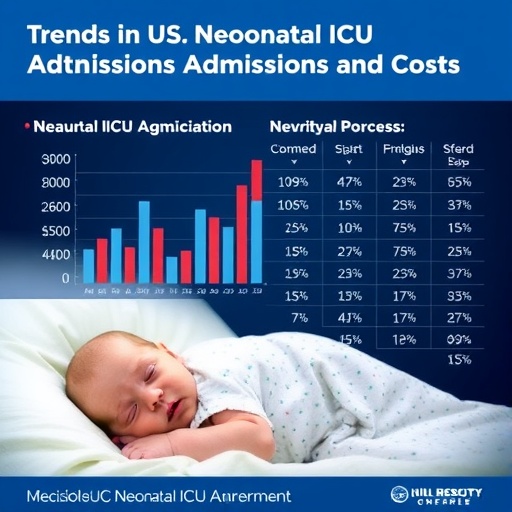
One of the study’s most striking revelations is the steady increase in NICU admissions during the years analyzed. This trend compels a deeper examination of underlying factors such as rising incidences of preterm births, congenital anomalies, and perinatal complications that necessitate intensive care. The surge in admissions illuminates an intensifying demand for neonatal specialists, advanced life-support technologies, and comprehensive support services within hospitals—a demand that continues to stretch the limits of existing infrastructure.
Parallel to the increase in admission rates, the research highlights a proportional escalation in the cumulative costs associated with NICU care. Neonatal intensive care remains one of the most resource-intensive segments of pediatric healthcare, involving sophisticated monitoring systems, respiratory support, and multidisciplinary expert teams. The correlation between rising admissions and escalating costs underscores the challenging economics of providing cutting-edge care while striving to maintain financial sustainability in children’s hospitals.
Delving deeper, the study disaggregates cost data by length of stay and clinical complexity, painting a nuanced picture of expenditure drivers. Prolonged NICU stays, often necessitated by severe prematurity or complex medical diagnoses, disproportionately inflate overall costs. Additionally, the implementation of novel therapeutic modalities—while improving survival and long-term outcomes—frequently brings heightened expenses, raising pressing questions about cost-benefit balances in neonatal medicine.
Geographic variations also emerge as a compelling aspect of the findings. Hospitals located in different US regions displayed disparate trends in admission rates and associated costs, reflective of localized population demographics, prenatal healthcare access, and socioeconomic determinants. These disparities illuminate the broader challenges of ensuring equitable neonatal care across diverse communities, emphasizing the need for targeted policy interventions to bridge these gaps.
A particularly noteworthy aspect of this comprehensive review is its timeframe, enclosing the initial years of the COVID-19 pandemic. The pandemic’s indirect impacts on maternal and neonatal health services—including care delays, staffing constraints, and fluctuating birth outcomes—likely contributed to some of the observed changes in NICU utilization. Although the study does not isolate these pandemic effects explicitly, the temporal overlap invites further investigative efforts to quantify their lasting consequences on neonatal critical care.
From a health systems perspective, the research underscores the importance of strategic resource planning to accommodate the rising demand. Pediatric hospitals are increasingly challenged to balance scaling up NICU capacity with maintaining quality care standards. Investments in advanced monitoring technologies, telemedicine applications, and neonatal transport networks emerge as potential solutions to manage patient influx while optimizing clinical workflows.
Importantly, this rich dataset serves as a clarion call for policymakers and healthcare leaders to revisit funding frameworks dedicated to neonatal care. Enhanced reimbursement models that recognize the complexity and intensity of NICU services are crucial to prevent financial strain that could undermine care delivery. Furthermore, these findings amplify the urgency of expanding preventive perinatal healthcare initiatives aimed at reducing the incidence of high-risk births requiring intensive neonatal interventions.
The study also catalyzes renewed focus on family-centered care and post-discharge support infrastructure. As NICU admissions grow and lengths of stay increase, the cumulative psychosocial and financial burdens borne by families escalate correspondingly. Developing integrative care models that provide comprehensive support from admission through convalescence could mitigate long-term adverse outcomes for both infants and their caregivers.
Technological innovation, as illuminated by the data trends, will undoubtedly play a transformative role in the future of neonatal intensive care. Emerging modalities such as artificial intelligence-guided clinical decision support, remote monitoring, and precision medicine approaches hold promise to enhance diagnostic accuracy and personalize treatment plans. However, integrating these advances sustainably requires ongoing assessment of cost-effectiveness alongside clinical efficacy.
Further research prompted by these findings may explore longitudinal outcomes of infants admitted to NICUs amidst these changing trends. Tracking neurodevelopmental trajectories, morbidity rates, and healthcare utilization beyond initial hospitalization will be pivotal to comprehensively evaluate the long-term impact of NICU care dynamics on pediatric populations.
In conclusion, this seminal study provides an indispensable lens through which to understand the evolving epidemiology and economics of neonatal intensive care in the United States. The observed upward trends in admissions and costs encapsulate both the successes in saving vulnerable newborn lives and the escalating challenges confronting healthcare systems. Stakeholders across clinical, administrative, and policy spheres must engage collaboratively to translate these insights into actionable strategies that ensure equitable, high-quality, and financially viable neonatal intensive care for generations to come.
Subject of Research: Trends in neonatal intensive care unit admissions and associated healthcare costs in US children’s hospitals from 2017 to 2022.
Article Title: Trends in admissions and costs for neonatal intensive care in US children’s hospitals, 2017–2022.
Article References:
Vance, A.J., Richardson, T., King, B. et al. Trends in admissions and costs for neonatal intensive care in US children’s hospitals, 2017–2022. J Perinatol (2026). https://doi.org/10.1038/s41372-026-02619-8
Image Credits: AI Generated
DOI: 10.1038/s41372-026-02619-8
Tags: congenital anomalies in newbornsequity in neonatal healthcare accesshealthcare policy neonatal intensive carehealthcare resource allocation neonatal careneonatal healthcare costs analysisneonatal intensive care unit trendsneonatal survival rates USNICU length of stay trendspediatric hospital NICU expendituresperinatal complications NICU carepreterm birth NICU impactUS NICU admissions 2017-2022