Christian Cazares: Addressing the Class Inequities Embedded in Science
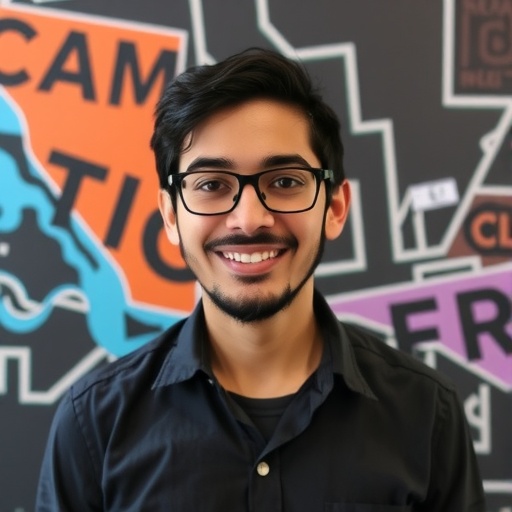
Christian Cazares, PhD, a postdoctoral researcher at the University of California, San Diego, exemplifies a transformational journey from personal adversity to pioneering scientific innovation. Raised in the border town of Calexico, California, where economic hardship was widespread, Cazares intimately understands the multifaceted barriers that constrain access to scientific careers and healthcare. His decade-long mission has been to develop research tools and systemic interventions that dismantle these barriers, thereby creating more equitable pathways for the next generation of scientists and patients alike.
Growing up in a community where over 80 percent of children qualified for free lunch programs, Cazares confronted realities that many researchers never experience firsthand. These early experiences ingrained a profound awareness of how socio-economic conditions and geographical isolation shape life trajectories. This recognition crystallized during a poignant family visit when Cazares witnessed his nephew’s struggles to access specialized autism care. The nearest expert was located hours away, making appointments financially and logistically prohibitive. Such geographic and economic constraints underscored a painful truth: health outcomes are too often determined by the zip code into which one is born.
This realization galvanized Cazares’s scientific vision towards accessible neurodiagnostic tools. He was drawn to the laboratory of Dr. Bradley Voytek, whose research in EEG technology employs electroencephalography in ways that transcend traditional clinical infrastructure. Unlike costly imaging techniques requiring hospital access, EEG offers a portable, non-invasive, and affordable modality for evaluating brain function. Cazares harnesses this technology as a means of bridging the divide between cutting-edge neuroscience and underserved populations, conceptualizing it not merely as an instrument but as a vehicle for equity in neurological care.
Technically, Cazares’s research intricately links human electrophysiological signals to underlying brain biology through novel experimental frameworks. He pioneers studies correlating scalp EEG readings from children with autism to activity recorded in cortical organoids derived from patients’ own stem cells. This bioengineered “mini-brain” model allows for a unique window into cellular and network dynamics underlying neurodevelopmental disorders. Complementing this, his team employs single-nucleus RNA sequencing on mouse models of Rett syndrome to identify gene expression patterns corresponding to abnormal electrophysiological phenotypes. This multi-level analysis integrates molecular, cellular, and systemic approaches to unravel complex brain disorders.
Another cornerstone of his work involves decoding the electrophysiology-behavior relationship in individuals with intellectual disabilities who cannot undergo conventional cognitive testing. By associating innate reflexive behaviors with specific EEG profiles, Cazares advances the prospect of objective biomarkers that transcend patient limitations, thereby enabling precision diagnostics where behavioral assessments fall short. His ultimate aspiration is to deploy EEG and organoid platforms synergistically for high-throughput screening of personalized therapies, particularly targeting patients in marginalized communities.
Recognizing that technology alone cannot overcome entrenched socio-educational barriers, Cazares has championed structural reforms and community initiatives alongside his science. As a graduate student, he co-founded Colors of the Brain, a nonprofit dedicated to empowering historically underrepresented students in neuroscience research. By offering competitive stipends — among the highest at UCSD for summer undergraduate research — the program mitigates financial barriers that favor privileged applicants, fostering more inclusive access to experiential learning. Graduates of the program now increasingly pursue doctoral studies and leadership roles, reflecting the success of his vision.
Parallel to programmatic efforts, Cazares advocated for institutional policy change by challenging the standardization and fairness of graduate admissions criteria. He led efforts to eliminate the GRE requirement at UCSD’s cognitive science graduate program, presenting evidence that this standardized test fails to predict academic success and disproportionately disadvantages economically challenged applicants. This early intervention predated the broader movement against GRE usage in graduate admissions across the United States, underscoring his foresight and commitment to eradicating systemic gatekeeping.
Language emerged as yet another battleground where inequities manifest, particularly in biomedical communication. Dr. Cazares highlights how the predominance of English-language journals and media marginalizes non-English speakers and their contributions, perpetuating a cycle of exclusion linked closely to class. To confront this, he founded BrainBorders, an initiative providing bilingual neuroscience education for students in Calexico and surrounding border regions. He has also organized Spanish-language workshops at major neuroscience conferences and is preparing a dedicated course for Spanish-speaking scientists in Mexico, thereby fostering cross-cultural scientific exchange and accessibility.
Underlying all of Cazares’s endeavors is a lucid acknowledgment that science is inherently political. For him, this recognition is not merely rhetorical but foundational—it informs a conscious commitment to examining and revising the societal structures that govern scientific practice and access. Through careful blending of technical innovation with community advocacy and institutional reform, he embodies a model for how scientists can engineer equity into the very infrastructure of their disciplines.
His story, featured as part of Genomic Press’s Innovators and Ideas series in the journal Brain Medicine, offers a compelling narrative on the intersection of personal history and scientific endeavor. It challenges the scientific community to rethink traditional notions of merit and access, emphasize the importance of inclusiveness, and harness neuroscience to not only advance knowledge but also justice. The interview, entitled “Christian Cazares: Confronting science’s class problem,” is open access and provides deep insights into the challenges and solutions around diversity in science.
By leveraging EEG’s potential as a decentralized diagnostic tool and integrating cutting-edge molecular neuroscience techniques, Cazares sets the stage for transformative neurotherapeutics that are both scientifically rigorous and socially conscious. His work underscores the urgency of confronting disparities embedded in social, educational, and linguistic structures if science is to fulfill its promise of serving all segments of society equitably. In doing so, he paves the way for a new era where geographical and economic obstacles no longer predetermine brain health and scientific opportunity.
The trajectory of Dr. Cazares’s career offers vital lessons for researchers, institutions, and policymakers alike: equity must be a deliberate design parameter, scientific tools must be adapted for real-world accessibility, and inclusion must permeate every level of educational and professional ecosystems. His example demonstrates that scientific innovation, infused with moral clarity and community engagement, can create a more just and inclusive future for both science and society.
Subject of Research: People
Article Title: Christian Cazares: Confronting science’s class problem
News Publication Date: 17-Mar-2026
Web References: https://doi.org/10.61373/bm026k.0021 , https://interviews.genomicpress.com/
Image Credits: Christian Cazares, PhD, University of California, San Diego, USA
Keywords: Minorities in science, Scientific workforce, Academic researchers, Early career scientists, Science careers, Young scientists, Neuroscience, Behavioral neuroscience, Clinical neuroscience, Molecular neuroscience, Neurochemistry, Neurophysiology
Tags: accessible autism care researchclass barriers in scienceeconomic hardship and educationgeographic isolation and health outcomeshealthcare disparities in border communitiesinclusion in neuroscience researchneurodiagnostic tools developmentscience career accessibilitysocioeconomic inequities in healthcaresystemic interventions in sciencetransformative scientific innovation from adversityUS-Mexico border scientist challenges