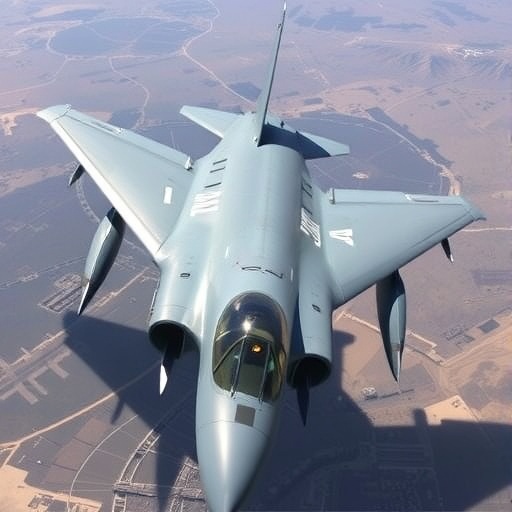
Southwest Research Institute (SwRI) has embarked on a pioneering initiative to enhance the inspection protocols for aging aircraft, specifically focusing on bolt holes that have undergone bushing repairs. This contract, awarded by the U.S. Air Force Academy, targets the intricate challenge of inspecting these critical structural features without the conventional necessity of bushing removal. Maintaining the integrity of these components is paramount to ensuring continued airworthiness and operational safety of aging military aircraft, a task that demands both precision and innovation.
Aircraft structural longevity has always been a complex engineering challenge. Over decades of service, military aircraft endure cyclic stresses that often manifest as cracks or material degradation, especially concentrated around bolt holes. These bolt holes are essential not only for fastening mechanical components but also serve as focal points for stress concentration due to their geometry and loading conditions. To mitigate wear and crack propagation, damaged bolt holes are frequently repaired by inserting cylindrical metal sleeves known as bushings. Yet, while bushings restore mechanical functionality, they simultaneously complicate the inspection process, as traditional methods require bushing extraction—an operation fraught with risks of further damage.
The Southwest Research Institute’s approach integrates advanced nondestructive evaluation (NDE) techniques, leveraging the physics of electromagnetic interaction to probe subsurface flaws. NDE is a cornerstone methodology in aerospace safety, enabling inspectors to detect cracks, corrosion, and other anomalies without dismantling or damaging the aircraft’s structure. SwRI’s project zeroes in on the application of low-frequency eddy current testing to this problem. Unlike conventional eddy current methods that operate at high frequencies and thus are limited to surface or near-surface inspections, low-frequency eddy currents penetrate deeper beneath the surface, facilitating flaw detection through the metallic bushing and into the underlying bolt hole material.
This inspection enhancement signifies a leap in maintenance methodology, reducing downtime and preserving the structural integrity that could be compromised during bushing removal and replacement. The low-frequency approach emits a controlled electromagnetic field that induces circular currents, or eddy currents, within conductive materials. Variations in these currents, caused by discontinuities such as cracks or corrosion, modify the impedance of the probe coil, which is then analyzed to infer the presence and characteristics of flaws. Fine-tuning the frequency enables optimal penetration depth and sensitivity, balancing detection capabilities with the constraints imposed by the layered geometry of repaired bolt holes.
A critical aspect of this research lies in establishing the probability of detection (POD) curves. POD curves are statistical representations that quantify how reliably an inspection method identifies flaws of varying sizes. SwRI engineers fabricate coupons—precisely controlled test specimens embedded with artificial flaws simulating real-world defects—enabling rigorous calibration of the method’s sensitivity and reliability. By subjecting these specimens to low-frequency eddy current testing, researchers ascertain detection thresholds and characterize uncertainties, thereby equipping maintenance crews with validated metrics to make informed repair decisions.
SwRI’s collaboration with the U.S. Air Force Academy extends beyond mere technological implementation; it fortifies a comprehensive aircraft structural integrity program that synergizes engineering analysis with empirical inspection data. This program leverages damage tolerance concepts, which assess how flaws grow under operational stresses and how much damage can be tolerated before the risk of catastrophic failure escalates. Integrating such analytical frameworks with enhanced NDE capabilities improves lifecycle management of aging airframes, enabling military aviation to meet stringent safety and operational readiness standards.
The challenges addressed by this research are emblematic of broader aerospace engineering trends, where aging fleets necessitate innovative maintenance solutions that limit operational disruptions and extend structural life. In the context of military aviation, this is especially critical given the dual imperatives of safety and mission readiness. SwRI’s low-frequency eddy current testing methodology exemplifies an elegant convergence of physics, materials science, and applied engineering, tailored specifically to a pressing operational need.
Moreover, the development of inspection techniques that circumvent invasive procedures resonates within the aerospace industry’s growing focus on cost efficiency and sustainability. By reducing the physical interventions needed for routine inspections and repairs, aircraft operators not only save on maintenance labor and materials but also minimize the environmental footprint associated with parts replacement and waste. This aligns with global aerospace trends anticipating more sustainable practices without compromising safety or performance.
Nathan Richter, the senior research engineer leading this project, emphasizes the nuanced balance between detection sensitivity and practical applicability. Detecting micro-cracks early enough to preempt failure without generating false positives that could lead to unnecessary part replacements requires finely calibrated technology and comprehensive data validation. SwRI’s characterization efforts, therefore, prioritize both technical rigor and operational feasibility, ensuring that the technology delivers actionable insights within the real-world contexts of aircraft maintenance.
This initiative is poised to influence broader aerospace maintenance protocols by establishing benchmark methodologies for evaluating repaired structural components. The potential to adapt low-frequency eddy current testing for other challenging inspection scenarios—such as layered composites or complex substructures—signifies a transformative direction in aircraft structural health monitoring. As next-generation platforms increasingly rely on advanced materials and intricate assemblies, innovations such as these will be vital in sustaining fleet integrity over extended operational timelines.
By integrating empirical testing with sophisticated nondestructive techniques, SwRI’s work embodies the synergistic approach necessary for modern aerospace engineering challenges. The outcomes promise enhanced safety margins, streamlined maintenance workflows, and prolonged service life for critical military assets. This project not only addresses immediate inspection challenges but also paves the way for future advancements in aircraft durability assessment and repair technologies, underscoring the ongoing evolution of aerospace engineering disciplines in meeting emergent defense needs.
Subject of Research: Inspection methods for bushing-repaired bolt holes in aging military aircraft using low-frequency eddy current testing.
Article Title: Advancing Aircraft Safety: Low-Frequency Eddy Current Testing Revolutionizes Inspection of Bushing-Repaired Bolt Holes
News Publication Date: March 16, 2026
Web References: https://www.swri.org/markets/chemistry-materials/materials/sensor-systems-nondestructive-evaluation-nde
Image Credits: Southwest Research Institute
Keywords
Aircraft, Aerospace engineering, Airplanes, Military aircraft, Aircraft engines, Aircraft design, Aircraft construction, Infrasound
Tags: advanced NDE methods for bolt holesaging Air Force aircraft maintenanceaircraft bolt hole inspection techniquesaircraft structural integrity monitoringbolt hole crack detection technologiesbushing repair inspection challengescyclic stress impact on military aircraftinnovation in aircraft maintenance protocolsnondestructive evaluation for military aircraftprecision inspection without bushing removalSouthwest Research Institute aerospace researchU.S. Air Force Academy aircraft safety