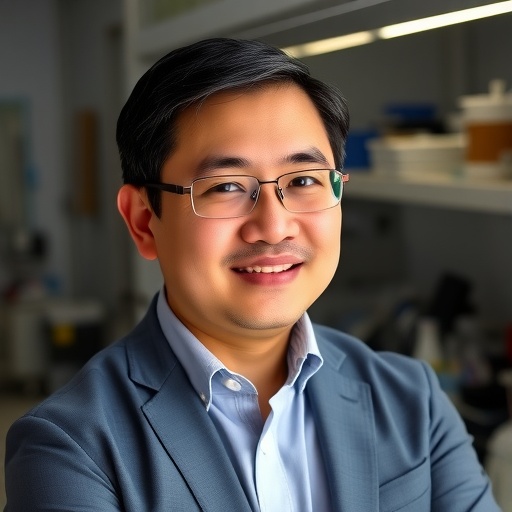
In the rapidly evolving fields of optics and condensed matter physics, nurturing the next generation of scientists demands not only scientific rigor but also a fundamentally human approach to mentorship. Professor Mengkun Liu embodies this philosophy, fostering an environment where curiosity is paramount, independence is cultivated, and mistakes are embraced as intrinsic steps toward discovery. His approach transcends conventional metrics of success, emphasizing a holistic development of young researchers as confident, thoughtful individuals and capable scientists.
At the core of Professor Liu’s mentorship lies the creation of a safe space for intellectual risk-taking. He encourages his students and collaborators to ask all manner of questions—simple, naïve, or even “stupid.” This invitation to probe assumptions without fear unveils hidden premises that often underpin scientific dogma. These seemingly elementary inquiries, rather than being dismissed, act as catalysts for deeper, more nuanced discussions. In such an environment, learning becomes a dynamic, collective process where everyone, including the mentor himself, benefits from the exchange of ideas.
Within his group, the cultivation of independence is vital. Young researchers are urged to develop their own scientific intuition and aesthetic, honing a skill set uniquely their own. This individuality is especially crucial in an era dominated by rapid advancements in artificial intelligence and automation, where the capacity for original thought and judgment remains irreplaceable. Professor Liu’s role, therefore, is not one of micromanagement but of providing broad guidance—contextualizing challenges while allowing ample freedom for researchers to claim ownership over their projects.
This philosophy extends to how success is perceived. For Professor Liu, the publication of papers, while important, is not the ultimate measure of a research group’s influence. Much greater significance lies in the transformation of its members into confident scientists, ready to challenge established assumptions and forge new paths in their careers. He takes particular pride in witnessing students openly contest his views, recognizing this as a hallmark of their intellectual maturity and readiness to lead independently.
The research landscape into which young scientists enter is often fraught with complexity and uncertainty. Professor Liu advises a mindset of patience and enduring curiosity, acknowledging that meaningful scientific advances rarely occur overnight. Setbacks and confusion are to be expected and should be met with resilience rather than frustration. The ability to maintain a sense of wonder, or even humor, amid adversity is a critical tool for navigating the inherent messiness of scientific inquiry.
This approach is particularly relevant in optics and condensed matter physics, fields characterized by intricate phenomena and often contradictory observations. The often-confounding nature of initial problems requires a readiness to embrace ambiguity, to iterate swiftly, and to learn from errors. Mistakes are not stigmatized but rather viewed as invaluable opportunities for growth and insight. This perspective fosters a culture where experimentation thrives and innovation flourishes.
At the heart of Professor Liu’s mentorship lies an acknowledgment of science as a deeply human endeavor, one that is enriched by collective learning, open dialogue, and mutual respect. He encourages young researchers to view their scientific journey not just as a career path but as a lifelong cultivation of curiosity that transcends disciplinary boundaries and professional identities. Whether one remains in academia or ventures into the broader world of industry, the intrinsic drive to explore and understand is the most enduring legacy.
In the context of augmented intelligence and automated reasoning technologies shaping modern research, Professor Liu’s emphasis on unique human judgment gains even greater relevance. While AI can process vast datasets and unveil patterns at unprecedented scales, it lacks the nuanced intuition and creative leaps characteristic of human thought. Cultivating these qualities within young scientists ensures they remain indispensable contributors to the future of science and technology.
Professor Liu’s approach highlights the delicate balance necessary in mentorship—offering enough guidance to provide direction and context, yet enough freedom to inspire autonomy and innovation. This balance serves to engender confidence not only in experimental skills or theoretical acumen but also in the capacity to navigate complex scientific landscapes independently. Such confidence is essential for leadership in any scientific domain.
The collective nature of learning within Professor Liu’s group is more than a training model; it is a living philosophy in which dialogue and collaboration create a fertile ground for breakthroughs. By fostering an atmosphere where hierarchical barriers are minimized and everyone’s voice is valued, he instills a sense of shared mission and responsibility that propels the group’s collective success forward.
Furthermore, the environment Professor Liu nurtures encourages resilience. Science, particularly at the frontiers of optics and condensed matter physics, is inevitably a journey punctuated by experiments that fail and hypotheses that fall short. Encouraging researchers to laugh off their mistakes elevates morale and creates a culture in which risk-taking is normalized rather than feared.
The message Professor Liu imparts is ultimately one of hope and empowerment. The path to scientific discovery may be long and sometimes arduous, but maintaining curiosity and patience will yield profound personal and professional rewards. This mindset not only prepares young researchers for a successful career but also cultivates a lifelong engagement with the evolving world of science and technology.
In a time when artificial intelligence and robotics promise to reshape society and scientific practice profoundly, Professor Liu’s commitment to nurturing human qualities—curiosity, judgment, and independent thinking—stands as a beacon. His mentorship model serves as a reminder that while technology advances, the human elements of science remain irreplaceable and essential.
By redefining success beyond paper counts and impact metrics and focusing instead on intellectual growth and personal development, Professor Liu offers a compelling vision for the future of scientific mentorship. This vision fosters not only innovative research but also the kind of scientific community that is inclusive, adaptable, and resilient.
Ultimately, Professor Liu’s ethos highlights an essential truth: the value of a research group lies not only in its contributions to knowledge but also in the strength and character of the scientists it nurtures. Through his thoughtful and human-centered approach, he exemplifies how mentorship can shape the future landscape of physics and beyond.
Subject of Research: Mentorship philosophy and development of young researchers in optics and condensed matter physics.
Article Title: Light people: Professor Mengkun Liu.
Article References:
Zheng, W., Guo, S. Light people: Professor Mengkun Liu. Light Sci Appl 15, 172 (2026). https://doi.org/10.1038/s41377-026-02211-x
Image Credits: AI Generated
DOI: https://doi.org/10.1038/s41377-026-02211-x
Tags: collaborative learning in physicscondensed matter physics educationcultivating independence in researchersempowering young scientistsfostering curiosity in science educationholistic development of scientistsinnovative mentorship methodsintellectual risk-taking in researchnurturing scientific intuitionoptics research mentorshipovercoming fear of failure in sciencescientific mentorship in physics