A transformative advancement in plant genomics has paved the way for unraveling ancient regulatory elements that govern plant development, tracing their origins back over 300 million years. This remarkable discovery, emerging from a global collaboration of plant scientists, challenges long-standing assumptions about plant genome evolution and opens new horizons for precision crop engineering to meet the food security and environmental challenges of the future.
Genome editing technologies have rapidly evolved, enabling scientists to modify plants with unprecedented accuracy. However, the fundamental question that now drives the field is not if plants can be engineered but rather which genomic targets can yield predictable, beneficial traits. Traditional genetic engineering often focuses on genes themselves, yet the subtler realm of regulatory sequences—those non-coding DNA segments dictating gene expression timing and location—holds immense potential for fine-tuning desirable traits in crops without disrupting other functions.
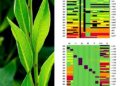
Published in Science on March 12, 2026, the latest study unveils a vast repository of conserved non-coding sequences (CNSs) identified through a novel comparative genomics platform named Conservatory. This platform integrates deep phylogenomic sampling, sophisticated microsynteny analyses, and alignment algorithms tailored to handle the complexity of plant genomes. By dissecting genomic data from 284 plant species spanning 72 families—including eudicots, monocots, gymnosperms, and algae—researchers catalogued approximately 2.3 million CNSs, constituting an invaluable dataset for exploring the evolutionary trajectories of plant gene regulation.
For decades, the presence of ancient regulatory DNA in plants has been controversial. While animal genomes have well-documented ancient cis-regulatory elements, plant genomes were thought to harbor far fewer due to their notoriously complex evolutionary histories characterized by repeated whole-genome duplications, gene loss, and genomic rearrangements. This complexity obscures homology relationships and has historically impeded the identification of ancient regulatory elements. The Conservatory platform surmounts these challenges by tracing gene-centric conserved elements despite sequence divergence and genomic reshuffling, revealing that deep regulatory programs not only exist but are widespread across the plant kingdom.
Detailed analysis demonstrates that many of these CNSs congregate near genes controlling crucial developmental pathways, particularly transcription factors essential for morphogenesis. Intriguingly, functional tests indicate that perturbations to these ancient sequences can elicit pronounced developmental abnormalities, attesting to their indispensability. For instance, regulatory elements in the promoter region of WUSCHEL—a master regulator of stem cell maintenance—have been conserved for 300 million years, maintaining relative position and order despite sequence mutations and genomic reorganizations over evolutionary time.
This nuanced conservation illustrates a dynamic balance between stability and flexibility—contrary to the notion of regulatory DNA as immutable relics. These sequences can shift locations, duplicate, and diversify, yet preserve core regulatory logic critical for orchestrating developmental programs. Such insights underscore a refined understanding of how cis-regulatory landscapes evolve and function, extending beyond simplistic gene models to include complex non-coding architectures.
The research further revises classical views of regulatory element proximity, as approximately 25% of CNSs were discovered more than 25 kilobases away from their target genes. These distant regulatory nodes sometimes bypass neighboring genes entirely, indicating that experimental approaches relying on conventional, proximal reporter constructs may overlook essential regulatory influences, thus underrepresenting the true complexity of gene regulation in plants.
Gene duplication emerges as a key driver of regulatory innovation. Post-duplication, paralogous gene copies frequently undergo asymmetric divergence: one retains ancestral regulatory sequences, ensuring conserved expression patterns, while the other acquires novel regulatory elements that may confer new functions or expression domains. Particularly in grasses (Poaceae), such regulatory rewiring appears pronounced and early in their evolutionary history, potentially underpinning the vast morphological diversity seen in these ecologically and agriculturally important species.
The Conservatory dataset is now publicly accessible, providing an unprecedented resource for researchers to interpret gene regulatory evolution and to guide precision editing strategies aimed at optimizing crop yield, stress resilience, and development. By integrating evolutionary conservation with functional genomics, this tool offers the promise of more predictable engineering outcomes, enabling tailored modulation of plant traits with minimal unintended effects.
This pioneering work was spearheaded by key scientists including Professors Madelaine Bartlett, Idan Efroni, and Zachary Lippman, with dedicated contributions from co-first authors Kirk R. Amundson and Anat Hendelman. Their collective expertise harnessed interdisciplinary methodologies and collaborative efforts spanning multiple institutions to resolve one of plant genomics’ most formidable puzzles.
Supporting institutions such as the United States-Israel Binational Science Foundation, Israel Science Foundation, Howard Hughes Medical Institute, U.S. National Science Foundation, USDA AFRI, and The Gatsby Charitable Foundation provided essential funding, reflecting the global significance and potential impact of these findings.
In reconsidering the regulatory architecture of plant genomes, this study calls for a reevaluation of experimental designs and gene functional assays in plant biology. It challenges researchers to move beyond gene-centric perspectives towards a more comprehensive, evolutionary-informed approach that fully incorporates regulatory DNA’s dynamic landscapes. The discoveries herald a new era in plant biotechnology where ancient molecular legacies illuminate future agricultural innovations.
Subject of Research: Not applicable
Article Title: A deep-time landscape of plant cis-regulatory sequence evolution
News Publication Date: 12-Mar-2026
Web References:
Conservatory project: https://conservatorycns.com/dist/pages/conservatory/about.php
DOI of research article: https://doi.org/10.1126/science.adt8983
References:
Amundson, K. R., Hendelman, A., Ciren, D., Yang, H., de Neve, A. E., Tal, S., Sulema, A., Jackson, D., Bartlett, M. E., Lippman, Z. B., & Efroni, I. (2025). A deep-time landscape of plant cis-regulatory sequence evolution. Science. https://doi.org/10.1126/science.adt8983
Image Credits: Professor Madelaine Bartlett
Keywords: Plant genomics, conserved non-coding sequences, cis-regulatory elements, genome evolution, gene regulation, comparative genomics, whole-genome duplication, transcription factors, crop engineering, Conservatory platform
Tags: ancient plant DNA regulatory elementscomparative genomics in plant scienceconserved non-coding sequences in plantsfuture of plant genetic engineeringgene expression regulation in plantsglobal plant genomics collaborationimproving crop traits through regulatory DNAmicrosynteny analysis in genomicsnovel genome alignment algorithmsphylogenomic sampling of plant speciesplant genome evolution over 300 million yearsprecision crop engineering technologies