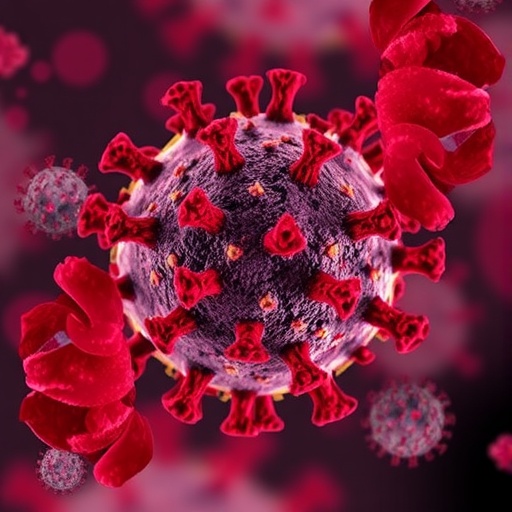
In a groundbreaking advancement in the fight against COVID-19, researchers have unveiled a novel antibody discovery approach that promises potent neutralization of the elusive Omicron variants of SARS-CoV-2. As the virus continues to evolve and spawn variants with mutations that confer resistance to previously effective antibodies, the need for targeted and highly effective therapeutics becomes ever more critical. This new study, published in Nature Microbiology by Zost et al., tackles this challenge head-on by focusing on epitope-centered antibody identification, offering fresh hope in the ongoing global battle against COVID-19.
The Omicron variants, notorious for their extensive spike protein mutations, have posed a formidable challenge to existing vaccines and antibody treatments. Their ability to evade immune responses has resulted in waves of reinfections and breakthrough cases. Traditional antibody discovery methods often fall short because they target broader regions of the virus, which mutate rapidly. The innovative epitope-focused strategy employed in this research hones in on conserved spike protein regions less prone to mutations, enabling the isolation of antibodies with broad and long-lasting efficacy.
Fundamental to this discovery approach is the detailed structural mapping of the SARS-CoV-2 spike protein, particularly identifying immunologically vulnerable epitopes that remain stable despite viral evolution. By leveraging advanced cryo-electron microscopy and computational modeling techniques, the researchers pinpointed specific spike regions that are conserved across multiple Omicron subvariants. This precision allowed the team to selectively screen for antibodies binding to these conserved epitopes, thereby enriching for potent neutralizers capable of overcoming Omicron’s mutational fortitude.
Additionally, the research showcases a sophisticated phage display library screening process optimized to capture rare antibody candidates. Instead of casting a wide net, the screening was informed by structural insights, enabling the isolation of antibodies with exceptional binding affinity and neutralization breadth. This strategy contrasts sharply with conventional antibody discovery pipelines that often yield candidates with limited cross-variant efficacy, underscoring the power of an epitope-driven approach.
Functional analyses of the identified antibodies revealed their capacity to neutralize multiple Omicron sublineages, including those with the most extensive immune escape profiles to date. In vitro neutralization assays demonstrated that these antibodies maintain high potency even against subvariants that have rendered many existing therapeutic antibodies obsolete. Such findings mark a crucial step toward developing next-generation antibody therapies tailored for the rapidly shifting landscape of SARS-CoV-2 variants.
Beyond neutralization assays, the study delved into mechanistic evaluations to understand how these antibodies effectively neutralize viral entry. Structural investigations elucidated how antibody binding at conserved epitopes disrupts critical conformational changes in the spike required for host cell fusion. This mechanistic clarity not only validates the epitope-targeted discovery but also lends itself to the rational design of antibody cocktails and fusion inhibitors, further diversifying the arsenal against COVID-19.
Importantly, the discovered antibodies also demonstrated favorable biophysical properties, including high stability and low propensity for eliciting antibody-dependent enhancement—a phenomenon that can paradoxically exacerbate viral infection. Such attributes are critical for progressing these candidates into clinical development pipelines, as they promise safer and more efficacious therapeutic options for patients.
The implications of these findings extend widely, potentially impacting both treatment paradigms and vaccine design. Vaccines incorporating epitopes identified in this study could elicit robust and broadly neutralizing immune responses, enhancing protection against current and future variants. Moreover, antibody therapeutics derived from the epitope-focused approach might serve as potent prophylactic measures for immunocompromised individuals or as early interventions to reduce disease severity.
Furthermore, the study highlights the adaptive ingenuity of viral evolution and the necessity of equally adaptive countermeasures. As SARS-CoV-2 continues its trajectory of rapid mutation, scientific strategies must evolve in parallel. By prioritizing conserved epitopes less susceptible to mutation-driven escape, researchers can stay a step ahead of the virus, anticipating and mitigating the impact of new variants before they spread widely.
Collaboration across structural biology, computational modeling, immunology, and virology underpinned this accomplishment, setting a benchmark for future antiviral discovery efforts. The interdisciplinary approach exemplifies how integrating diverse methodologies can accelerate the pace of biomedical innovation, especially in crisis situations requiring urgent solutions.
As antibody candidates identified in this study advance into preclinical and clinical phases, ongoing surveillance of viral mutations will be essential to confirm sustained efficacy. The framework established here provides a robust template for continuous antibody adaptation, enabling rapid redevelopment should new escape variants emerge.
In conclusion, the epitope-focused antibody discovery approach described by Zost et al. represents a paradigm shift in SARS-CoV-2 therapeutic development. By zeroing in on structurally conserved epitopes, the team has laid the groundwork for antibody-based interventions that retain potency against even the most evasive Omicron subvariants. This work not only revitalizes hope for controlling the COVID-19 pandemic but also enriches our broader understanding of how to combat rapidly evolving pathogens with precision medicine strategies.
As the global community continues to grapple with the unpredictable nature of SARS-CoV-2, innovations like these are crucial milestones. They underscore the importance of marrying cutting-edge structural insights with targeted immunological interventions, ultimately paving the way for more resilient and effective responses to current and future viral threats.
This research is set to transform the landscape of COVID-19 antibody therapeutics, aligning scientific ingenuity with public health imperatives. By anticipating viral evolution and tailoring antibodies accordingly, the discovery strategy detailed here serves as a beacon of hope for curtailing the pandemic and safeguarding global health.
Subject of Research: Epitope-focused antibody discovery against SARS-CoV-2 Omicron variants
Article Title: Epitope-focused discovery of SARS-CoV-2 antibodies that potently neutralize Omicron variants
Article References:
Zost, S.J., Suryadevara, N., Williamson, L.E. et al. Epitope-focused discovery of SARS-CoV-2 antibodies that potently neutralize Omicron variants. Nat Microbiol (2026). https://doi.org/10.1038/s41564-026-02282-x
Image Credits: AI Generated
DOI: https://doi.org/10.1038/s41564-026-02282-x
Tags: antibody discovery against viral mutationsbreakthrough COVID-19 infections and antibody resistancebroad-spectrum COVID-19 therapeuticsconserved spike protein epitopescryo-electron microscopy in antibody researchepitope-centered antibody identificationepitope-targeted antibodies for COVID-19long-lasting antibody efficacyneutralization of SARS-CoV-2 Omicron variantsovercoming vaccine resistance in OmicronSARS-CoV-2 immune evasion strategiesstructural mapping of SARS-CoV-2 spike protein