A groundbreaking study led by researchers at the University of Waterloo has unveiled a novel diagnostic method that could revolutionize how neurodegenerative diseases such as amyotrophic lateral sclerosis (ALS), Frontotemporal Lobar Degeneration (FTLD-TDP), and Alzheimer’s disease are diagnosed. This innovative approach employs retinal imaging combined with advanced machine learning techniques, promising a fast, non-invasive, and highly accurate alternative to the current symptom-based diagnosis, which often occurs at late stages when treatment options are limited.
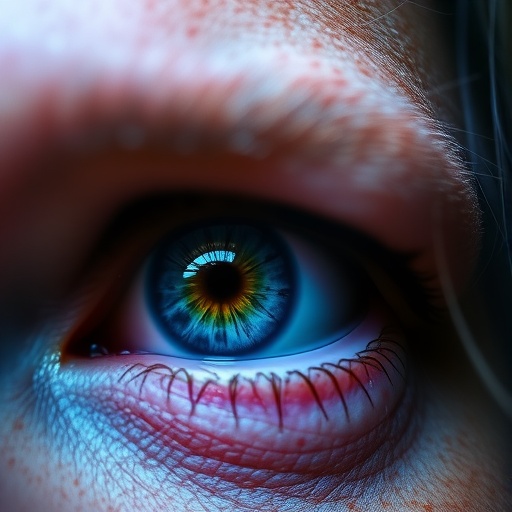
Traditionally, neurodegenerative diseases like ALS and FTLD-TDP have lacked objective diagnostic tools, relying heavily on clinical evaluations that appear only after considerable disease progression. This delay frustrates early therapeutic intervention, which is crucial in slowing disease advancement. The new technology focuses on the retina—a transparent neural tissue at the back of the eye intimately connected to the central nervous system—as a window into brain pathology, allowing visualization of protein deposits associated with these diseases.
Dr. Melanie Campbell and graduate student Lyndsy Acheson spearheaded the study, where they used polarized light microscopy to examine retinal tissue samples donated by patients afflicted with Alzheimer’s disease and those with proteinopathies linked to FTLD-TDP and ALS. This specialized imaging technique exploits the unique interaction between polarized light and protein aggregates to distinguish between different pathological deposits based on their light scattering patterns and birefringent properties.
The hallmark proteins analyzed include amyloid beta, prominent in Alzheimer’s pathology, and transactive response DNA-binding protein 43 (TDP-43), which forms aberrant deposits in FTLD-TDP and ALS patients. By meticulously measuring how these deposits alter polarized light transmission through the retinal fibers, the team identified distinct optical signatures corresponding to each protein type, unveiling a sensitive biomarker reflective of neurodegenerative changes in the central nervous system.
To translate these optical measurements into clinically relevant diagnostics, the researchers integrated the imaging data into sophisticated artificial intelligence models. Employing a Random Forest classifier, a robust ensemble learning algorithm, alongside convolutional neural networks (CNNs)—powerful deep learning models adept at interpreting complex images—they trained the AI systems to accurately categorize retinal images based on the underlying protein deposit composition.
Remarkably, the Random Forest algorithm achieved an 86% accuracy rate in differentiating amyloid beta deposits from TDP-43 inclusions. Even more impressive, the convolutional neural networks surpassed this, attaining a diagnostic precision of 96%. These findings underscore the profound discriminatory capacity embedded in polarized light interactions and machine learning’s potential to transform retinal imaging into a reliable diagnostic tool.
Beyond classification, the data revealed correlations between retinal deposit patterns and the severity of neurodegenerative disease manifestation in the brain. This suggests that retinal imaging could serve not only as a diagnostic aid but also as a prognostic instrument, allowing clinicians to monitor disease progression non-invasively and tailor therapeutic strategies accordingly.
The implications of this research extend far beyond clinical neurology. Given the retina’s accessibility, the envisioned diagnostic modality could democratize early detection of multiple brain disorders, especially in underserved or remote communities lacking access to advanced neuroimaging resources. A simple retinal scan administered in an optometrist or primary care setting may one day circumvent complex lumbar punctures or costly PET scans.
Moreover, the affordability and speed of this method align with the growing demand for scalable neurodegenerative disease screening in aging populations worldwide, where early diagnosis and intervention are critical to reducing healthcare burdens and enhancing patient quality of life.
Dr. Campbell highlights the transformative potential of this technology: “Our work marks a major advance toward earlier and more accurate diagnosis of devastating neurodegenerative diseases. Detecting pathological protein deposits in the retina before clinical symptoms emerge could fundamentally alter how we approach treatment, opening new avenues for slowing or halting disease progression.”
While further validation and clinical trials are necessary to refine this technology and integrate it into routine practice, the promising results mark a pivotal step. The convergence of optical physics, neuropathology, and artificial intelligence in this study exemplifies the interdisciplinary innovation required to tackle complex medical challenges.
In summary, by harnessing the interaction of polarized light with retinal protein deposits and applying cutting-edge machine learning algorithms, this novel diagnostic tool offers an unprecedented avenue for early detection and precise differentiation of neurodegenerative diseases. As research progresses, it holds the promise of reshaping neurodiagnostic paradigms and significantly improving outcomes for millions worldwide grappling with ALS, FTLD-TDP, Alzheimer’s, and related conditions.
Subject of Research: Human tissue samples
Article Title: Retinal Deposits of TDP-43 and Amyloid Beta and Associated Neurodegenerative Diseases are Accurately Classified using Measured Interactions with Polarized Light in Machine Learning Algorithms
News Publication Date: 23-Dec-2025
Web References: http://dx.doi.org/10.1002/alz70861_108465
References: Retinal Deposits of TDP-43 and Amyloid Beta and Associated Neurodegenerative Diseases are Accurately Classified using Measured Interactions with Polarized Light in Machine Learning Algorithms, Alzheimer’s & Dementia: The Journal of the Alzheimer’s Association
Image Credits: University of Waterloo
Keywords: Neurodegenerative diseases, retinal imaging, amyotrophic lateral sclerosis, ALS, Alzheimer’s disease, FTLD-TDP, TDP-43 protein, amyloid beta, polarized light microscopy, machine learning, artificial intelligence, Random Forest, convolutional neural networks, non-invasive diagnostics
Tags: advanced imaging for ALS and FTLD-TDPAlzheimer’s disease retinal biomarkersearly detection of ALSFrontotemporal Lobar Degeneration diagnosis methodsinnovative diagnostic tools for neurological healthmachine learning in neurological diagnosisneural tissue analysis for brain disordersneurodegenerative disease retinal biomarkersnon-invasive brain disease diagnosticspolarized light microscopy in medical researchprotein deposits in neurodegenerationretinal imaging for neurodegenerative diseases