In the relentless pursuit of novel bioactive compounds, scientists continue to explore the metabolic treasures harbored by the prolific genus Streptomyces. This genus, famed for its unparalleled capacity to produce diverse natural products, has now delivered a remarkable discovery: a previously unknown allosamidin congener exhibiting a complex pseudotetrasaccharide structure. Published recently in The Journal of Antibiotics, this finding heralds a significant advance in chitinase inhibitor research, potentially impacting biomedical and agricultural fields where control of chitin degradation is critical.
Allosamidin, a well-characterized metabolite of Streptomyces species, has long captivated researchers due to its potent inhibition of family 18 chitinases. These enzymes catalyze the hydrolysis of chitin, a crucial component of fungal cell walls and insect exoskeletons, marking allosamidin as a valuable molecule with potential antifungal and insecticidal applications. Traditional studies have consistently reported all known natural congeners of allosamidin as pseudotrisaccharides. These molecules possess a unique architectural signature—a cyclopentane ring fused seamlessly with an aminooxazoline moiety. This structural motif underpins their inhibitory aptitude and defines the chemical class.
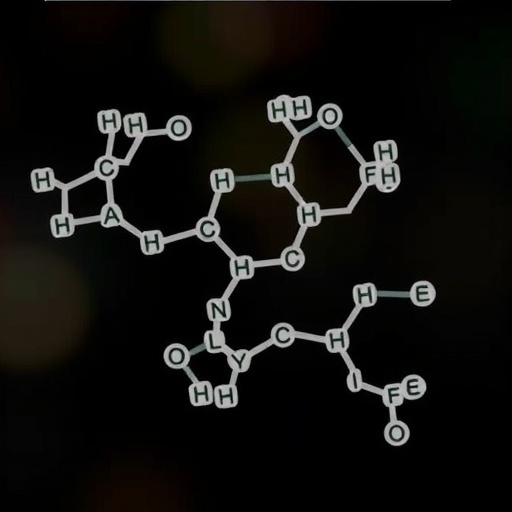
The breakthrough, achieved by Sakuda, Uchida, Hakoshima, and colleagues, centers on a novel congener isolated from Streptomyces sp. No. 1-5-6, a newly discovered soil-born strain acclaimed for its allosamidin production. Despite challenges posed by its exceptionally low yield—a common hurdle in natural product isolation—the team skillfully employed nuclear magnetic resonance (NMR) spectroscopy and mass spectrometry (MS) to unravel the mystifying molecular blueprint of this elusive compound. Their efforts culminated in the identification of N-acetylallosaminylallosamidin, marking a pioneering entry into natural allosamidins with a pseudotetrasaccharide conformation.
Delving deeper into the molecular intricacies, the structure features an additional N-acetylallosamine sugar unit intricately linked to the allosamidin core, thereby extending the canonical trisaccharide framework. This subtle yet profound modification expands the conformational landscape and potentially alters interaction dynamics with targeted chitinases. From a biochemical perspective, the presence of the acetylated sugar may influence both binding affinity and specificity, offering new avenues for optimizing chitinase inhibition.
To evaluate the bioactivity of this newly unearthed congener, researchers utilized bacterially expressed mouse acidic mammalian chitinase (AMCase) as a model target. AMCase, implicated in inflammatory airway diseases such as asthma, represents a therapeutically relevant enzyme for selective inhibition. Impressively, N-acetylallosaminylallosamidin exhibited strong inhibitory potency, with an IC₅₀ value of 102.3 nanomolar. While this value indicates slightly lower affinity compared to canonical allosamidin, it nonetheless confirms the compound’s robust biological functionality.
The discovery of the first natural pseudotetrasaccharide allosamidin congener significantly enriches the chemical repertoire known within this biologically important class. It provokes intriguing questions about the evolutionary biosynthetic pathways inherent to Streptomyces, especially the enzymatic machinery capable of assembling extended oligosaccharide chains tethered to unusual heterocyclic rings. Further biosynthetic studies could elucidate whether this compound arises from divergent gene clusters or employs unique glycosyltransferases responsible for the additional sugar attachment.
Moreover, the implications for drug discovery and agricultural biotechnology are equally compelling. Chitinases serve as prime targets for controlling fungal pathogens and insect pests, with inhibitors like allosamidin providing environmentally friendly alternatives to conventional pesticides and fungicides. By broadening the structural diversity of potential inhibitors, this research fosters the rational design of more selective, potent, and bioavailable chitinase antagonists.
The methodologies employed in isolating and characterizing N-acetylallosaminylallosamidin further exemplify the sophisticated analytical tools now available to natural product chemists. The integration of multidimensional NMR techniques with high-resolution mass spectrometry facilitated identification despite minimal sample quantities. Such advancements underscore the potential for uncovering rare metabolites previously obscured due to technical limitations.
Beyond its immediate biochemical significance, this novel congener offers insight into the spatial constraints and flexibility inherent in chitinase inhibition. The additional sugar unit may induce conformational changes in the inhibitor or the enzyme’s active site, potentially altering binding kinetics or allosteric interactions. Future structural biology investigations, including crystallographic analyses of enzyme-inhibitor complexes, could illuminate these mechanistic dimensions.
The soil microbiome, once again, demonstrates its untapped wealth of chemical innovation. Harnessing the prolific biosynthetic capabilities of Streptomyces species via meticulous isolation and characterization techniques remains a cornerstone of natural product research. As microbial strains continue to be isolated from diverse ecological niches, discoveries such as this pseudotetrasaccharide allosamidin analog reaffirm nature’s prowess in molecular craftsmanship.
Interestingly, the discovery also raises the possibility of engineered biosynthesis or semi-synthetic approaches to generate a library of allosamidin derivatives with varied sugar units, potentially optimizing pharmacological profiles and expanding spectrum of activity. Such approaches could leverage genetic engineering and metabolic pathway elucidation to customize inhibitor structures tailored for specific biomedical or ecological objectives.
The revelation of N-acetylallosaminylallosamidin’s biological activity simultaneously sheds light on the nuanced interplay between natural product structure and function. Though its inhibitory effect on AMCase was marginally weaker than allosamidin, its potent nanomolar IC₅₀ highlights its promising role as a scaffold for further optimization within drug development pipelines targeting chitinase-linked diseases.
Overall, this landmark discovery propels allosamidin research into uncharted territory by unveiling a structurally unprecedented pseudotetrasaccharide congener. It highlights the ongoing relevance of natural products in inspiring novel chemical entities and therapeutic candidates, reaffirming the value embedded within microbial secondary metabolism.
As the scientific community continues to delve deeper into molecular diversity through environmental sampling and advanced characterization, the landscape of bioactive small molecules will undoubtedly become more varied and sophisticated. Studies like those led by Sakuda and colleagues pave the way for innovative solutions addressing human health and agricultural sustainability challenges, rooted in the elegant complexity of natural chemistry.
The promise of N-acetylallosaminylallosamidin extends far beyond its initial discovery. Future exploration may unlock further congeners with unique modifications, enhancing our capacity to fine-tune chitinase inhibition and exploit this activity across multiple domains. The road ahead beckons researchers to expand the boundaries of chemical biology through the inspired chemistries of nature.
Subject of Research: Novel allosamidin congener with pseudotetrasaccharide structure produced by Streptomyces sp. and its chitinase inhibitory activity.
Article Title: Isolation of N-acetylallosaminylallosamidin, a new pseudotetrasaccharide allosamidin congener.
Article References:
Sakuda, S., Uchida, K., Hakoshima, N. et al. Isolation of N-acetylallosaminylallosamidin, a new pseudotetrasaccharide allosamidin congener. J Antibiot (2026). https://doi.org/10.1038/s41429-026-00904-4
Image Credits: AI Generated
DOI: 25 February 2026
Tags: allosamidin congener discoveryaminooxazoline chemical motifantifungal compound developmentbioactive pseudotrisaccharideschitin degradation controlchitinase inhibitor researchcyclopentane ring in bioactive moleculesfamily 18 chitinases inhibitioninsecticidal bioactive moleculesnovel soil-born Streptomyces strainpseudotetrasaccharide structureStreptomyces natural products