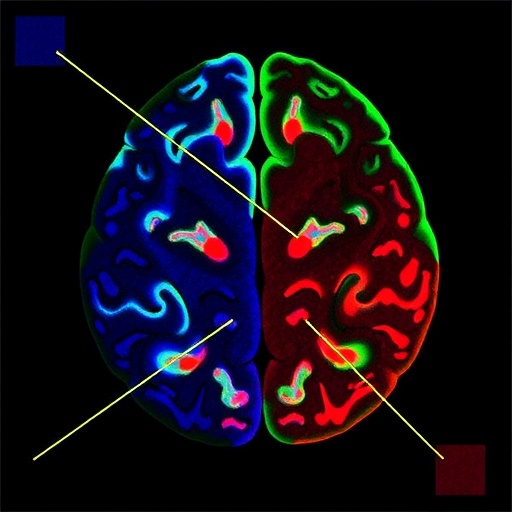
In a groundbreaking advance set to redefine our understanding of neurodegenerative disorders, a team of researchers led by Ruf, Kühlwein, and Meier has unveiled a multi-modal approach to dissecting the cell-type specific pathology of TDP-43 in the human motor cortex. Published recently in Nature Communications, this ambitious study merges state-of-the-art molecular techniques with high-resolution imaging and computational analyses, offering unprecedented clarity on one of the most enigmatic proteins implicated in conditions such as ALS and frontotemporal dementia.
TDP-43, or TAR DNA-binding protein 43, has long been recognized as a pathological hallmark in a spectrum of neurodegenerative diseases. Its aberrant aggregation within neurons and glial cells disrupts crucial cellular functions, precipitating a cascade of neurotoxicity and cell death. Yet, despite intense scrutiny, the precise mechanisms by which TDP-43 pathology manifests differently across diverse cell populations in the cerebral cortex remained elusive until now.
Harnessing an integrative strategy, the authors employed a suite of complementary modalities, including single-cell transcriptomics, spatial proteomics, and advanced confocal and super-resolution microscopy. This comprehensive methodology allowed them to pinpoint distinct patterns of TDP-43 misfolding and deposition with an unprecedented level of spatial and molecular resolution. Crucially, the study delineated how these pathological signatures vary between neuronal subtypes and glial cells, deepening insight into the cellular vulnerabilities underlying motor cortex degeneration.
One of the hallmark revelations of the investigation was the demonstration of differential TDP-43 aggregation kinetics in excitatory versus inhibitory neurons. Excitatory pyramidal neurons exhibited an early onset of cytoplasmic inclusions that correlated with profound synaptic dysfunction, whereas inhibitory interneurons showed a more protracted pathology progression. Such cell-type selective dynamics underscore potential avenues for targeted therapies aiming to mitigate early neuronal damage in ALS and related disorders.
Further, the researchers spotlighted the role of astrocytes and microglia in modulating TDP-43 pathology. Employing spatial proteomic maps combined with single-cell gene expression data, they revealed an intricate interplay where glial activation states influence the seeding and spread of TDP-43 aggregates. These findings suggest that non-neuronal cells do not merely respond passively to neurodegeneration but actively shape the progression of pathological protein accumulation.
Importantly, by correlating molecular pathology with electrophysiological measurements, Ruf and colleagues were able to link TDP-43 burden with functional deficits in motor cortical circuits. This integration bridges molecular aberrations to system-level dysfunction, providing a crucial framework for understanding symptom emergence in motor neuron diseases.
The utilization of cutting-edge machine learning algorithms to integrate vast datasets marked another milestone in this research. These computational models refined the classification of pathological states and predicted vulnerable cell populations with remarkable accuracy. Such data-driven insights pave the way for future biomarker discovery and personalized medicine approaches that stratify patients based on precise pathological profiles.
The study’s multi-modal approach addresses longstanding challenges in neuropathology, where traditional histological techniques often failed to capture the heterogeneity and complexity of proteinopathies. By combining modalities that probe gene expression, protein localization, and cellular morphology, researchers can now construct holistic maps detailing the molecular anatomy of neurodegeneration.
Beyond its immediate implications for TDP-43 related diseases, this framework offers a scalable blueprint for studying diverse neurodegenerative conditions typified by protein aggregation, including Alzheimer’s, Parkinson’s, and Huntington’s diseases. The versatility of integrating imaging, transcriptomics, and proteomics at single-cell resolution heralds a new era of precision neuropathology.
The team’s findings also emphasize a temporal dimension of pathology evolution, suggesting that therapeutic windows may be optimized by tailoring interventions to specific disease stages and cellular targets. Such nuanced approaches challenge the prevailing “one-size-fits-all” treatment paradigms and advocate for a dynamic, phased strategy in combating neurodegeneration.
Collaboration across disciplines was paramount to the study’s success, combining expertise in molecular biology, computational science, neuroscience, and clinical neurology. This interdisciplinary synergy set a new standard for future endeavors aimed at unraveling complex brain diseases.
As the research community digests the implications of this comprehensive analysis, there is palpable optimism that these insights will accelerate the development of diagnostic tools and therapeutic strategies. The elucidation of cell-type specific vulnerabilities linked to TDP-43 pathology ships a crucial ship in the quest to conquer debilitating motor neuron disorders.
The study’s deployment of high-resolution imaging not only visualized pathological inclusions with stunning clarity but also illuminated subcellular compartments most affected by TDP-43 aggregation. This granular view elucidates intracellular trafficking disruptions, nucleocytoplasmic transport defects, and stress granule dynamics previously implicated in TDP-43 mediated toxicity.
Moreover, the integration of spatial proteomics with transcriptomic data sets unraveled post-translational modifications and protein-protein interaction networks instrumental in aggregate formation. These molecular portraits provide potential druggable targets to halt or reverse pathological cascade initiation.
Future research trajectories inspired by this work include validating these findings in longitudinal patient cohorts and animal models, further dissecting the causal relationships between TDP-43 pathology and neurodegeneration. The development of cell-type specific gene therapy vectors or small molecules designed to stabilize TDP-43’s native conformation emerges as a tantalizing prospect.
In summary, the pioneering efforts by Ruf, Kühlwein, Meier, and their collaborators illuminate the intricate landscape of TDP-43 pathology within the motor cortex, blending technological innovation with mechanistic insight. Their multi-modal dissection not only deepens our fundamental understanding of neurodegenerative disease pathology but also opens fresh horizons for targeted therapeutic interventions poised to transform patient outcomes in the near future.
Subject of Research: Cell-type specific pathology of TDP-43 protein in the motor cortex and its implications in neurodegenerative diseases.
Article Title: Multi-modal dissection of cell-type specific TDP-43 pathology in the motor cortex.
Article References:
Ruf, W.P., Kühlwein, J.K., Meier, L. et al. Multi-modal dissection of cell-type specific TDP-43 pathology in the motor cortex. Nat Commun (2026). https://doi.org/10.1038/s41467-026-69944-6
Image Credits: AI Generated
Tags: cell-type specific neurodegenerationcomputational analysis of protein misfoldingfrontotemporal dementia protein aggregationhigh-resolution imaging of TDP-43molecular mechanisms of ALSneuronal and glial cell pathologyneurotoxicity in motor neuronssingle-cell transcriptomics neurodegenerative researchspatial proteomics in brain disorderssuper-resolution microscopy in neuroscienceTDP-43 aggregation patternsTDP-43 pathology in motor cortex