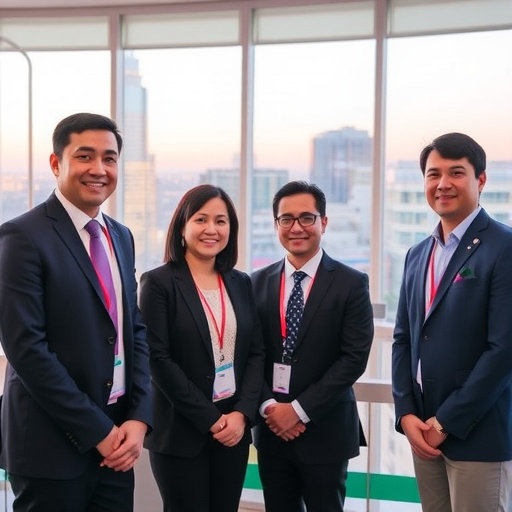
In a transformative move poised to redefine the biomedical innovation landscape, the Terasaki Institute for Biomedical Innovation (TIBI) and Keck Graduate Institute (KGI) have forged a pioneering collaboration aimed at catalyzing breakthroughs in biomedical research and education. Situated in Southern California, these esteemed institutions are leveraging their complementary expertise and resources to establish a lasting partnership that promises to accelerate advancements in biomaterials, cell engineering, drug delivery systems, medical devices, and personalized medicine. This alliance marks a seminal moment in the integration of academic research and translational applications, offering heightened opportunities for scientific inquiry and innovation with tangible clinical impact.
The foundation of this partnership rests on a multifaceted framework that facilitates interdisciplinary research, joint faculty appointments, and an unprecedented sharing of cutting-edge laboratory infrastructure. By consolidating their scientific capabilities, TIBI and KGI will harness synergistic expertise across diverse yet interrelated domains, creating an ecosystem where pioneering technologies can be developed and rapidly transitioned from conceptualization to clinical implementation. This strategic coalition is enhanced by mutual access to core facilities, including specialized instrumentation platforms and preclinical animal research resources, which are essential for the rigorous evaluation and validation of novel biomedical technologies.
Central to the partnership’s mission is the elevation of student training and mentorship programs, reflecting a deep commitment to cultivating the next generation of biomedical innovators. Doctoral candidates at KGI will have enhanced access to Terasaki Institute laboratories, allowing immersive, hands-on research experiences under the guidance of leading principal investigators who are at the forefront of their fields. This collaborative training environment aims to foster a rich intellectual milieu where interdisciplinary approaches flourish, equipping emerging scientists with the skills and knowledge necessary to navigate the complexities of modern biomedical challenges.
From a research perspective, the alliance is designed to stimulate joint proposals for competitive grants, enabling researchers from both institutions to secure pivotal funding that supports ambitious, high-impact projects. In addition, co-authorship of scholarly publications and patent applications will reinforce the academic and translational significance of the collaborative efforts. This integrative approach underscores a shared ethos: advancing discovery not as isolated endeavors but through collective enterprise that amplifies the pace and scope of innovation in biomedical sciences.
Biomaterials—engineered substances designed to interface with biological systems—represent a cornerstone of this alliance’s scientific focus. By combining expertise in material science, cellular interactions, and bioengineering, researchers are poised to develop novel scaffolds and matrices that promote tissue regeneration and repair. These materials could revolutionize therapeutic strategies for a broad spectrum of conditions, from degenerative diseases to traumatic injuries, by providing tailored cellular environments that enhance healing and functional recovery.
Concurrently, the partnership prioritizes advances in cell engineering, wherein precise manipulation of cellular behaviors and functions enables the design of next-generation therapeutics. Techniques such as gene editing, stem cell programming, and synthetic biology are at the forefront, enabling the creation of engineered cells capable of performing complex therapeutic tasks, including targeted drug delivery, immune modulation, and tissue regeneration. This collaborative effort seeks to harness cutting-edge methodologies to push the boundaries of cellular therapies and regenerative medicine.
Drug delivery technologies, another principal focus area, are being revolutionized through this partnership by developing innovative platforms that improve the targeting, efficacy, and safety profiles of therapeutics. Researchers are investigating nanoparticle carriers, controlled release systems, and bioresponsive delivery mechanisms that synchronize therapeutic release with physiological cues. These advancements hold promise for overcoming longstanding challenges in pharmacokinetics and biodistribution, ultimately enabling personalized and precision medicine approaches tailored to individual patient needs.
The alliance also emphasizes medical device innovation, integrating engineering, materials science, and clinical insights to create novel diagnostic and therapeutic tools. By leveraging shared expertise, teams aim to develop devices that are not only more effective and biocompatible but also possess enhanced capabilities for real-time monitoring and intervention. These devices are critical in advancing minimally invasive procedures and improving patient outcomes across various medical disciplines.
Personalized medicine stands as a unifying theme throughout the partnership’s initiatives, focusing on the development of tailored diagnostic and therapeutic strategies that account for individual variability in genetics, environment, and lifestyle. By integrating data from multiple scientific domains, the collaboration seeks to refine patient-specific interventions that maximize therapeutic benefits while minimizing adverse effects. The amalgamation of innovative biomaterials, engineered cells, drug delivery systems, and medical devices under this personalized framework exemplifies a visionary approach to future healthcare.
To ensure effective governance and strategic vision, the partnership will be overseen by a joint Collaborative Research Steering Committee. This committee will coordinate research agendas, foster interdisciplinary dialogue, identify and secure funding opportunities, and rigorously evaluate scientific progress. The initial term of the agreement spans three years, with potential renewal contingent on demonstrable advancements and emerging collaborative opportunities, thereby maintaining agility in responding to evolving scientific frontiers.
Beyond research and education, the partnership also engages in community-building activities including scientific symposia, speaker series, and summer programs targeted at undergraduate and high school students. These initiatives aim to inspire and cultivate early interest in biomedical sciences, thereby strengthening the pipeline of future innovators. By fostering a broader scientific dialogue and promoting inclusivity in STEM fields, TIBI and KGI are contributing to a sustainable and dynamic biomedical research ecosystem.
The convergence of engineering, life sciences, and clinical applications encapsulated in this partnership sets a compelling precedent for how collaborative innovation can propel biomedical research into new realms of possibility. By embracing translational research principles, the Terasaki Institute for Biomedical Innovation and Keck Graduate Institute are not only advancing the frontiers of knowledge but also laying the groundwork for improved patient outcomes and societal health.
Stewart Han, President of the Terasaki Institute for Biomedical Innovation, articulated the vision underlying this alliance, emphasizing the power of combined institutional strengths in accelerating technology development that directly benefits patient care. Meanwhile, Dr. Loren Martin, Associate Vice Provost of Research at KGI, highlighted the indispensable role of collaborative partnerships in bridging the gap between laboratory discoveries and real-world applications.
As this partnership unfolds, the biomedical community will be closely observing its outcomes, anticipating novel therapeutics, advanced training paradigms, and a strengthened translational research infrastructure. Such endeavors are critical in an era where biomedical challenges are increasingly complex and require integrated approaches that transcend traditional disciplinary boundaries.
Ultimately, the collaboration between TIBI and KGI exemplifies a forward-thinking model that melds innovation with education and clinical relevance, heralding a new epoch in biomedical science where shared goals and unified efforts drive meaningful advances for global health.
Subject of Research:
Biomedical innovation focusing on biomaterials, cell engineering, drug delivery technologies, medical devices, and personalized medicine through interdisciplinary collaboration.
Article Title:
Terasaki Institute and Keck Graduate Institute Launch Strategic Partnership to Accelerate Biomedical Innovation
News Publication Date:
March 9, 2026
Web References:
https://mediasvc.eurekalert.org/Api/v1/Multimedia/e9a2135e-66be-4893-86e1-6f35e2f4b605/Rendition/low-res/Content/Public
Image Credits:
Terasaki Institute for Biomedical Innovation / Keck Graduate Institute
Keywords
Biomedical engineering, Scientific collaboration, Translational research, Biotechnology, Cell engineering, Biomaterials, Drug delivery, Medical devices, Personalized medicine, Interdisciplinary research, Scientific innovation, Graduate education
Tags: biomaterials developmentbiomedical innovation collaborationcell engineering advancementsdrug delivery system innovationinterdisciplinary biomedical researchKeck Graduate Institute partnershipmedical device researchpersonalized medicine technologypreclinical biomedical researchshared laboratory infrastructureTerasaki Institute biomedical researchtranslational biomedical applications