In a groundbreaking advance that reshapes our understanding of social cognition, researchers have uncovered a neural signature fundamental to the brain’s ability to adaptively mentalize—effectively allowing individuals to infer and flexibly adjust their interpretations of others’ mental states in real time. This discovery sheds light not only on the intricate neural computations underpinning social interactions but also on potential pathways to address impairments found in neuropsychiatric conditions such as autism spectrum disorder and schizophrenia.
The study, recently published in Nature Neuroscience, employs cutting-edge neuroimaging techniques combined with sophisticated mathematical modeling to isolate brain activity patterns associated with adaptive mentalization. Mentalization, broadly described as the capacity to attribute intentions, desires, and beliefs to oneself and others, is crucial for effective communication and social behavior. Prior research has identified key brain regions implicated in this process, but the neural dynamics by which individuals adapt their mental models dynamically according to changing social contexts remained elusive until now.
Using a large cohort of human participants engaged in complex social decision-making tasks, the investigators captured high-resolution functional MRI data to map the spatiotemporal signatures of mentalization. These tasks required subjects to predict others’ choices while continuously updating their beliefs based on new information, simulating real-life social exchanges. By integrating Bayesian modeling frameworks, the team was able to computationally infer participants’ latent mental states and quantify how these states fluctuated in response to social cues.
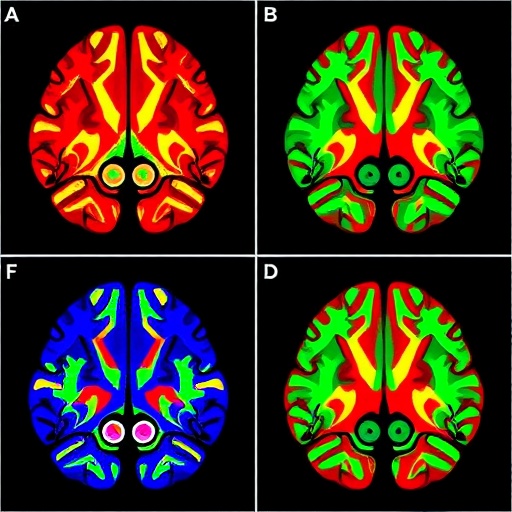
The principal finding revealed a distinct pattern of activity localized primarily within the medial prefrontal cortex (mPFC) and temporoparietal junction (TPJ), brain regions long associated with theory of mind processing. What distinguished this study was the identification of dynamic coupling between these areas that corresponded tightly with shifts in participants’ predictive models during the task. In other words, these regions did not merely activate in a static manner but exhibited coordinated fluctuations reflecting continuous recalibration of mental representations.
Digging deeper, the researchers applied representational similarity analysis and dynamic causal modeling to probe the directionality and informational content of neural exchanges. They demonstrated that the mPFC acts as a hub orchestrating mental state inferences, integrating bottom-up signals from sensory and affective regions with top-down expectations about others’ intentions. This interplay allows for rapid updates in the face of uncertain or ambiguous social information, embodying a neural mechanism for adaptive mentalization.
The implications of these findings extend beyond foundational neuroscience into clinical realms. Deficits in adaptive mentalization are hallmark features of several psychiatric disorders, where patients display difficulties in understanding and responding flexibly to others’ mental states. Unlocking the neural circuitry and computational rules governing this ability opens avenues for targeted interventions, potentially aiding in the development of novel diagnostic markers or neuromodulatory therapies tailored to restore social cognitive functions.
Moreover, this research underscores the brain’s remarkable capacity for probabilistic reasoning within social contexts. Unlike rigid binary categorization, adaptive mentalization relies on continuously updated probabilistic beliefs, a computational sophistication enabled by the interplay of the mPFC and TPJ. This nuanced perspective challenges simplistic models that regard social cognition as a fixed ability, highlighting instead its inherently dynamic and context-sensitive nature.
Beyond human applications, the study invites intriguing questions about the evolution of social cognition. The identification of neural signatures supporting adaptive mentalization suggests evolutionary pressures favored not just understanding others but doing so flexibly and adaptively in frequently changing environments. Such neural flexibility could underpin complex cooperative behaviors, cultural transmission, and the sophisticated social strategies that define humanity.
Methodologically, the integration of computational psychiatry approaches with neuroimaging exemplifies a new frontier in cognitive neuroscience. By bridging quantitative modeling with empirical brain data, the study achieves a level of precision in dissecting mental processes previously unattainable. This paradigm could serve as a blueprint for future investigations into other high-level cognitive functions characterized by adaptive inference and real-time updating.
The researchers also emphasize the importance of task design that mirrors ecological social complexity. Simple, static tasks fail to capture the dynamic nuance of mentalization. Incorporating real-time feedback, uncertainty, and interactive elements in experimental paradigms is essential for unraveling the neural substrates of social cognition in its naturalistic form.
Importantly, the study accounted for individual variability, uncovering differences in neural adaptability that correlated with behavioral performance and personality traits related to social competence. These insights pave the way for personalized models of social cognition, with potential relevance for educational, occupational, and therapeutic contexts.
Future research inspired by these findings will likely explore how autism, schizophrenia, and social anxiety disorders disrupt the identified neural patterns. Additionally, there is interest in examining developmental trajectories to understand how adaptive mentalization matures throughout childhood and adolescence, and how environmental factors or interventions might modulate these processes.
In essence, the delineation of a neural signature for adaptive mentalization represents a paradigm shift in social neuroscience. It provides a concrete, mechanistic foundation for understanding how the brain navigates the ever-changing landscape of social information, adjusting mental constructs fluidly to guide behavior. This advance not only enriches theoretical frameworks but also holds promise for improving mental health outcomes linked to social cognition deficits.
As neuroscience continues to uncover the neural architecture underpinning our social minds, studies like this illuminate the complex machinery that allows humans to thrive in social ecosystems. The profound ability to adaptively mentalize arguably stands as one of the defining features of human intelligence—an ability now rendered visible, measurable, and potentially modifiable thanks to pioneering research at the intersection of neuroimaging, computational modeling, and cognitive science.
Subject of Research: Neural mechanisms of adaptive mentalization during social interactions
Article Title: A neural signature of adaptive mentalization
Article References:
Buergi, N., Aydogan, G., Konovalov, A. et al. A neural signature of adaptive mentalization. Nat Neurosci (2026). https://doi.org/10.1038/s41593-026-02219-x
Image Credits: AI Generated
DOI: https://doi.org/10.1038/s41593-026-02219-x
Tags: adaptive mentalization neural signaturebrain mechanisms of social cognitiondynamic mental state inferencefMRI studies of mentalizationmathematical modeling of brain activitymentalization impairments in autismneural computations in social interactionsneuroimaging in social neurosciencereal-time social cognition processesschizophrenia and social cognitionsocial decision-making neural basisspatiotemporal brain activity patterns