A groundbreaking study from Boston University has unveiled a pivotal role for the enzyme lysyl oxidase-like 2 (LOXL2) in the protection and maintenance of cartilage within the temporomandibular joint (TMJ), offering new hope for therapeutic interventions against TMJ osteoarthritis (TMJ-OA). This degenerative disorder, which impairs the cartilage of the jaw joint, affects millions globally, yet currently lacks targeted treatments to halt or reverse cartilage degradation. The research, published on February 4, 2026, in the International Journal of Oral Science, provides a comprehensive molecular insight into how LOXL2 modulates inflammatory pathways and safeguards chondrocytes, the cells responsible for cartilage integrity.
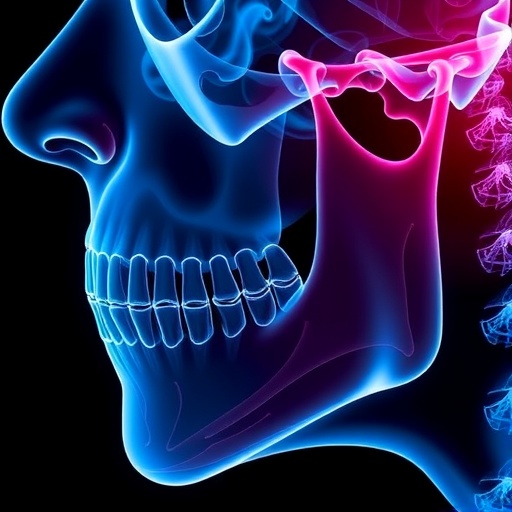
The temporomandibular joint serves as a complex, hinge-like articulation connecting the mandible to the skull, facilitating essential functions such as chewing, speaking, and yawning. Cartilage and the interposed articular disc in this joint act as shock absorbers, providing a resilient surface for smooth movement. In TMJ-OA, chronic inflammation and mechanical wear create a destructive environment where cartilage components are degraded, leading to pain, stiffness, and limited mobility. Despite the prevalence of TMJ-OA and its impact on quality of life, there are currently no FDA-approved drugs specifically designed to protect or regenerate the cartilage in the TMJ.
Recognizing this therapeutic gap, the Boston University team, led by Assistant Professor Manish V. Bais, embarked on an experimental exploration of LOXL2, an enzyme traditionally linked to cross-linking collagen and elastin in the extracellular matrix. Using genetically engineered mouse models deficient in the Loxl2 gene combined with cartilage specimens derived from goats—the latter chosen due to structural similarity to human jaw joints—the researchers meticulously charted the enzyme’s involvement in maintaining cartilage homeostasis under inflammatory stress.
Osteoarthritis fundamentally disrupts the equilibrium maintained by chondrocytes, the specialized cells tasked with synthesizing and remodeling cartilage matrix. Profound inflammatory stimuli, especially the cytokine interleukin-1 beta (IL-1β), activate catabolic pathways in these cells, accelerating cartilage breakdown. The study highlights that loss of LOXL2 leads to enhanced expression of pro-inflammatory genes and a concurrent depletion of key structural molecules such as aggrecan proteoglycans, pivotal for cartilage’s cushioning properties.
At the molecular level, the team concentrated on the NF-κB (nuclear factor kappa B) signaling pathway, often regarded as a central orchestrator of inflammation and tissue degradation in arthritis. Activation of NF-κB shifts chondrocyte gene expression toward the production of matrix metalloproteinases (MMPs), including MMP13, which degrade collagen and extracellular matrix components. Intriguingly, LOXL2 acts as a suppressor of this pathway, thereby curbing the inflammatory cascade and preventing programmed cell death—or apoptosis—in chondrocytes. Additionally, LOXL2 preserves mitochondrial function, safeguarding the cell’s energy supply and resilience amid inflammatory assault.
Experimentally, administration of exogenous LOXL2 to cartilage tissues under inflammatory conditions reversed numerous harmful effects. Specifically, it markedly reduced levels of matrix-degrading enzymes and inflammatory mediators such as ADAMTS5 and PTGS2, which are implicated in cartilage erosion and pain sensation. Concurrently, the enzyme helped restore the deposition of protective cartilage elements, countering the degradation typically seen in TMJ osteoarthritis.
The translational validity of these findings was reinforced through experiments involving goat jaw cartilage, whose anatomic and biochemical properties closely mirror human TMJ structure and function. This strategic model strengthens the prospect that LOXL2-based therapies could be efficacious in human patients. Prof. Bais emphasizes that this discovery opens new therapeutic avenues that may slow, halt, or even reverse TMJ pathological progression by preserving cartilage viability and function.
The implications of this research extend beyond the TMJ, as OA remains a widespread, debilitating condition affecting numerous synovial joints throughout the body. Understanding LOXL2’s dual role in extracellular matrix stabilization and inflammation modulation may inform future drug development in orthopedics and regenerative medicine. Nonetheless, the investigators caution that extensive clinical trials are required before LOXL2-targeted interventions can be safely and effectively deployed in humans.
This study represents a paradigm shift by casting LOXL2 not merely as a structural enzyme but as a key modulator of inflammatory processes in joint tissues. Such insight could revolutionize current strategies for managing TMJ disorders, which presently revolve around symptom relief rather than disease modification. The ability to intervene at a molecular level to forestall cartilage degeneration stands to dramatically enhance patient outcomes, alleviating chronic pain and preserving jaw mobility.
Boston University’s interdisciplinary approach, merging molecular biology, veterinary science, and translational medicine, underscores the importance of integrative research in addressing complex disorders like TMJ-OA. Dr. Bais and his colleagues have laid a crucial foundation for future innovations that harness endogenous mechanisms to counteract joint disease—ushering in a new era of precision therapeutics in dentistry and orthopedics alike.
As research progresses, further elucidation of how LOXL2 interacts with other cellular pathways and tissue microenvironments will be vital. Delineating these interactions will aid in optimizing delivery methods and treatment regimens. The ultimate goal is to develop FDA-approved drugs capable of selectively boosting LOXL2 activity or mimicking its protective effects, providing clinicians with robust tools to combat TMJ osteoarthritis effectively.
This seminal discovery not only advances scientific understanding of cartilage biology but also offers tangible hope for millions suffering from TMJ disorders worldwide. By protecting the integrity of the jaw joint at the cellular and molecular levels, LOXL2-targeted therapies could transform the clinical landscape, reducing reliance on invasive procedures and improving life quality for patients with chronic joint conditions.
Subject of Research: Animals
Article Title: LOXL2 deletion triggers TMJ osteoarthritis, while overexpression protects it from NF-κB-induced chondrocyte apoptosis
News Publication Date: 4-Feb-2026
References: DOI: 10.1038/s41368-025-00409-0
Image Credits: Emily McDougall and Annie Campbell by University of Dundee, School of Dentistry from Openverse
Keywords: TMJ osteoarthritis, LOXL2, cartilage degeneration, chondrocytes, NF-κB pathway, inflammation, jaw joint, regenerative medicine, enzyme therapy, matrix metalloproteinases, mitochondrial protection, translational dental research
Tags: Boston University TMJ researchcartilage regeneration in jaw arthritischondrocyte preservation in jaw jointenzymatic pathways in TMJ osteoarthritisLOXL2 enzyme role in TMJ arthritislysyl oxidase-like 2 inflammatory modulationmolecular mechanisms of TMJ cartilage repairnovel treatments for TMJ osteoarthritistemporomandibular joint cartilage degenerationtherapeutic targets for TMJ disordersTMJ joint inflammation and therapyTMJ osteoarthritis cartilage protection