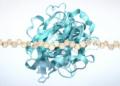
In a groundbreaking collaboration between researchers at the University of Warwick and the Massachusetts Institute of Technology (MIT), scientists have unveiled microscopic networks on catalyst surfaces that promise to revolutionize the way we understand and design catalysts for chemical processes. This remarkable discovery sheds light on the intricate and cooperative behavior of catalyst surfaces, challenging long-held assumptions and opening new avenues for cleaner, greener technologies essential to energy and industrial applications.
Traditionally, catalysts—substances that accelerate chemical reactions without being consumed—have been conceptualized as a collection of isolated “hotspots” where reactions occur most rapidly. These hotspots were thought to operate independently, each serving as a discrete active site for a reaction step. However, the new study offers a paradigm-shifting perspective: catalyst surfaces act as interconnected electrical networks in which individual regions communicate and cooperate through the flow of electrons.
Utilizing advanced scanning electrochemical cell microscopy (SECCM), the researchers achieved an unprecedented level of resolution and sensitivity in mapping catalytic activity. SECCM, an innovative technique that enables localized electrochemical measurements, was applied here for the first time to thermochemical catalysis—a class of reactions fundamental to fuel production and clean energy technologies such as hydrogen generation and fuel cells. This approach provides detailed spatially resolved chemical activity data directly on real catalyst surfaces.
The team focused on platinum catalysts, extensively used in industry due to their effectiveness in facilitating oxidation and reduction reactions. By combining SECCM with crystallographic mapping methods, which reveal the orientation and structure of microscopic crystal grains on the catalyst surface, the scientists identified that these grains are not uniform in activity. Instead, different grains are specialized, with some favoring oxidation reactions and others promoting reduction, highlighting a division of labor at the sub-micron scale.
This discovery reveals that each grain on the catalyst surface does not act alone; rather, grains engage in “chemical crosstalk,” influencing each other’s activity through electron exchange and spatial proximity. Such interactions can enhance or suppress catalytic processes in adjacent regions, resulting in complex cooperative behavior that ultimately drives the overall reaction more efficiently than isolated sites could.
Dr. Xiangdong Xu, the study’s lead author and a Research Fellow at Warwick, highlights the transformative nature of this insight: “Our findings dismantle the conventional view of catalysts functioning as isolated hotspots. Instead, the catalyst surface is a dynamic, electrically interconnected system where different regions share electrons and collaboratively accelerate chemical reactions.”
Co-author and MIT Associate Professor Yogesh Surendranath emphasizes the broader implications: “Understanding that catalyst surfaces operate as interconnected networks rather than simple patches of independent active sites fundamentally changes how we approach catalyst design. This networked behavior can be leveraged to engineer catalysts with enhanced performance by fine-tuning inter-grain connectivity.”
The technical innovation underpinning these results, scanning electrochemical cell microscopy, allows researchers to perform electrochemical measurements at the nanoscale by bringing a microscopic cell filled with electrolyte into contact with a pinpoint on the catalyst surface. This method captures localized current responses associated with redox reactions, rendering a detailed map of catalytic activity across diverse crystal facets and grain boundaries.
Furthermore, the combination of SECCM with crystallographic analysis—typically conducted by electron backscatter diffraction techniques—provides simultaneous information on both the chemical and structural domains of the catalyst. This dual-view capability is crucial for correlating precise grain orientation and boundary characteristics with catalytic function, a feat previously unattainable with conventional techniques.
Another striking aspect of the research is the observation of cooperative electron flow patterns between grains, effectively resembling an electrical circuit overlaid on the catalyst surface. This network facilitates electron sharing, optimizing energy transfer during catalytic cycles and reducing inefficiencies that limit reaction rates. It is akin to an orchestra of individual instruments synchronizing to produce a harmonious symphony rather than solo performances.
The study’s insights present a compelling case for shifting catalyst development strategies from focusing on isolated active sites to engineering holistic surface architectures where interactivity and connectivity dominate. Such next-generation catalysts could significantly improve efficiency in industrial chemical synthesis, environmental remediation, and clean energy technologies, playing a pivotal role in reducing carbon footprints and advancing sustainable manufacturing.
Professor Pat Unwin, an eminent figure from the University of Warwick, underscores the profound impact of these findings: “For the first time, we visualize how catalytic activity orchestrates across a real-world surface, revealing connectivity that was previously invisible. This opens new technological frontiers where we can precisely design catalysts with controlled inter-regional communication, elevating catalytic science beyond conventional bounds.”
Beyond fundamental science, this research exemplifies the power of interdisciplinary collaboration, merging advanced microscopy, electrochemistry, and materials science. It also showcases the potential of electrochemical microscopy as a general tool to unravel complex surface phenomena in heterogeneous catalysis, energy conversion, and beyond.
As the world grapples with urgent demands for cleaner fuels and sustainable chemical processes, innovations that deepen mechanistic understanding at the microscopic level are vital. The unveiling of such intricate cooperative networks heralds a new era wherein catalyst surfaces are engineered as dynamic systems, driving transformative improvements in catalytic efficiency and environmental compatibility.
This pioneering work was published in the prestigious journal Nature Catalysis and is expected to catalyze further research exploring the multi-scale interplay of structure and function in catalytic materials. By exposing the hidden networks coordinating catalytic activity, scientists are now better equipped to design catalysts that meet the pressing challenges of 21st-century energy and chemical industries.
Subject of Research: Not applicable
Article Title: Electrochemical Imaging of Thermochemical Catalysis
News Publication Date: 5-Mar-2026
Web References:
https://www.nature.com/articles/s41929-026-01486-y
http://dx.doi.org/10.1038/s41929-026-01486-y
References:
University of Warwick & MIT researchers, “Electrochemical Imaging of Thermochemical Catalysis,” Nature Catalysis, 2026.
Image Credits:
Dr Xiangdong/University of Warwick
Keywords
Catalysis, Chemical processes, Catalytic efficiency, Green chemistry, Industrial chemistry, Scanning electrochemical cell microscopy (SECCM), Electrochemistry, Chemical reactions, Thermochemical catalysis, Microscopic networks, Platinum catalyst, Crystal grains
Tags: advanced catalytic activity mappingcatalyst surface electrical networkscatalyst surface microscopic networksclean energy catalysis researchcooperative catalyst behaviorelectron flow in catalystsfuel cell catalyst designhydrogen generation catalystsinterconnected catalyst hotspotsscanning electrochemical cell microscopy SECCMthermochemical catalysis innovationsUniversity of Warwick MIT collaboration