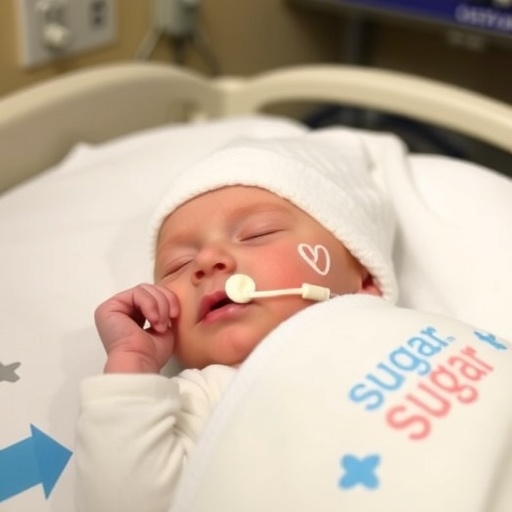
A groundbreaking Cochrane systematic review has provided compelling new evidence supporting the analgesic effects of oral sucrose in neonates undergoing venepuncture, a common but painful hospital procedure. Venepuncture, which involves needle insertion to draw blood, is frequently performed on newborns, particularly those admitted to neonatal intensive care units (NICUs). This review consolidates findings from 29 clinical trials encompassing over 2,700 preterm and full-term infants, marking a significant step forward in neonatal pain management protocols.
The physiological immaturity of newborns, especially premature infants, renders their nociceptive systems highly sensitive, often resulting in pronounced pain responses during routine medical interventions. Repeated procedural pain without adequate analgesia has been linked with adverse developmental outcomes, including altered brain architecture and impaired physical growth trajectories. This underscores the critical need for effective, accessible analgesic interventions in neonatal care.
Sucrose analgesia, the administration of a sweet sugar solution orally moments before painful procedures, has been a pragmatic solution since its introduction decades ago. Despite its longstanding usage in many neonatal units worldwide, the specific evidence addressing its impact during venepuncture remained relatively sparse until now. This latest review rigorously evaluated and synthesized data to determine the efficacy, safety, and optimal administration practices of sucrose in this context.
The compiled evidence strongly suggests that sucrose significantly reduces acute procedural pain during and immediately after venepuncture when compared to no intervention, water, or standard care protocols. Notably, the analgesic effect of sucrose was enhanced when paired with non-nutritive sucking stimuli, such as pacifiers or dummies, indicating a synergistic effect that engages multiple sensory pathways to mitigate pain.
Lead author Mariana Bueno, an Assistant Professor at the University of Toronto, emphasizes the clinical implications of these findings. She points out that neonatal pain relief remains inconsistently applied across hospital settings despite the availability of evidence-based interventions like sucrose. The review offers a robust, evidence-backed rationale for integrating sucrose analgesia more systematically into clinical practice, improving the neonatal care experience.
Importantly, none of the encompassed studies reported immediate adverse effects from sucrose given in the small volumes necessary for analgesia. This reinforces the safety profile of sucrose as a low-cost, fast-acting, and non-invasive analgesic option. Nevertheless, the authors acknowledge the need for further longitudinal studies focusing on the neurodevelopmental effects of repeated sucrose exposure in infants requiring extended hospitalization.
Co-author Ligyana Candido, a registered nurse, articulates that parents and caregivers might feel reassured by knowing that something as simple as a few drops of sugar solution can effectively alleviate distress during blood draws. This is particularly critical in instances where alternative comforting methods—such as skin-to-skin contact or breastfeeding—are not feasible due to clinical or logistical limitations.
One striking observation in the review was the heterogeneity in sucrose administration protocols across trials. Variability in dosing, timing, and mode of administration highlight inconsistencies that may limit broader clinical adoption and efficacy. The authors advocate for standardized medication protocols, treating sucrose administration with the same rigor as pharmacological agents to ensure safety, reproducibility, and optimized analgesic outcomes.
Furthermore, the review underscores that sucrose should be administered deliberately as an analgesic intervention during painful procedures rather than as a general soothing agent for distressed infants. Proper documentation and adherence to formal protocols are essential to maintain clinical integrity and prevent misuse.
Future research priorities include direct head-to-head comparisons of sucrose with other non-pharmacologic comfort measures such as skin-to-skin contact and breastfeeding, moving beyond the conventional comparisons to no treatment or placebo. Such studies will help delineate the most efficacious, synergistic, or context-appropriate strategies for neonatal pain management.
The implications of this review extend beyond the neonatal ward; they challenge clinical norms and ethical considerations regarding infant pain management. Historically, infant pain has been under-recognized and undertreated, but emerging data, including this comprehensive synthesis, calls for a paradigm shift towards proactive analgesia.
In conclusion, this extensive Cochrane review cements oral sucrose as a validated, low-cost analgesic modality for neonatal venepuncture pain. It encourages health care providers to implement evidence-based, standardized protocols to alleviate one of the most common and distressing experiences endured by hospitalized newborns. Such advancements are not only ethically imperative but hold the promise of optimizing long-term developmental outcomes for the most vulnerable patients.
Subject of Research: People
Article Title: Sucrose analgesia for venepuncture in neonates
News Publication Date: 3-Mar-2026
Web References:
http://dx.doi.org/10.1002/14651858.CD015221.pub2
Keywords: Neonatology, Pain, Sugars, Sucrose, Hospitals, Medical treatments, Analgesics, Procedural pain, Neonatal care, Venepuncture, Non-nutritive sucking, Pain management
Tags: analgesic effects of sugar on infantsclinical trials on infant pain managementimpacts of procedural pain on infant developmentneonatal intensive care pain interventionsneonatal pain management during venepuncturenon-pharmacological pain relief in neonatesoral sucrose analgesia for newbornspain relief for preterm infantssafety of oral sucrose in newbornssucrose administration protocols for neonatessucrose use in NICU proceduressystematic review of neonatal analgesics