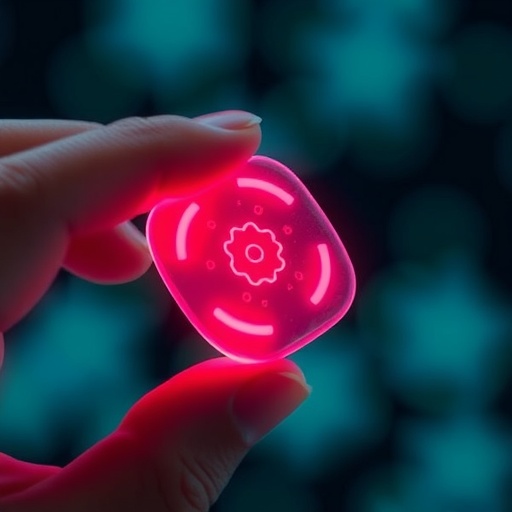
In a groundbreaking advancement at the intersection of immunology and biomedical engineering, researchers at The Jackson Laboratory (JAX), in collaboration with the Massachusetts Institute of Technology (MIT), have pioneered an innovative microneedle skin patch designed to non-invasively sample the body’s immune activity directly from the skin. This bandage-like device captures critical immune signals and cells within a remarkably brief timeframe—detecting inflammatory signals within minutes and collecting specialized immune cells within hours—circumventing the need for traditional blood draws or invasive biopsies. This pioneering technology holds promise for revolutionizing how immune system dynamics are monitored, particularly in contexts ranging from chronic autoimmune skin conditions to vaccine responsiveness and cancer immunotherapy.
The core innovation lies in the device’s ability to interface with resident memory T cells (Trm), which inhabit the skin and act as vigilant sentinels guarding against pathogens. Unlike circulating immune cells found in blood, Trm cells reside within skin layers, ready to rapidly deploy an immune response upon recognizing previously encountered antigens. By leveraging this natural immunological alarm system, the microneedle patch stimulates a localized response that summons a diverse array of immune cells and signaling molecules from the bloodstream into the skin at the site of application. The microneedles—constructed from an FDA-approved polymer and coated with a seaweed-derived hydrogel approved for biocompatibility—penetrate only the upper layers of the skin, ensuring minimal irritation without damaging nerves or blood vessels.
This minimally invasive approach opens up a new frontier in immune monitoring, particularly for patients in whom standard invasive methods pose substantial challenges. Skin biopsies and blood draws can be especially problematic when sampling from sensitive or cosmetically important areas like the face and neck, or with vulnerable populations such as infants, elderly individuals, and frail patients. The microneedle patch, roughly the diameter of a quarter, presents a painless, patient-friendly alternative that facilitates repeated sampling without scarring or significant discomfort, which could dramatically enhance longitudinal monitoring capabilities in clinical and research settings.
The development journey journeyed from foundational studies in mouse models, where the patch’s capability to enrich for antigen-specific T cells was demonstrated by recruiting these cells from circulation into skin tissue, to initial human trials conducted at the University of Massachusetts Chan Medical School. In these preliminary human applications, the patch successfully captured a heterogeneous mix of crucial immune cells, including resident memory T cells, as well as a spectrum of signaling proteins reflective of the immune system’s functional status. This represents the first live human immune cell sampling via such a microneedle technology, signaling a paradigm shift in non-invasive immune diagnostics.
Operated simply by applying the patch to the skin, the device absorbs immune cells and soluble biomarkers from the interstitial fluid surrounding skin cells after a brief antigen rechallenge that transiently reactivates Trm cells. This reactivation engenders a local pro-inflammatory milieu, recruiting immune actors from the circulation into the epidermis and upper dermis, effectively concentrating critical immune responses in an anatomically accessible area. The microscopic needles facilitate direct molecular and cellular sampling within just minutes to hours, providing a dynamic readout that reflects both the quantity and activation state of T cells and other immune constituents.
Beyond its immediate research implications, this breakthrough offers immense potential for clinical translation. The ability to track immune responses safely and conveniently could transform patient care paradigms, enabling real-time monitoring of treatment efficacies in conditions like psoriasis, vitiligo, and other immune-mediated dermatologic diseases that are driven by aberrant tissue-resident immune activity. Additionally, the patch could assist in evaluating vaccine-induced immunity or immunotherapy outcomes by providing complementary data to traditional blood tests, but in a format far easier to implement repeatedly and at home.
The device’s fabrication utilizes hundreds of microneedles made from an FDA-approved polymer, whose dimensions allow skin penetration only to the superficial layers, avoiding deeper tissue trauma. The seaweed-derived hydrogel coating binds immune cells and inflammatory proteins, stabilizing the captured sample for subsequent detailed analyses. The fabrication techniques and biocompatible materials selected ensure not only efficacy but also safety and manufacturability at scale, laying the foundation for broad clinical adoption once further validation studies are completed.
Importantly, this innovation aligns with a growing appreciation in the scientific community for tissue-resident immunity as a critical axis of immune surveillance and memory, distinct from circulating immune compartments. Studying cells confined to specific organs or tissues traditionally necessitated invasive procedures, limiting clinical feasibility. By presenting a window into the skin’s immune ecology through a simple patch, this technology could catalyze new investigations into how localized immunity shapes systemic health and disease outcomes.
The investigators emphasize the patch’s utility extends beyond T cells to other immune cell types and molecular mediators. This versatility opens doors for broad applications, including early detection of inflammatory flares, monitoring disease progression, and even personalized therapeutic adjustments. The rapid sampling time—ranging from mere minutes up to half an hour—is a critical attribute that enhances patient convenience and clinical workflow compatibility.
Further exploration and refinement are underway, including studies across diverse patient demographics and disease states to delineate the patch’s performance parameters and optimize its diagnostic algorithms. The development team forecasts future iterations tailored for alternative mucosal surfaces such as the oral and nasal cavities, potentially broadening the scope to respiratory and gastrointestinal immune monitoring.
In addition to the intrinsic scientific merit, the collaborative effort spanning JAX, MIT, University of Massachusetts Chan Medical School, and Scripps Research underscores the interdisciplinary synergy required to bring such translational innovations from conceptualization to clinical reality. The team holds a patent application filed by MIT protecting aspects of this technology, underscoring the novel intellectual property emerging from this venture.
This advancement signifies a promising leap toward more patient-centered immune surveillance tools, blending cutting-edge biomaterials, immunology, and engineering. As it evolves from experimental validation to clinical adoption, the microneedle skin patch has the potential to redefine immune diagnostics, enabling real-time, site-specific insight into human immunity that was previously inaccessible without invasive procedures.
Subject of Research: Immune system monitoring through minimally invasive skin sampling
Article Title: Leveraging tissue-resident memory T cells for non-invasive immune monitoring via microneedle skin patches
News Publication Date: 2 March 2026
Web References: https://www.nature.com/articles/s41551-026-01617-7
References: Nature Biomedical Engineering, DOI: 10.1038/s41551-026-01617-7
Image Credits: The Jackson Laboratory
Keywords: Immune system, Immune disorders, Aging populations, Skin, Inflammatory signaling
Tags: biomedical engineering in immunologycancer immunotherapy monitoringchronic autoimmune skin condition diagnosticsimmune system dynamics trackinginnovative microneedle skin patchlocalized immune response samplingnon-invasive immune monitoring technologypainless immune health assessmentrapid inflammatory signal detectionresident memory T cells detectionskin-based immune cell collectionvaccine response measurement tool