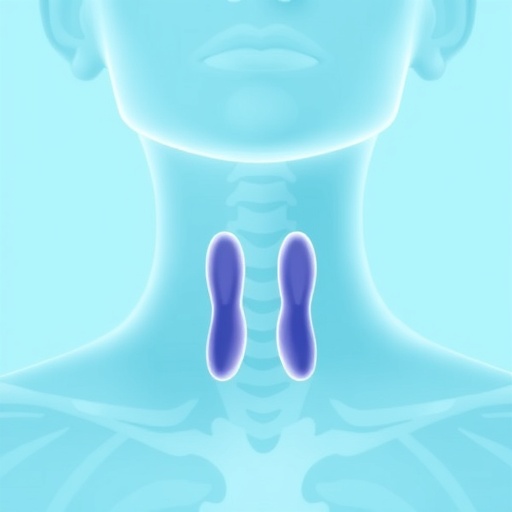
In an era where medicine increasingly leans towards personalization, a groundbreaking development in cancer prognosis has emerged, promising to redefine how clinicians approach treatment decisions for older adults with differentiated thyroid cancer (DTC). Researchers Y. Mu, S. Zhang, M. Huang, and their collaborators have constructed and validated an advanced survival prediction model tailored specifically for older postoperative patients with DTC, offering a level of prognostic precision never before seen in this demographic. This model marks a pivotal step forward in geriatric oncology by addressing the unique physiological and clinical challenges that elderly patients face after thyroid cancer surgery.
Differentiated thyroid cancer, encompassing primarily papillary and follicular thyroid cancers, represents the most common type of thyroid malignancy. While generally associated with a favorable prognosis in the general population, older patients with DTC often exhibit vastly different disease progression patterns and survival outcomes, largely due to age-related comorbidities, altered immune status, and variability in treatment tolerance. The traditional one-size-fits-all predictive tools have struggled to accurately estimate survival probabilities in this subgroup, leading to suboptimal treatment decisions and patient outcomes. The newly validated model effectively bridges this gap by incorporating multidimensional clinical data tailored to the older patient’s unique profile.
Central to the innovation of this prognostic tool is its foundation on a comprehensive dataset that includes demographic variables, tumor characteristics, surgical outcomes, and post-surgical clinical parameters specifically recorded for elderly patients. Unlike existing models, which mainly rely on broad cancer staging and histopathological factors, this prediction algorithm integrates a personalized risk stratification approach. This methodology significantly enhances predictive accuracy for postoperative survival by accounting for the patient’s biological age rather than chronological age, as well as other factors such as comorbidities and functional status.
The construction of the model involved rigorous statistical techniques, including Cox proportional hazards regression analyses and machine learning algorithms, which allowed for the identification of variables most strongly associated with survival outcomes. Validation cohorts drawn from independent datasets demonstrated robust predictive power, reinforcing the model’s reliability across diverse patient populations. Such statistical rigor ensures that the tool is not merely academically sound but also translatable to real-world clinical settings. Its validation across external populations suggests a broad applicability that can potentially standardize postoperative prognosis worldwide.
One of the standout technical features of the new model is its dynamic ability to update prognosis in light of evolving clinical data during follow-up visits. Traditional predictive models often provide a static risk estimate at the point of surgery, yet patient status postoperatively can change substantially due to complications, disease recurrence, or the emergence of secondary health issues. By enabling clinicians to recalibrate survival estimates based on longitudinal patient data, this model supports more nuanced and flexible treatment planning that adapts over time, enhancing patient management and potentially improving survival outcomes.
The implications of these findings are profound for how geriatric oncology care is conceptualized. In clinical practice, older patients with thyroid cancer frequently face overtreatment or undertreatment due to the uncertainty in balancing cancer aggressiveness with overall health status. With a reliable prognostic tool, physicians can stratify patients more effectively to determine who might benefit from aggressive adjuvant therapies versus those better suited for conservative management or supportive care. This prevents unnecessary interventions and maximizes the quality of life—an imperative consideration in geriatrics.
From a biomolecular perspective, the model’s predictive variables underscore the complex interplay between tumor biology and systemic aging processes. For instance, factors such as tumor size, lymph node involvement, and extrathyroidal extension remain important, but their prognostic weight is modulated by patient frailty scores and serum biomarker profiles indicative of immune competence and metabolic health. This comprehensive approach highlights the necessity of integrative oncology, where predictions extend beyond tumor-centric metrics to embrace the patient’s entire physiological landscape.
The implementation of this prediction model also carries significant potential for health economics by guiding resource allocation more efficiently. In healthcare systems burdened by aging populations and increasing cancer incidences, personalized prognostic tools enable better utilization of diagnostic and therapeutic resources. Patients deemed at low risk of mortality postoperatively can be spared from costly interventions, while high-risk patients can be prioritized for intensive care, thus improving overall system efficacy and patient-centered care delivery.
Further technical elaboration reveals that the modeling approach takes advantage of cutting-edge machine learning methodologies, including ensemble learning techniques that combine multiple predictive algorithms to optimize survival estimates. This hybrid modeling strategy enhances interpretability while minimizing overfitting, a persistent challenge in clinical predictive modeling. Such advancements reflect the growing intersection between artificial intelligence and personalized medicine, where computational power enables novel insights into complex clinical datasets.
It is also worth noting that the research team meticulously accounted for missing data and potential confounders through advanced imputation techniques and sensitivity analyses. This methodological robustness enhances confidence that the model’s predictions are not biased by incomplete or skewed data, a common pitfall in retrospective clinical research. Moreover, the inclusion criteria for patient data reflects real-world diversity, encompassing a range of socioeconomic backgrounds, cancer stages, and postoperative courses, which strengthens the generalizability of findings.
The clinical translation of this work is facilitated by the development of user-friendly digital interfaces that integrate the model within electronic health record systems. This ease of access ensures that oncologists, endocrinologists, and geriatricians can rapidly obtain individualized survival predictions at the point of care. Coupled with decision support systems, these interfaces assist in shared decision-making conversations between clinicians and patients, empowering older adults to make informed choices about their treatment trajectories based on robust, personalized prognostic information.
Ethical considerations have also been thoughtfully integrated into the design and potential application of this tool. The capacity to predict survival with greater accuracy must be balanced against the psychological impact such information can have on patients and families. The researchers advocate for a sensitive, communicative approach wherein prognostic data is used to support patient autonomy, clarify expectations, and foster realistic hope without diminishing quality of life. This balanced perspective is critical to the humane application of precision oncology in vulnerable populations.
Future directions for this research include expanding the model to incorporate genomic and proteomic data, which may further refine prognostic accuracy by capturing tumor heterogeneity at the molecular level. Integration with wearable health technologies and continuous monitoring could also enable real-time adjustments to survival predictions, bringing personalized oncology closer to a truly dynamic and responsive practice. Collaborative multicenter trials are planned to evaluate the model’s impact on treatment outcomes, survival rates, and patient satisfaction across diverse healthcare settings.
The emergence of this personalized survival prediction model heralds a transformative era for managing differentiated thyroid cancer in older adults. This advancement epitomizes the confluence of clinical expertise, statistical innovation, and ethical foresight necessary to tailor cancer care in an aging world. As the model gains adoption, it holds promise not only to improve prognostication but to realign treatment philosophy around the principles of individualized, patient-centered care—ushering in new hope for millions of elderly thyroid cancer patients globally.
By successfully addressing the unmet need for precise individualized prognosis in this unique patient group, the research led by Mu and colleagues exemplifies how data-driven models can overcome traditional limitations of cancer staging systems. This work represents a vital stride towards personalized oncology, where each patient’s distinctive biological and clinical profile shapes the therapeutic approach, optimizing survival and wellbeing. It is a testament to the power of interdisciplinary innovation at the interface of medicine, technology, and geriatrics.
As medicine continues to evolve, tools like this predictive model will increasingly serve as cornerstones in cancer care, facilitating not just survival but meaningful longevity and quality of life. The broader implications extend far beyond thyroid cancer, informing a future where predictive analytics guide tailored interventions across oncology subspecialties. This research stands as a compelling example of how modern science harnesses data to rewrite the narrative of cancer prognosis for the betterment of society’s aging populations.
Subject of Research: Survival prediction modeling for older postoperative differentiated thyroid cancer patients
Article Title: Personalized prognosis: construction and validation of a survival prediction model for older postoperative differentiated thyroid cancer patients
Article References:
Mu, Y., Zhang, S., Huang, M. et al. Personalized prognosis: construction and validation of a survival prediction model for older postoperative differentiated thyroid cancer patients. BMC Geriatr (2026). https://doi.org/10.1186/s12877-026-07178-3
Image Credits: AI Generated
Tags: advanced predictive analytics in thyroid cancerage-related comorbidities in thyroid cancerage-specific cancer prognosis toolsclinical challenges in elderly thyroid cancer treatmentdifferentiated thyroid cancer outcomes in older adultsimproving treatment decisions for elderly cancer patientsmultidimensional data in cancer prognosispapillary and follicular thyroid cancer survivalpersonalized prognosis in geriatric oncologypostoperative survival prediction in thyroid cancersurvival prediction model for elderly thyroid cancertailored survival models for postoperative cancer patients