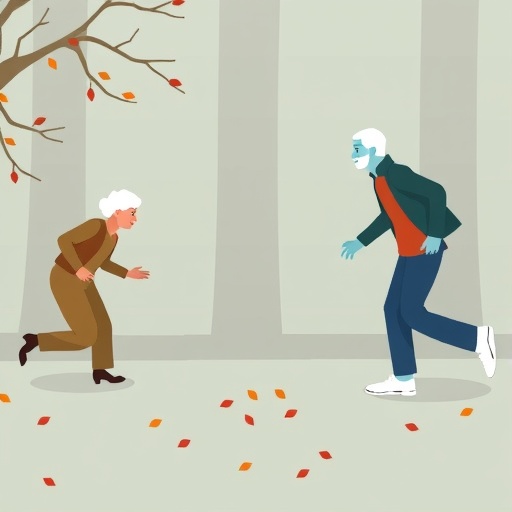
As global populations continue to age, the imperative to safeguard older adults from the debilitating consequences of falls has never been more critical. Recent research led by Dudash, Ickert, Ward, and colleagues ventures into this pressing issue with an innovative approach, utilizing a structured e-Delphi study to design a comprehensive fall preparedness and recovery program tailored specifically for older adults. This pioneering work, published in 2026 in BMC Geriatrics, marks a significant advancement in geriatric healthcare, aiming to not only prevent falls but also facilitate effective recovery when they occur.
Falls remain one of the most common and severe public health challenges for older populations worldwide. The physical, psychological, and economic repercussions are profound, often triggering a cascade of health decline, loss of independence, and increased mortality risk. Despite numerous studies and intervention strategies, a standardized, universally effective fall preparedness and recovery program has remained elusive. By harnessing the expertise of multidisciplinary professionals through an e-Delphi methodology, the current study introduces a meticulously crafted roadmap promising to transform fall management paradigms.
The e-Delphi technique employed in this study capitalizes on the collective intelligence and consensus of diverse experts in geriatrics, rehabilitation, psychology, and public health. This iterative, anonymous feedback method ensured a balanced synthesis of knowledge, eliminating biases typically encountered in face-to-face expert panels. Participants underwent multiple rounds of surveys designed to refine and prioritize key program components, culminating in an evidence-driven, consensus-backed framework. Such an approach underscores the study’s commitment to both scientific rigor and practical applicability.
Central to the research is the recognition that fall preparedness extends beyond mere prevention—it encompasses education, psychological readiness, and structured recovery pathways. The designed program integrates strategic interventions that address environmental risk factors, physical conditioning, and cognitive resilience. Notably, it proposes personalized assessments to identify individual vulnerabilities, emphasizing tailored interventions rather than one-size-fits-all solutions. These nuanced considerations elevate the program’s potential efficacy, catering to diverse demographic and health profiles within the older adult population.
The recovery component of the program is particularly innovative. Traditionally, fall recovery efforts have focused on immediate clinical responses and physical rehabilitation. However, this study expands the scope to include psychosocial support systems, caregiver involvement, and post-fall monitoring technologies. By integrating these elements, the program aims to expedite functional recovery, mitigate fear of falling, and reduce the likelihood of recurring falls through sustained support mechanisms.
Technological advancements play a pivotal role in the envisioned program. The researchers highlight the potential of e-health platforms, wearable sensors, and telehealth services to facilitate continuous monitoring and real-time feedback. These tools can empower older adults by providing timely alerts, customized exercise regimens, and direct communication channels with healthcare providers. The seamless blend of technology with human-centered care represents a forward-thinking model, aligning with the growing trend toward digital health innovation in geriatric care.
Moreover, the study meticulously addresses the barriers to effective implementation, such as limited health literacy, socioeconomic disparities, and cultural differences in attitudes toward aging and fall risks. The program’s design incorporates educational modules and community engagement strategies tailored to enhance accessibility and acceptance across various population segments. This inclusivity is vital to ensuring broad adoption and sustainability of fall prevention and recovery initiatives.
Safety and cost-effectiveness also receive significant attention in the program’s blueprint. By emphasizing proactive risk assessments and evidence-based interventions, the program aspires to reduce healthcare costs associated with hospitalizations and long-term care resulting from falls. Such economic considerations are crucial for policymakers and healthcare systems striving to balance resource allocation with patient outcomes in an aging society.
The study does not shy away from acknowledging the complexities inherent in fall management. Psychological factors, such as fear of falling and resultant activity avoidance, are intricately woven into the program’s educational content and intervention strategies. Tackling these mental health dimensions is essential to fostering confidence and promoting active lifestyles among older adults, thereby reinforcing overall fall resilience.
Additionally, caregiver education and involvement are highlighted as indispensable. Recognizing caregivers as pivotal allies in both preparedness and recovery phases, the program offers targeted resources and training to optimize their support capabilities. This holistic approach strengthens the care network surrounding older adults and underscores the community-centric philosophy embedded in the program’s design.
Future implications of this study are vast and promising. The consensus-driven framework provides a robust foundation for clinical trials and real-world implementations aimed at validating and refining its effectiveness. Such empirical validation will be critical for persuading healthcare authorities to adopt and fund widespread dissemination of these tailored programs. Moreover, it opens avenues for integrating similar methodologies in designing interventions for other age-related health challenges.
In a broader context, this study exemplifies how digital collaboration tools like the e-Delphi technique can accelerate consensus-building in complex health issues, enabling rapid development of multi-component intervention programs. This methodological innovation could inspire adaptations in various fields of medical research and public health policy, fostering efficiency without compromising depth and inclusivity.
The timing of this study is particularly relevant given the mounting pressures on healthcare infrastructures worldwide from the aging demographic. With fall-related injuries contributing significantly to morbidity, mortality, and healthcare expenditure, effective preventive and recovery strategies are not merely clinical necessities but socioeconomic imperatives. This research brings hope and direction to addressing these intertwined challenges.
By faithfully integrating expert insights, cutting-edge technology, and a compassionate, individualized understanding of aging, the program designed by Dudash and colleagues sets a new standard for fall management. It embraces complexity to deliver clarity—offering a scalable, adaptable, and holistic approach to preserving independence and enhancing quality of life among older adults.
To conclude, this 2026 study represents a watershed moment in geriatric care, merging innovation with pragmatism to confront one of the most pressing vulnerabilities confronting older populations. It stands as a testament to the power of collaborative science and forward-thinking design in shaping the future of health and wellness for aging societies worldwide.
Subject of Research: Designing and implementing a comprehensive fall preparedness and recovery program tailored for older adults.
Article Title: Designing an effective fall preparedness and recovery program for older adults: an e-Delphi study.
Article References:
Dudash, S., Ickert, E., Ward, R. et al. Designing an effective fall preparedness and recovery program for older adults: an e-Delphi study. BMC Geriatr (2026). https://doi.org/10.1186/s12877-026-07203-5
Image Credits: AI Generated
DOI: 10.1186/s12877-026-07203-5
Keywords: Fall prevention, Recovery program, Older adults, Geriatrics, e-Delphi study, Digital health, Multidisciplinary care, Psychosocial support, Wearable technology, Personalized intervention, Healthcare policy
Tags: e-Delphi study in geriatric healthcareeconomic consequences of elder fallsexpert consensus in fall prevention researchfall preparedness in aging populationsfall prevention programs for older adultsfall recovery strategies for seniorsinnovative geriatric fall programsmultidisciplinary fall management approachpsychological impact of falls on elderlypublic health interventions for senior fallsrehabilitation techniques for fall victimsstandardized fall prevention protocols