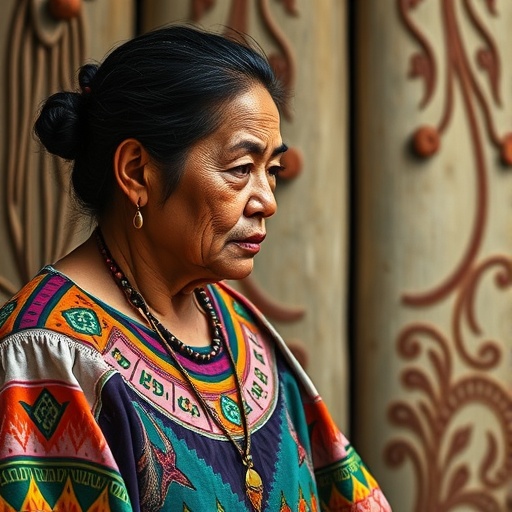
In a groundbreaking international effort led in part by researchers at the University of Minnesota Medical School, Duluth Campus, a new study has been published that critically examines the roots of dementia disparities among Indigenous communities globally. This work, appearing in the prestigious journal Alzheimer’s & Dementia, represents a significant advancement in understanding how Indigenous peoples’ unique cultural contexts and community strengths can reshape brain health research on a worldwide scale.
Dementia, a complex neurodegenerative condition primarily associated with aging, has increasingly been recognized as a multifaceted disease influenced by a broad array of factors spanning an individual’s entire lifespan. Indigenous populations frequently experience higher incidences of dementia compared to other groups, making this issue both pressing and complex. However, prevailing biomedical models have been criticized for their limited capacity to incorporate the rich cultural, social, and environmental factors that define Indigenous ways of life and their potential protective effects on cognitive health.
Dr. Cliff Whetung, PhD, MSW, a pivotal figure in this collaboration and a member of the Memory Keepers Medical Discovery Team, emphasizes that prior research has largely excluded Indigenous perspectives or treated these communities through a deficit-based lens. “Indigenous peoples are rarely included in brain health research, and when they are, there is little consideration of the remarkable strength within our communities,” states Dr. Whetung. This new study aims to transcend such limitations by synthesizing diverse international insights and proposing a paradigm shift toward more inclusive, culturally grounded brain health research frameworks.
The study adeptly highlights that dementia risk is not merely a result of biological aging or genetics but emerges from a complex interplay of risk and protective factors encountered throughout life. Indigenous communities face a unique combination of risk elements, including historical trauma, socio-economic challenges, and limited access to health care. Yet, these communities simultaneously demonstrate distinctive protective mechanisms such as deep cultural continuity, robust social networks, and intrinsic connections to land—all of which may confer neuroprotective benefits rarely accounted for in conventional biomedical research.
By centering research methodologies on these cultural and relational dimensions, the authors argue for reimagining brain health beyond a strictly biological paradigm. This conceptual pivot introduces cultural resilience not just as a peripheral factor but as a central, neuroprotective agent that can inform more effective dementia prevention and care models. Significantly, this reorientation respects Indigenous epistemologies and values, fostering a more equitable and respectful research environment.
The paper calls urgently for enhanced Indigenous leadership within brain health research, advocating for projects that are community-driven and culturally tailored. Such approaches promise to better address the specific needs and strengths of Indigenous populations, moving away from one-size-fits-all biomedical models that often fail to capture the nuance and diversity of lived experiences. This shift marks a critical step in rectifying longstanding disparities and fostering equitable brain health outcomes.
One of the remarkable insights emerging from the study is the potential for community-driven research to inspire novel, strength-based models of dementia care. These models focus not only on mitigating symptoms but also on harnessing cultural practices, storytelling, land stewardship, and social connectedness to promote neurocognitive resilience. Such transformative practices may hold valuable lessons applicable far beyond Indigenous communities and could influence brain health paradigms globally.
Tools used in conventional dementia research, typically centered on biomarkers and neuroimaging, tend to overlook the socio-cultural substrates that nurture cognitive health. The authors propose integrating interdisciplinary approaches, encompassing anthropology, psychology, and Indigenous knowledge systems, to deepen the understanding of how cultural identity and environmental connection influence neurological outcomes. This integrative science stands to enrich biomedical models with critical dimensions of human experience often missing in clinical assessments.
The implications of these findings reach far beyond academia. Policymakers and healthcare providers must reckon with the necessity of culturally responsive care frameworks that respect Indigenous sovereignty and knowledge. Such frameworks not only improve service delivery but also honor the diversity and dignity of Indigenous peoples, setting new ethical standards for brain health interventions worldwide.
Funding for this project reflects its global and cross-disciplinary importance. Support from agencies such as the National Health and Medical Research Council, the National Institute on Aging, the National Institute of Mental Health, and the National Institute of General Medical Sciences underscores the critical need for bridging cultural and biomedical divides in dementia research. Additional contributions from Dementia Australia Research Foundation, Alzheimer’s Association, and Fonds de recherche du Québec – Santé further highlight wide-ranging stakeholder commitment.
This landmark study opens new horizons for brain health research, emphasizing that addressing dementia inequities is inseparable from acknowledging and integrating Indigenous strengths. The work charts a path toward international collaboration that centers community agency, cultural resilience, and innovative, equity-driven science. Future research will undoubtedly build on this foundation, advancing a model of brain health that is inclusive, diverse, and profoundly human.
As the global population ages and dementia incidence grows, this study’s insights serve as a crucial call to action. Medical researchers, clinicians, and communities alike must embrace the complex interplay of biology, culture, and social environment to develop effective, just, and sustainable dementia care. Indigenous communities’ leadership and lived experience are not ancillary but vital to this transformative endeavor.
Subject of Research: People
Article Title: Advancing brain health equity with Indigenous peoples: A critical imperative
News Publication Date: 25-Feb-2026
Web References: https://alz-journals.onlinelibrary.wiley.com/doi/10.1002/alz.71125
Keywords: Alzheimer disease, Indigenous peoples, Neurological disorders, Dementia
Tags: Alzheimer’s research and Indigenous peoplescommunity strengths and cognitive healthcultural context in dementia studiescultural resilience and brain healthdementia disparities in Indigenous communitiesglobal Indigenous dementia researchIndigenous health equity and dementiaIndigenous perspectives on dementialifespan factors affecting dementia riskMemory Keepers Medical Discovery Teamneurodegenerative diseases in Indigenous populationssocial determinants of brain health