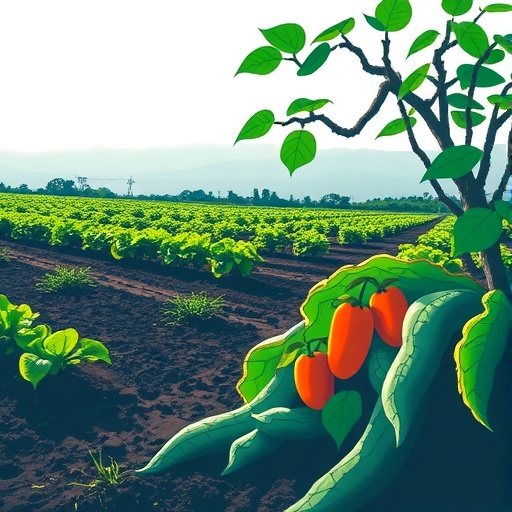
In the heart of Singapore’s bustling urban fabric, a groundbreaking initiative spearheaded by Singapore Management University (SMU) is embracing the future of sustainability by leveraging the potential of native edible plants. The Nature-Food Futures Learning Precinct project is an ambitious, two-year endeavor designed not only to transform a portion of the university campus into a vibrant living laboratory but also to foster a broader dialogue around food security, community engagement, and urban green space utilization.
At its core, this project aims to reconcile urban living with nature’s bounty by integrating edible native flora that thrive naturally in Singapore’s tropical climate. Unlike traditional urban farming systems that rely on energy-intensive controlled environments, Nature-Food Futures leverages indigenous plants such as daun kaduk, gotu kola, sayur manis, lemongrass, pandan, and the bamboo orchid, many of which are familiar to local culinary and cultural practices. This strategic selection underscores a novel approach whereby the ecological and social fabric of the city is harnessed to promote food sustainability with minimal technological intervention.
The project’s physical footprint is planned to begin on rooftops, a cutting-edge urban space often overlooked as a site for food production. By evaluating both the aesthetic and functional merits of growing native edibles on elevated platforms, the initiative seeks to generate replicable models of rooftop agriculture that can be adapted across Singapore’s densely populated environments. Beyond rooftops, the scope will extend to road verges, planter boxes in communal areas, and corridors — all envisaged as nodes of edible landscaping. This layered approach demonstrates a sophisticated understanding of urban microclimates and spatial dynamics in tropical megacities.
Legally and administratively, the Nature-Food Futures Learning Precinct project delves into uncharted territories, undertaking a rigorous exploration of laws and policies governing urban agricultural practices. From reviewing green supplier contracts including terms for nurseries, gardeners, and fertiliser provision, to scrutinizing ordinances around public urban space utilization such as kerbside planting rights, the project opens a crucial discourse on the synergy between private law and public regulation in enabling urban food cultivation. This facet aligns with Singapore’s Green Plan 2030, illustrating the university’s commitment to national sustainability goals.
Community engagement is a hallmark of this initiative, with SMU Associate Professor Michelle Lim highlighting the unique intersection of legal scholarship and grassroots involvement. By aiming to involve at least 100 participants — encompassing students, faculty, staff, and local residents — the project emphasizes a co-creative model. Its intent to secure at least five food and beverage tenants on campus to integrate harvested plants into their menus further exemplifies the full cycle of urban food systems, from cultivation to consumption.
In contrast to high-tech urban farms with artificial lighting and complex climate controls, Nature-Food Futures advocates for a “city-in-nature” paradigm. This approach recognizes the natural suitability of Singapore’s environment for these plants and the cultural resonance native edibles can have across diverse communities. Indeed, the project fosters preservation and celebration of cultural heritage through familiar food plants, reinforcing a relationship between biodiversity, culinary traditions, and urban livelihoods.
From an academic standpoint, the initiative is poised to contribute substantially to the emerging field of sustainability law. By publishing research articles and convening scholarly and practitioner dialogues, the Nature-Food Futures project aims to influence policy frameworks and legal standards that could redefine urban land use and contract law in green economies. The interdisciplinary collaboration among SMU’s Yong Pung How School of Law, the Office of Campus Infrastructure and Services, and the Office of Dean of Students exemplifies the integrative methodology necessary to address complex sustainability challenges.
Technologically and operationally, this project illustrates a nuanced application of ecological knowledge to pragmatic urban planning. Utilizing native species that are adapted to local climatic conditions reduces dependence on water and chemical inputs, thus minimizing the carbon footprint of urban food production. Moreover, the strategic analysis of legal and social barriers anticipates potential conflicts, such as those concerning pesticide regulations and the suitability of fertilizers for edible crops, highlighting the systemic approach required to align environmental objectives with regulatory compliance.
The anticipated culmination of the project — a food festival held at SMU’s Connexion complex — symbolizes the blending of research, community, and celebration. Such an event aims to create experiential learning opportunities and showcase the tangible benefits of urban agriculture, forging connections between scientific inquiry and everyday life. The festival also serves as a platform for knowledge exchange, cultural expression, and building social resilience through shared food heritage.
Critically, the project’s broader implications transcend the university. It offers a replicable urban sustainability model that could be embraced by other tropical cities seeking low-impact strategies for food production amid growing urban populations and climate stressors. The emphasis on community participation, legal innovation, and native biodiversity integrates ecological, social, and governance dimensions into a cohesive strategy for sustainable urban development.
In this context, Nature-Food Futures epitomizes the potential for academia to act as a catalyst in driving societal change towards sustainability. By navigating the intersections of law, infrastructure, ecology, and culture, the project charts a path for how urban spaces can be reimagined as sites for food, learning, and community engagement, contributing to Singapore’s ambitious vision for a greener and more resilient future.
Subject of Research: Urban sustainability and native edible plants integration in tropical cities
Article Title: Nature-Food Futures: Redefining Urban Sustainability Through Native Edible Plants in Singapore
News Publication Date: Not provided
Web References:
– SMU 2030 Strategic Plan: https://www.smu.edu.sg/about/smu2030
– Singapore Green Plan 2030: https://www.greenplan.gov.sg/
– SMU Connexion: https://www.smu.edu.sg/campus-life/campus-development/smu-connexion
– Profile of SMU Associate Professor Michelle Lim: https://faculty.smu.edu.sg/profile/michelle-lim-6466
References: Not provided
Image Credits: Singapore Management University
Keywords: Sustainable agriculture, urban food security, native edible plants, urban sustainability, tropical urban farming, sustainability law, community engagement, Singapore Green Plan 2030
Tags: biodiversity and food sustainabilitycommunity engagement in food securitycultural significance of indigenous plantsfuture of food security in citiesintegrating nature in city planninglow-tech urban farming methodsnative edible plants in urban sustainabilitySingapore urban agriculture initiativessustainable food systems in tropical climatesuniversity-led urban sustainability projectsurban green spaces for food cultivationurban rooftop gardens for food production