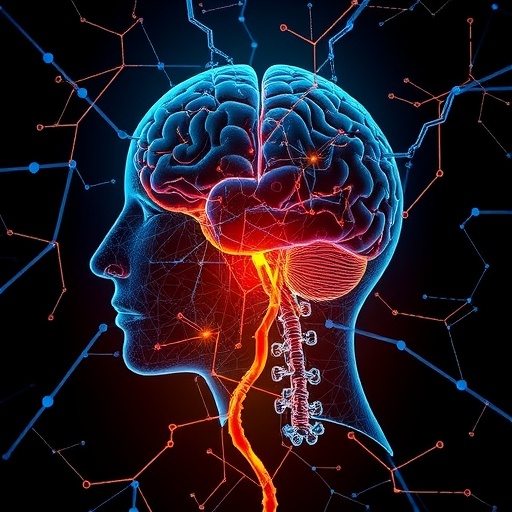
What if the future of brain injury recovery weren’t just about what happens inside the skull, but also centered in the complex ecosystem of bacteria residing in our intestines? Groundbreaking research led by Dr. Sonia Villapol at Houston Methodist has illuminated a transformative connection between the gut microbiome and traumatic brain injury (TBI), revealing that targeted antibiotic treatments can mediate neuroinflammation and promote neural recovery by reshaping this internal microbial community.
This innovative study, recently published in Communications Biology, challenges conventional notions of neurorehabilitation by suggesting that healing the brain might start in the gut. Using sophisticated animal models, researchers demonstrated that short-term administration of antibiotics after TBI significantly reduced lesion size, decreased neurodegeneration, and curbed inflammation in the brain. This neuroprotective effect was mediated by a shift in the gut microbiota composition, which altered peripheral immune responses that, in turn, influenced inflammation within the central nervous system.
Central to this finding is the role of two commensal bacterial species, Parasutterella excrementihominis and Lactobacillus johnsonii. When harmful bacteria were diminished through antibiotic intervention, these beneficial microbes flourished, driving enhanced cell repair mechanisms and modulating systemic inflammation. The implication is profound: these bacteria act as critical regulators at the intersection of gut health and neurological function, potentially offering new therapeutic targets in TBI management.
The research underscores the substantial influence of the gut-brain axis, a bidirectional communication system linking the brain with the gastrointestinal tract. It is now understood that approximately 70% of the body’s immune system regulation originates within the gut microbiome. Post-TBI, disrupted signaling along this axis can exacerbate systemic inflammation, complicating brain healing and possibly affecting other organs. This interplay suggests that maintaining gut microbiome balance is not only essential for optimal digestion but also pivotal for the brain’s recovery trajectory.
Dr. Villapol explains, “Our brains continuously send regulatory signals to peripheral organs, including the digestive system. When traumatic injury occurs, these signals can become dysregulated, negatively impacting gut homeostasis. If the gut remains imbalanced, it creates a feedback loop that impedes the brain’s ability to repair itself.”
The clinical ramifications of these findings could be monumental, considering that an estimated 4 million TBIs occur annually in the United States alone. These injuries are known to not only cause immediate harm but may also precipitate long-term neurodegenerative conditions such as Parkinson’s disease, Alzheimer’s, and various forms of dementia. This study suggests that gut dysbiosis following TBI could be a significant early factor in this pathological cascade.
Villapol’s laboratory is dedicated to untangling the intricate mechanisms underlying neuroinflammation and its role in the progression of neurodegeneration. By interrupting inflammation during both acute and chronic phases of brain injury, they aim to reduce the likelihood of lasting cognitive decline and the onset of debilitating disorders. Their work represents a promising avenue toward preventive treatments that could modify disease progression years before symptoms manifest.
Looking ahead, the research team plans to bioengineer strains of Parasutterella excrementihominis and Lactobacillus johnsonii, optimizing their therapeutic potential. Precision modification of these bacterial species could allow personalized treatments designed to recalibrate the gut microbiome, thereby attenuating neuroinflammation more effectively and improving functional outcomes in TBI patients.
This study’s collaborative effort involved a multidisciplinary team including Hannah Flinn, Austin Marshall, Morgan Holcomb, Marissa Burke, Goknur Kara, Leonardo Cruz-Pineda, Sirena Soriano, and Todd J. Treangen, demonstrating the power of cross-specialty integration in cutting-edge science. Funded by the Houston Methodist Research Institute and the National Institutes of Health, their work charts a promising course for future research.
While antibiotics are traditionally viewed as blunt instruments that can disrupt microbiota broadly, this research reveals a nuanced therapeutic potential, highlighting the importance of microbial ecology and specific strains that promote recovery. It signals a shift toward microbiome-centered strategies that may eventually complement or even replace current pharmacological approaches in brain injury care.
The implications extend beyond TBI. Since neuroinflammation is a common denominator in many neurological diseases, uncovering the gut-brain connection opens a vast frontier in neurotherapeutics. Harnessing the microbiome to influence immune signaling pathways could revolutionize the treatment of chronic neural disorders, shifting paradigms from symptomatic management to root-cause interventions.
At its core, this research exemplifies an emerging frontier in neuroscience that transcends traditional organ-centric views, embracing a holistic biological network perspective. The gut’s role as a “second brain” is no longer metaphorical but is being substantiated by rigorous scientific evidence, compelling us to reconsider how interconnected systems drive health and disease.
Subject of Research: Animals
Article Title: Antibiotic-induced gut microbiome remodeling reduces neuroinflammation in traumatic brain injury
News Publication Date: 25-Feb-2026
Web References: 10.1038/s42003-026-09737-1
Image Credits: Houston Methodist
Keywords: Brain damage, Microbiota, Gut microbiota
Tags: antibiotic treatment effects on brain healinggut health impact on neurodegenerationgut microbiome reshaping for brain injury therapygut microbiome role in neuroinflammation reductiongut-brain axis and traumatic brain injury recoveryintestinal bacteria influence on central nervous system inflammationLactobacillus johnsonii in neural recoverymicrobiota-mediated immune response modulationneuroprotection through gut bacteria balanceParasutterella excrementihominis benefits for brain repairtargeted antibiotics to enhance brain healing