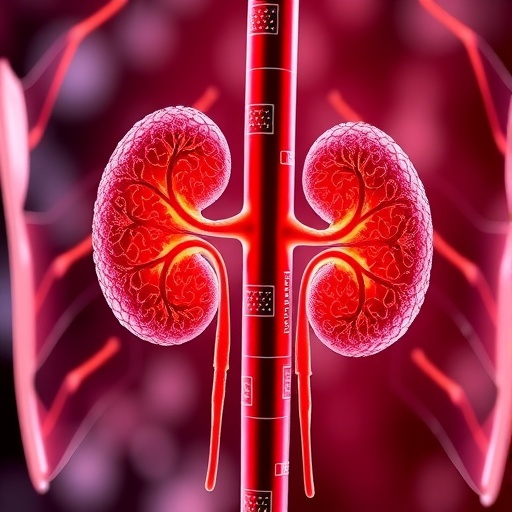
In a groundbreaking study emerging from Penn State College of Medicine, researchers have identified a substantial correlation between prior COVID-19 infection and an increased risk of kidney disease. Kidney disease, affecting an estimated one in seven adults in the United States, involves damage to vital organs that filter waste and excess fluids from the bloodstream. Despite its prevalence, early stages of chronic kidney disease frequently go undiagnosed due to a lack of symptoms, posing significant challenges to early intervention strategies.
The study, led by assistant professor Djibril Ba and his team, emphasizes the critical need for enhanced predictive models that identify populations at risk before the disease advances. Unlike traditional kidney disease prediction models, which typically incorporate 20 to 30 variables, Ba’s team introduced a novel approach that incorporates COVID-19 infection history among just nine variables. This development was based on extensive data analysis and was described ahead of publication in Communications Medicine.
A large-scale analysis of over three million working-age adults within the U.S. health insurance claims database, MarketScan, formed the foundation of this research. Subjects were stratified into three distinct groups: those with documented COVID-19 infections, those with influenza infections but no history of COVID-19, and a control group lacking evidence of either infection. Importantly, individuals with pre-existing kidney disease were excluded to isolate the incidence of new kidney conditions following viral exposure.
The results revealed a striking increase in risk for kidney-related ailments post-COVID-19 infection. Compared to the influenza cohort, COVID-19 survivors faced a 2.3-fold higher likelihood of acute kidney injury, a 1.4-fold increased risk of developing chronic kidney disease, and an alarming 4.7-fold greater risk of progressing to kidney failure. These findings underscore the unique and sustained impact COVID-19 has on renal health, a contrast to the relatively mild and transient effects observed following influenza infection.
Mechanistically, the vulnerability of kidney cells to SARS-CoV-2 infection is supported by molecular studies demonstrating the kidney’s abundant expression of ACE2, the critical receptor facilitating viral entry. Kidney cells also produce specialized enzymes that assist viral internalization, potentially making the organ a direct target for viral-induced damage. This viral tropism may instigate inflammatory cascades, oxidative stress, and cellular injury pathways that accelerate both acute and chronic renal deterioration.
The study employed advanced machine learning algorithms to enhance the predictive accuracy of kidney disease risk attributable to COVID-19 exposure. These algorithms integrated clinical and demographic data, alongside viral infection history, enabling superior identification of individuals at heightened risk. This approach not only improved detection rates but also streamlined the number of input variables necessary, representing a significant leap in precision medicine and automated risk stratification.
Clinically, these revelations prompt a paradigm shift in post-COVID-19 patient management. Healthcare providers are urged to implement more frequent and prolonged renal function monitoring for patients with a history of COVID-19 infection, especially those harboring predisposing conditions such as diabetes mellitus or hypertension. Early recognition of renal impairment can facilitate timely therapeutic interventions aimed at halting progression to end-stage renal disease.
Furthermore, the comparative analysis with influenza infections offers important insights into the specificity of COVID-19’s renal sequelae. While both viral infections impact renal physiology, only COVID-19 demonstrated a persistent deleterious effect, highlighting potential differences in viral pathogenicity and host response mechanisms. Investigating these nuances may uncover novel targets for therapeutic intervention and inform public health policies concerning viral infection management.
The long-term monitoring period, with a median follow-up of around 324 days post-infection, provided the researchers with a comprehensive overview of the temporal evolution of kidney damage following viral exposure. This longitudinal approach strengthens the causal inference of COVID-19’s role in renal disease progression beyond transient acute episodes, underscoring its clinical significance in chronic kidney pathology.
Looking toward the future, the research team plans to refine these machine learning models further and develop a practical clinical application. Such a tool would empower clinicians with a real-time, data-driven risk assessment platform to identify patients susceptible to renal complications rapidly, facilitating preventive strategies and personalized care pathways.
This study marks a pivotal advancement in understanding the far-reaching consequences of SARS-CoV-2 infection, expanding the dialogue beyond respiratory complications to encompass critical systemic effects. As the global population navigates the post-pandemic landscape, insights like these will be instrumental in shaping comprehensive care models that address the full spectrum of COVID-19’s health impact.
By establishing a direct link between COVID-19 and increased kidney disease risk, this research calls attention to the need for heightened vigilance in renal monitoring and proactive intervention, potentially altering the trajectory of kidney health management worldwide. It reinforces the imperative to consider viral infection history as a key component in disease risk profiles, heralding a new era of disease prediction and prevention in the realm of nephrology.
Subject of Research: People
Article Title: The risk of kidney disease increases following SARS-CoV-2 infection compared to influenza
News Publication Date: 25-Feb-2026
Web References: https://dx.doi.org/10.1038/s43856-026-01460-6
References: Communications Medicine, eBioMedicine
Keywords: Nephropathies, Renal failure, Kidney, Viral infections, COVID 19, Influenza
Tags: chronic kidney disease early detectionCOVID-19 and kidney disease riskCOVID-19 infection health impactsCOVID-19 vs influenza kidney outcomesDjibril Ba kidney researchhealthcare data-driven disease predictionkidney disease epidemiology in the USkidney disease risk factorsMarketScan health insurance data analysisnovel kidney disease prediction variablespost-COVID kidney complicationspredictive models for kidney disease