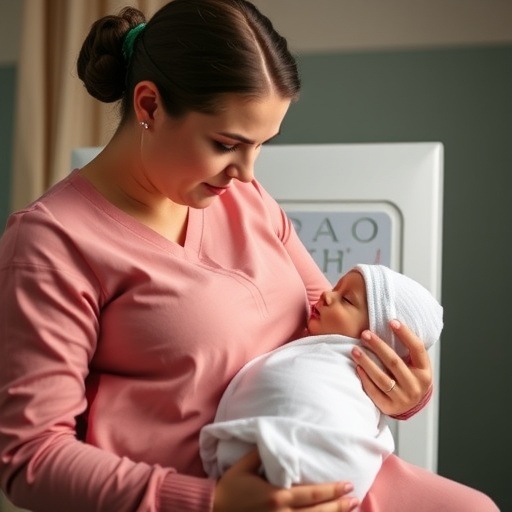
In a groundbreaking study conducted jointly by researchers at the University of Liverpool and King’s College London, a nuanced exploration of postpartum care experiences amid and following the COVID-19 pandemic reveals a critical balancing act between the convenience of virtual healthcare and the irreplaceable value of physical examinations. This investigation sheds new light on how mothers perceive the evolving landscape of maternity services, which has undergone rapid transformation under pandemic pressures, leading to an increased reliance on remote consultations via video and telephone.
The COVID-19 pandemic necessitated swift reconfiguration of healthcare protocols worldwide, with maternity services being no exception. To minimize the risk of virus transmission, many healthcare providers rapidly shifted towards virtual appointments, reducing face-to-face interactions between new mothers, their infants, and healthcare professionals. Although primarily a public health imperative, this pivot has enduring implications as components of virtual care have persisted in standard practice even after the immediate threat of the pandemic subsided.
Against this backdrop, the research team embarked on a comprehensive survey aiming to delineate the perceptions and lived experiences of women receiving postpartum care through different modalities: in-person, video-based, and telephone consultations. The study harnessed data from the COVID Symptom Study Biobank, part of the larger King’s College London/ZOE COVID Symptom Study, targeting women who delivered babies during the pandemic period. Over a thousand respondents provided a rich dataset including detailed qualitative feedback highlighting personal experiences and preferences.
Analysis revealed a generally positive reception of virtual postnatal care, with respondents highlighting its undeniable advantages in terms of convenience and rapid accessibility. Virtual consultations were particularly valued for their ability to fit seamlessly into the demanding schedules of new mothers balancing infant care alongside other responsibilities. This modality offered a swift and practical means of accessing professional advice without the logistical challenges of traveling to healthcare facilities.
Despite these favorable reports, the findings underscore an essential caveat: the recognition that virtual care, while efficient, cannot fully substitute for the tactile and diagnostic value inherent in physical examinations. Particularly in scenarios where infants exhibited signs of illness, mothers articulated a clear preference for in-person evaluation, underscoring the psychological reassurance and clinical thoroughness such assessments provide. This dichotomy underscores the necessity of integrating different care modes rather than replacing traditional approaches outright.
The participants also underscored the importance of a responsive and tiered care model, which allows seamless escalation from virtual to in-person consultations as clinical situations demand. Mothers expressed considerable appreciation for systems that could swiftly prioritize cases where physical evaluation was imperative, suggesting that while virtual platforms suffice for routine check-ups, timely face-to-face interventions remain critical in safeguarding maternal and neonatal health.
These insights present a compelling argument for healthcare systems to adopt a more personalized and adaptive care framework. By doing so, providers can align care delivery more closely with individual patient needs while maintaining clinical prudence. This tailored approach would accommodate varying preferences and medical urgencies, striking an optimal balance between efficiency and safety.
Lead investigator Dr. Sergio A. Silverio elaborated on these conclusions, emphasizing the need for health services to genuinely listen to women’s voices concerning their reproductive and perinatal care experiences. He advocates for a constructive integration of virtual care innovations with the irreplaceable elements of traditional care, thereby ensuring that new mothers and their infants receive holistic support throughout the postpartum period.
This study’s implications are profound for policymakers and healthcare professionals seeking to refine maternity care pathways. As virtual health technologies continue to evolve rapidly, understanding their appropriate role within a continuum of care is crucial. The research highlights the risks of over-reliance on remote modalities in contexts requiring nuanced clinical judgment that only physical interaction can provide.
From a technical perspective, the study employed qualitative content analysis of over a thousand free-text responses, enabling researchers to capture the complexity and diversity of maternal experiences. Such methodology is instrumental in moving beyond binary satisfaction metrics, uncovering subtleties in trust, safety perceptions, and logistical considerations inherent to postpartum care delivery.
Moreover, the research underscores the importance of equity in access to care modalities. Ensuring that virtual services remain inclusive and responsive to the needs of diverse populations requires attention to factors such as digital literacy, connectivity, and cultural preferences. Without addressing these barriers, the promise of efficiency gains risk exacerbating disparities in maternal health outcomes.
Future maternity care models are likely to be hybrid in nature, combining digital consultations for routine monitoring with scheduled in-person visits calibrated to clinical indicators and maternal preferences. Such tiered systems necessitate robust protocols for clinical escalation and clear communication pathways to safeguard the health of both mother and child effectively.
The ongoing evolution of postpartum care – accelerated by unprecedented global health challenges – presents a unique opportunity to reimagine how maternal services are delivered. By centering care models on patient experiences, incorporating technological advances judiciously, and preserving core elements of physical clinical assessment, healthcare systems can aspire to deliver safer, more responsive, and patient-centered postpartum care.
In conclusion, the evidence emerging from this large-scale survey highlights the critical need for a balanced approach melding the expedience of virtual care with the nuanced demands of clinical examination. Policymakers, clinicians, and innovators must collaborate to craft a tiered postpartum care ecosystem—one that respects maternal preferences, promotes clinical excellence, and ensures rapid escalation pathways. Such an approach will be pivotal in safeguarding the health and wellbeing of mothers and their newborns in a post-pandemic healthcare landscape.
Subject of Research: People
Article Title: Patient-centred postpartum care provision: virtual delivery, tiered escalation, and tensions between efficiency, preference, and clinical concern
News Publication Date: Not specified
Web References: Not provided
References: Patient-centred postpartum care provision: virtual delivery, tiered escalation, and tensions between efficiency, preference, and clinical concern, BMC Medicine
Image Credits: Not provided
Keywords: Health care, Obstetrics, Postnatal care
Tags: balancing virtual and in-person carehealthcare protocols in maternityimpact of COVID-19 on maternity carematernal healthcare experiencespersonalized postpartum carepostpartum care during COVID-19postpartum care transformationremote postpartum consultationstelephone postpartum caretiered postpartum care approachvideo consultations for new mothersvirtual maternity services