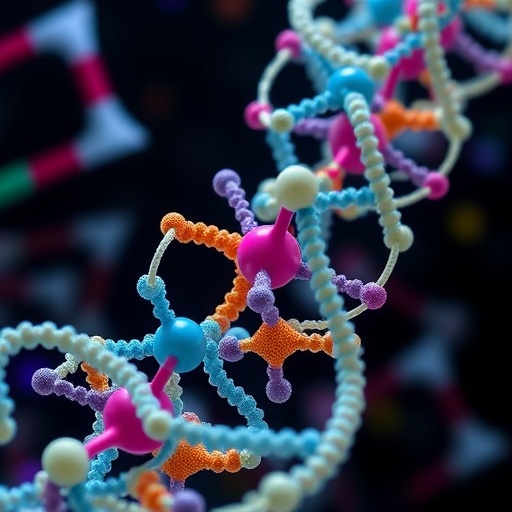
In an epoch-defining advancement, synthetic biology is revolutionizing the way scientists approach genome engineering by enabling the bottom-up assembly of synthetic microbial genomes. This method transcends traditional genetic manipulation, offering the unprecedented possibility of constructing entire genomes from scratch. The implications reach far beyond simple genetic editing, promising the creation of synthetic cells tailored for various applications spanning fundamental biology, biotechnology, and biomedicine. The intricate process involves meticulously designing and assembling DNA fragments that collectively form functional genomes capable of sustaining life-like processes within microbial cells.
At the heart of this frontier lies the rational design of synthetic microbial genomes, an endeavor that requires a deep understanding of the fundamental units of gene expression. Optimizing expression units is paramount as it dictates the way genes are transcribed and translated into proteins. Researchers are harnessing knowledge about promoter sequences, ribosome binding sites, and terminators to fine-tune gene expression levels. This optimization ensures that synthetic genomes not only encode functional genes but also regulate these genes with precision akin to, or even surpassing, that observed in natural organisms.
Integral to this design is the nuanced manipulation of codon usage. Despite the redundancy of the genetic code, synonymous codons can dramatically influence translation efficiency and accuracy. By selecting codons that match the host’s tRNA abundance and translation machinery preferences, synthetic genomes can achieve enhanced protein synthesis rates. This codon optimization minimizes translational bottlenecks and avoids aberrant protein folding, which is critical for synthetic cells intended for high-yield biotechnological production or therapeutic applications.
Transcriptional and translational control within synthetic genomes is orchestrated through an array of regulatory elements. These include inducible promoters, riboswitches, and RNA-based regulators that modulate gene expression post-transcriptionally. The precise control over when, where, and how much a gene is expressed grants synthetic cells adaptability and robustness, crucial for functioning under varying environmental conditions or within therapeutically relevant contexts.
Equally vital is the regulation of RNA and protein turnover. Synthetic genomes are designed to incorporate mechanisms that govern the degradation rates of mRNA and proteins, thereby maintaining cellular homeostasis. These turnover processes prevent the accumulation of faulty or unnecessary molecules, enabling the synthetic cell to recycle resources efficiently and respond dynamically to internal and external stimuli.
Zooming out to the genome-wide scale, the design considerations expand to include chromosomal architecture. The spatial organization of the chromosome influences gene expression patterns and genome stability. Synthetic genome architects are exploring how to arrange genetic elements in linear or circular chromosomes, regulating supercoiling and nucleoid-associated proteins to recapitulate or even improve upon natural genome architectures.
Gene orientation and positioning serve as additional layers of control. The directionality of gene transcription relative to DNA replication machinery can affect replication timing, mutational rates, and gene expression interference. Strategic positioning of genes ensures that synthetic genomes maintain efficient replication cycles and minimize conflicts between replication and transcription, which could otherwise compromise cell viability.
Moreover, emerging evidence suggests that the three-dimensional (3D) arrangement of genes within the nucleoid plays a crucial role in functional genome organization. Synthetic genomes can be designed with an eye toward these spatial configurations, allowing for enhanced regulatory interactions and coordinated gene expression. This 3D gene arrangement introduces a novel dimension of genome engineering, marrying spatial biology with synthetic design principles.
Assembling these synthetic genomes requires meticulous strategies to stitch together numerous synthetic DNA fragments into fully functional chromosomes. Advanced molecular assembly techniques, such as Gibson assembly and yeast homologous recombination, have become instrumental in piecing together these large DNA constructs. The fidelity and efficiency of these methods are continuously improving, enabling the synthesis of increasingly complex genomes.
Testing synthetic genomes entails rigorous validation protocols to confirm genome integrity and functionality. Techniques like whole-genome sequencing, transcriptional profiling, and phenotypic assays ensure the synthetic cells perform as designed. Iterative cycles of design, assembly, and testing are critical to refining synthetic genome constructs and optimizing their performance for intended applications.
The synthesis of fully functional synthetic cells represents a pinnacle goal for this field. Achieving this requires integrating diverse methodologies, from genome architecture design to evolutionary adaptation strategies. Directed evolution and machine learning-guided optimization offer promising avenues to accelerate this process, enabling synthetic cells to evolve desirable traits while guiding rational genome design decisions.
Machine learning algorithms, fueled by large datasets from synthetic genome experiments, are increasingly powerful in predicting gene function, regulatory interactions, and optimal design parameters. These computational tools are reshaping synthetic biology from an artful craft into a data-driven science, enhancing the precision and scalability of synthetic genome construction.
The convergence of synthetic biology with evolutionary principles provides a powerful framework for genome optimization. By subjecting synthetic cells to selective pressures, researchers can harness natural evolutionary forces to refine synthetic genomes in ways that elude purely rational design. This synergy between directed evolution and synthetic design catalyzes the development of robust, efficient synthetic cells.
Ultimately, the realization of fully synthetic microbial cells promises transformative impacts across multiple disciplines. From producing pharmaceuticals and biofuels to serving as models for probing the origins of life, synthetic genomes stand poised to unlock new scientific horizons. As the field advances, ethical and safety considerations will be paramount, ensuring that synthetic biology’s formidable capabilities are deployed responsibly.
This synthesis of biology and engineering marks a new chapter in life sciences, where the genome is no longer a static blueprint but a malleable instruction set that can be rewritten to create life forms tailored to human needs. The journey to bottom-up synthetic cells is rife with challenges but equally brimming with promise, heralding an era where life’s molecular code is a canvas for innovation.
Subject of Research: Synthetic microbial genomes and de novo genome synthesis
Article Title: De novo design of synthetic microbial genomes
Article References:
Koster, C.C., da Costa Oliveira, H., van Beveren, F. et al. De novo design of synthetic microbial genomes. Nat Rev Bioeng (2026). https://doi.org/10.1038/s44222-026-00410-0
Image Credits: AI Generated
Tags: bottom-up genome assemblycontrolling gene regulation in synthetic organismsdesigning DNA fragments for genomesfunctional synthetic genomesgenome synthesis for biotechnologyoptimizing gene expression in synthetic cellspromoter sequence designribosome binding site optimizationsynthetic biology genome engineeringsynthetic cells in biomedicinesynthetic genome codon usagesynthetic microbial genomes