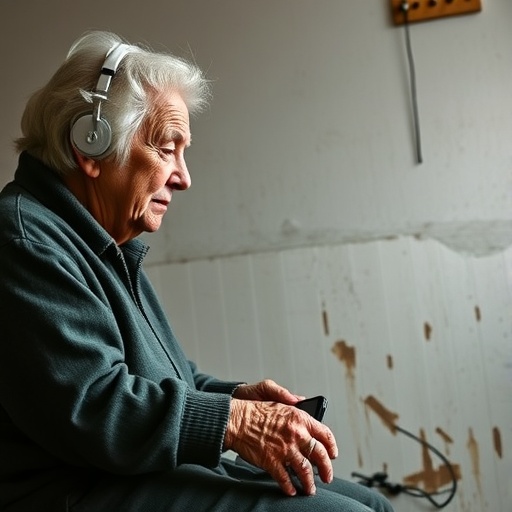
In an evolving landscape of geriatric research, a compelling new study has emerged highlighting the intricate relationship between psychological resilience and the fear of falling in older adults who have sustained fractures. This investigation, conducted by Su, Q., Liu, S., Luo, Y., and colleagues, delves into a nuanced psychological and clinical phenomenon with profound implications for patient recovery, mental health, and overall quality of life. Published in the prestigious journal BMC Geriatrics in 2026, the research employs a sophisticated cross-sectional potential profile methodology to unravel the psychological threads that bind resilience and fear responses in this vulnerable population.
Understanding the significance of falls among older adults requires a multifaceted approach that incorporates both biomedical and psychosocial factors. Falls are not merely mechanical events; they are embedded within a matrix of cognition, emotion, and behavioural adaptation. This study pivots on the hypothesis that psychological resilience—defined broadly as the capacity to withstand or rebound from significant stressors—may serve as a crucial determinant of how older adults cope with the aftermath of fractures and their associated fear of falling again. The investigators utilized detailed potential profile analyses to categorize participants’ psychological states, providing a granular view of resilience variations across individuals.
The methodology adopted involves a cross-sectional design whereby older adults with documented fractures were assessed at a single time point for both psychological resilience and their subjective fear of falling. Unlike longitudinal studies, this approach offers immediate insight into the prevailing emotional landscape within this cohort. It also allows researchers to map potential profiles—distinct clusters or subtypes of psychological resilience and fear levels—that could inform targeted interventions. This type of analysis is technically demanding, relying on robust psychometric instruments paired with advanced statistical clustering techniques, which collectively enhance the precision and interpretability of the findings.
Clinically, the fear of falling is a significant barrier to rehabilitation and mobility post-fracture. It is associated with a decrease in physical activity, social withdrawal, and an increased likelihood of further falls, creating a vicious cycle detrimental to health outcomes. What Su et al. contribute through their analytical framework is a refined understanding of how resilience factors operate at an intrapersonal level to mitigate or exacerbate this fear. Their data suggest that higher resilience is inversely correlated with fear of falling, meaning that those who demonstrate robust psychological coping mechanisms tend to report less apprehension about subsequent falls.
From a neurobiological standpoint, psychological resilience encompasses a repertoire of adaptive neural responses, including stress regulation via the hypothalamic-pituitary-adrenal (HPA) axis, enhanced prefrontal cortex engagement for executive control, and modulated amygdala activity affecting fear processing. The study’s insights resonate with this biological substrate, implying that interventions aiming to bolster resilience could recalibrate these neural pathways, thereby reducing maladaptive fear responses and promoting functional recovery.
A key strength of this research is its potential to inform personalized medicine in geriatric care. By identifying profiles of resilience and fear, clinicians can tailor rehabilitation programs that not only address physical impairments but also incorporate psychological support designed to fortify mental resilience. Cognitive behavioral therapy (CBT), mindfulness-based stress reduction (MBSR), and resilience training modules could be integrated systematically into post-fracture treatment strategies, thereby improving adherence and long-term outcomes.
Moreover, the implications of this study extend beyond individual patients to public health and healthcare policy domains. The increasing prevalence of fractures among aging populations places a substantial burden on healthcare systems globally. By elucidating modifiable psychological factors like resilience, this research advocates for preventive strategies that incorporate mental health screening in fracture care protocols, aligning with holistic and patient-centered models of healthcare delivery.
Importantly, the findings highlight the heterogeneity within the older adult demographic. Not all individuals exhibit the same degree of resilience or fear, underscoring the need for nuanced assessment tools that capture these differences effectively. Potential profile analysis, as utilized here, represents a methodological advancement enabling the dissection of complex psychosocial traits into actionable clinical categories. This precision enhances prognostication and resource allocation within constrained healthcare environments.
The study also raises intriguing questions about the bidirectional interplay between physical injury and psychological adaptation. While resilience may mitigate fear of falling, it remains to be explored how sustained fear might, conversely, impede resilience development, potentially leading to chronic psychological distress or depressive syndromes in this cohort. Future research building on these findings could adopt longitudinal designs to unravel causal pathways and temporal dynamics.
Furthermore, integrating wearable technologies and real-time monitoring could augment the assessment of both physical activity and psychological states, providing continuous data streams to refine understanding. Such innovations would facilitate dynamic tracking of resilience and fear, allowing for timely interventions and enhanced personalization. The technological synergy would mark a transformative step in geriatric rehabilitation science.
In addition, the cultural dimensions of resilience and fear perception merit exploration. Social support, community engagement, and cultural attitudes toward aging and disability profoundly shape psychological responses to injury. As this study was conducted within a specific geographical and cultural context, cross-cultural validations are essential to ensure generalizability and to tailor interventions accordingly across diverse populations.
Another exciting avenue is the genetic and epigenetic underpinnings of psychological resilience. Unraveling how inherited and environmentally modifiable factors influence resilience phenotypes could lead to biomarker identification, paving the way for predictive models of vulnerability post-fracture. This convergence of psychology, genetics, and gerontology could revolutionize the paradigm of fall-related injury management.
For practitioners, the take-home message from Su et al.’s work is clear: integrating psychological resilience evaluation into routine fracture care is not ancillary but fundamental. The nuanced understanding of fear of falling as a psychosocial phenomenon shaped by resilience offers new levers for intervention, transforming outcomes from disability toward restored autonomy. Preventing recurrence of falls and fostering mental well-being represent twin pillars supporting successful aging trajectories.
In summary, this landmark study synthesizes sophisticated psychological profiling with pressing clinical challenges in older adults recovering from fractures. It offers a robust theoretical and empirical framework to drive innovation in both research and practice, catalyzing a shift toward integrated biopsychosocial approaches in geriatric medicine. The promise lies in translating these insights into scalable, evidence-based strategies that empower older adults to overcome fear, harness resilience, and reclaim mobility with confidence.
As global demographics continue shifting toward older populations, and fractures remain a leading cause of morbidity, research such as this positions psychological resilience at the frontier of scientific inquiry and therapeutic advancement. The cross-sectional potential profile analysis devised by Su and colleagues illuminates this crucial frontier, setting a benchmark for subsequent investigations and offering hope for improved quality of life for millions worldwide.
Subject of Research: Psychological resilience and fear of falling in older adults with fractures.
Article Title: The relationship between psychological resilience and fear of falling in older adults with fractures: a cross-sectional potential profile analysis.
Article References:
Su, Q., Liu, S., Luo, Y. et al. The relationship between psychological resilience and fear of falling in older adults with fractures: a cross-sectional potential profile analysis. BMC Geriatr (2026). https://doi.org/10.1186/s12877-026-07193-4
Image Credits: AI Generated
DOI: 10.1186/s12877-026-07193-4
Keywords: psychological resilience, fear of falling, older adults, fractures, cross-sectional study, potential profile analysis, geriatric rehabilitation, mental health, fall prevention
Tags: behavioral adaptation to fall riskcognitive and emotional aspects of fall fearcoping mechanisms after elderly fracturescross-sectional potential profile analysis in geriatricsfear of falling in older adultsgeriatric fall prevention strategiesimpact of fractures on senior mental healthpsychological resilience in elderly fracture patientspsychosocial factors influencing fall fearquality of life after fractures in older adultsrecovery outcomes in fractured eldersresilience as a protective factor in aging