In an era where aging populations are rapidly expanding worldwide, understanding the psychological and social benefits of physical activity among older adults has become a critical area of research. A recent study published in BMC Geriatrics uncovers groundbreaking insights into the intricate interplay between physical activity participation and prosocial behavior in the elderly, revealing empathy’s pivotal mediating role. This research not only advances the scientific community’s comprehension of aging psychology but also offers a potential pathway for enhancing social cohesion and mental well-being among seniors through targeted interventions.
Older adults often face unique psychosocial challenges, including social isolation, loneliness, and diminished community engagement, all factors that can profoundly impact their mental and physical health. The novel investigation spearheaded by Yan, Fang, and Wang delves into how maintaining or increasing physical activity can foster more prosocial behavior — voluntary actions intended to benefit others — creating ripple effects that enrich both individual and communal quality of life. The study’s sophisticated methodological framework involved multi-dimensional assessments of physical activity levels, empathy scales, and observed prosocial tendencies among participants from diverse backgrounds, granting robustness to its conclusions.
Central to the findings is the concept of empathy as a psychological construct that serves as a bridge between physical activity and prosocial outcomes. Empathy, encompassing the capacity to understand and vicariously experience others’ emotions, has long been hypothesized to enhance social functioning, but empirical validation in the context of physical exercise had remained sparse. Yan and colleagues harnessed advanced psychometric tools and path analysis models to delineate empathy’s mediating role, demonstrating that increased physical activity correlates with heightened empathy levels, which in turn promote more frequent and pronounced prosocial behaviors.
The biological underpinnings of these relationships are deeply rooted in neurophysiological mechanisms. Physical activity is known to stimulate neurogenesis and improve cerebral blood flow, particularly in regions associated with emotional regulation and social cognition, such as the prefrontal cortex and the anterior cingulate cortex. These neuroplastic changes may facilitate greater emotional attunement and responsiveness, thereby amplifying empathetic capacities. The study in question integrates these neuroscientific perspectives to explain the observed behavioral patterns, offering an interdisciplinary blueprint for future research.
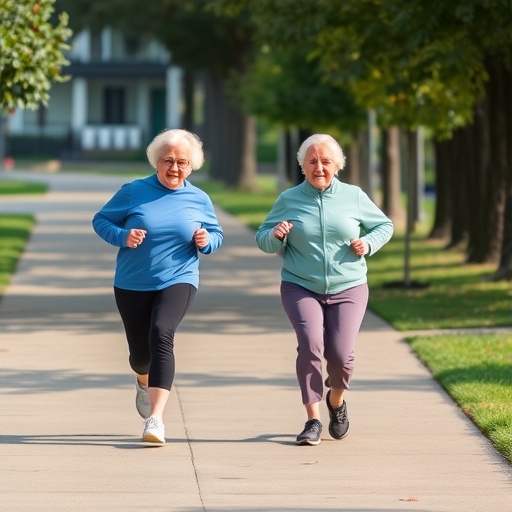
Furthermore, the research highlights the qualitative dimension of physical activity by exploring different activity types and intensities. It suggests that social forms of exercise—group walking, dance classes, or team sports—may yield disproportionately higher boosts in empathy and prosociality compared to solitary or highly competitive activities. This nuance underscores the complex social-cognitive dynamics involved and highlights the importance of tailoring physical activity programs to maximize psychosocial benefits specifically for older adult populations.
Importantly, the authors address the confounding variables that often complicate studies involving aging cohorts. Factors such as underlying health conditions, cognitive decline, socioeconomic status, and cultural variations were controlled or statistically adjusted to isolate the effects of physical activity and empathy on prosocial behavior. This stringent control bolsters the study’s internal validity and ensures that the observed mediation effect is robust rather than spurious.
One of the study’s most compelling implications lies in public health policy and community program design. By elucidating the empathy-mediated pathway linking physical activity to prosocial behavior, the researchers suggest that exercise interventions could be strategically leveraged not only to improve physical health but also to enhance social connectedness and emotional well-being in aging populations. Such dual-benefit programs could reduce societal costs associated with eldercare by promoting healthier, more engaged, and empathetic individuals.
Additionally, the findings shed light on potential therapeutic applications for mental health challenges common in older adults, such as depression and anxiety, which often co-occur with social withdrawal. Enhancing prosocial behavior through empathy-focused exercise regimens might mitigate these issues by fostering supportive social networks and improving mood regulation. The authors advocate for integrating empathy training with physical activity frameworks to develop holistic interventions that cater to multiple facets of aging well.
From a methodological standpoint, the study utilized longitudinal data collection, permitting a dynamic view of how sustained physical activity influences empathy and prosocial behavior over time. This approach allowed the identification of causal inferences and temporal sequencing, adding unprecedented depth to the understanding of aging psychosocial processes. The longitudinal design also captures variability within individuals, highlighting the importance of consistent physical engagement to maintain empathy and prosocial tendencies.
In the broader context of social neuroscience, this research marks a significant stride toward mapping behavioral phenotypes in aging populations. The demonstrated pathway elucidates how sensory-motor activities such as exercise can sculpt complex social-emotional traits, offering empirical support to theories positing embodied cognition and social brain plasticity throughout the lifespan. This convergence of physical health, cognitive function, and social behavior enriches the conceptual landscape and invites novel interdisciplinary collaboration.
The ramifications extend to technology-assisted interventions, as digital platforms are increasingly utilized to promote physical activity among seniors. Understanding the empathy link suggests that virtual or augmented reality group exercises, which simulate social interaction, could be optimized to trigger empathy and promote prosocial engagement remotely. Such innovations could be transformative, especially under constraints like mobility limitations or public health emergencies.
Moreover, the research provides a call to action for caregivers, family members, and community organizers to recognize the dual cognitive-social dividends of encouraging physical activity. These stakeholders are instrumental in shaping supportive environments that facilitate older adults’ participation in physical and social activities, thereby reinforcing community ties and reducing isolation.
While this study opens compelling avenues, the authors also cautiously note limitations, such as reliance on self-reported physical activity measures and the need for culturally diverse samples to enhance generalizability. Future investigations might incorporate wearable technology to obtain objective activity data and experimental designs to further probe causal mechanics. Additionally, expanding inquiry into other mediating psychological constructs like gratitude or altruism could deepen comprehension.
Overall, the Yan et al. study enriches the aging research field by unveiling empathy as a crucial mechanism through which physical activity fosters prosocial behavior among older adults. This insight bridges biological, psychological, and social dimensions, underscoring the multifaceted benefits of remaining physically active throughout later life stages. It challenges prevailing assumptions that exercise’s value is predominantly physical and spotlights its profound capacity to nurture social harmony and emotional vitality in aging societies globally.
In conclusion, as societies grapple with demographic shifts toward older populations, this research provides an evidence-based framework for harnessing physical activity not merely as a health mandate but as a vital social intervention. By spotlighting empathy’s mediating role, it offers a nuanced understanding that can inspire innovative programs, policies, and technologies aimed at enhancing the quality of life and social connectedness of seniors worldwide. The findings stand poised to resonate far beyond academic circles, carrying significant promise for public health strategies that recognize the interdependence of body, mind, and community in the aging journey.
Subject of Research:
The interplay between physical activity participation, empathy, and prosocial behavior among older adults.
Article Title:
The relationship between physical activity participation and prosocial behavior among older adults: the mediating role of empathy.
Article References:
Yan, J., Fang, S. & Wang, J. The relationship between physical activity participation and prosocial behavior among older adults: the mediating role of empathy. BMC Geriatr (2026). https://doi.org/10.1186/s12877-026-07196-1
Image Credits:
AI Generated
Tags: aging and social behavioraging psychology researchempathy as mediator in prosocial behaviorenhancing community engagement in elderlyphysical activity benefits for older adultsphysical activity interventions for seniorspromoting mental well-being in older adultsprosocial empathy in elderlypsychological effects of exercise on seniorsreducing loneliness through physical activitysocial cohesion in aging populationsvoluntary prosocial actions in older adults