The Baltic Sea, a vast and ecologically sensitive body of water in Northern Europe, faces a chronic environmental challenge due to its high phosphorous load. Excess phosphorus, a vital nutrient for all living organisms and a key component of fertilizers, accumulates at the seabed because of limited water exchange and anthropogenic inputs, causing severe oxygen depletion and eutrophication. These conditions threaten marine life, disrupt ecosystems, and impair the overall health of the sea. However, researchers from KTH Royal Institute of Technology have pioneered a groundbreaking method that could revolutionize phosphorus management by turning this persistent environmental problem into a sustainable resource.
Europe’s phosphorus supply chain is heavily dependent on imported phosphate rock, as the continent’s natural deposits are scarce, raising concerns about long-term agricultural sustainability. Phosphorus is indispensable for global food production, playing a crucial role in plant growth and soil fertility. The innovative approach devised by KTH scientists leverages the abundant phosphorus trapped within the sediment layers of the Baltic Sea, aiming to reclaim it through an environmentally sound and technologically advanced method. This breakthrough promises not only to alleviate dependency on global phosphorus imports but also to contribute significantly to the restoration of the Baltic Sea’s fragile ecosystem.
The Baltic Sea is characterized as a semi-enclosed, brackish body of water with limited water circulation, primarily through the narrow Danish Straits, resulting in prolonged retention of nutrients and pollutants. Over time, excess phosphorus accumulates in the soft sediments at its bottom, a process exacerbated by human activities such as agricultural runoff and untreated wastewater discharge. These sediments serve both as a phosphorus repository and as a source that can potentially be tapped into. The project at KTH harnesses the power of microbes to mobilize this embedded phosphorus, thereby offering a novel, biotechnological strategy for nutrient recovery from marine environments.
The process developed involves a two-step technique that first employs microbial activity to disrupt phosphorus bonds within the sediment. Microbes metabolize organic matter and produce acids and other compounds that effectively loosen phosphorus from the sediment matrix. Following this biological treatment, a chelating agent is introduced, which binds metal ions that otherwise hold phosphorus tightly in sediment minerals. This chemical step further liberates the phosphorus, allowing its subsequent capture and extraction in a form usable as fertilizer. Together, these stages maximize phosphorus recovery while minimizing environmental impact.
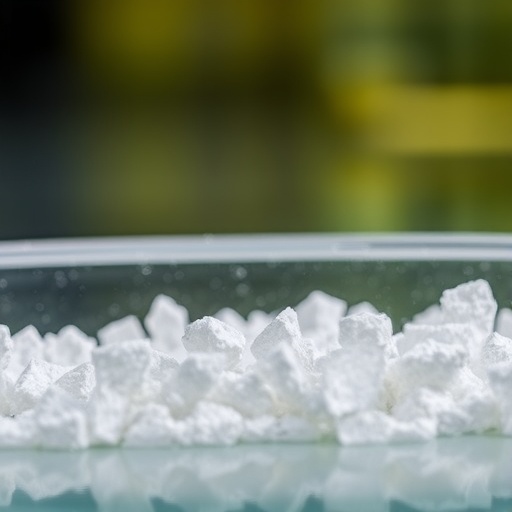
Experimental laboratory tests have demonstrated impressive efficiency for this combined microbial and chelation-enhanced phosphorus release strategy. Sediment samples collected from the Baltic Sea were treated, resulting in the liberation of approximately 80% of the total phosphorus content present in the muck. Remarkably, researchers succeeded in recovering 99% of the released phosphorus, underscoring the high potential for resource reclamation. These figures not only indicate a potent technology but also suggest the feasibility of scaling up the method for industrial application in a controlled environment.
A fascinating outcome of the microbial treatment phase was the significant enrichment in beneficial microbial populations, which are instrumental in maintaining sediment health and nutrient cycling. This microbial community shift implies that the process could also promote positive ecological effects beyond phosphorus recovery, potentially helping to rebalance the sediment microbiome and mitigate detrimental biogeochemical feedback loops that exacerbate hypoxia and eutrophic conditions in marine sediments.
Despite these promising results, researchers emphasize that the technology is currently at the experimental stage and not yet ready for direct deployment in open waters. Critical safety considerations dictate that such phosphorus recovery operations must be conducted within enclosed, land-based facilities. These facilities ensure containment, preventing unintended chemical or microbial release into marine ecosystems and avoiding the exacerbation of existing environmental problems. The controlled setting also allows for optimization of microbial cultures and chelation processes at industrial scales.
The team’s ongoing work explores sustainable alternatives to the synthetic chelating agents currently used. Biologically derived organic acids represent a promising avenue, coupling effectiveness with environmental compatibility. These naturally occurring compounds could mimic or even enhance metal-binding capacities, reducing chemical usage and minimizing ecological footprints. Such innovations are vital for developing scalable processes that meet both economic and environmental sustainability criteria for phosphorus recovery technologies.
If the approach proves scalable and environmentally benign on a larger scale, it could transform the Baltic Sea from a phosphorus sink into a source of valuable nutrients. This transition aligns with broader European objectives to foster circular nutrient economies where waste streams and pollution become feedstocks for resource recovery. By integrating microbial biotechnology with chemical engineering, the researchers are advancing a paradigm shift in how marine sediments are managed vis-à-vis nutrient control and agricultural reuse.
The envisioned technology ultimately contributes to combating eutrophication—a process where excessive nutrients spur algal blooms, oxygen depletion, and loss of aquatic biodiversity. By extracting excess phosphorus before it re-enters the water column, the method offers a proactive way to alleviate hypoxic zones and restore water quality. This approach exemplifies how innovative science can bridge environmental restoration with resource sustainability, addressing urgent global challenges from multiple angles.
Europe’s strategic interests in securing critical agricultural inputs like phosphorus are increasingly intertwined with environmental stewardship. Reducing reliance on phosphate rock imports enhances food security and buffers economies against market volatility. At the same time, restoring coastal water bodies from nutrient pollution protects fisheries, tourism, and biodiversity. The research at KTH Royal Institute of Technology signifies a crucial step in harmonizing these priorities by developing cutting-edge, microbial-driven phosphorus extraction techniques.
The project’s potential impact extends beyond the Baltic Sea itself. Similar nutrient accumulation and eutrophication problems plague many semi-enclosed marine systems worldwide. The principles and technologies emerging from this research could be adapted globally, promoting sustainable nutrient recovery and pollution control across diverse aquatic environments. This scalability could contribute globally to more resilient food systems and healthier marine ecosystems.
Through this pioneering work, scientists at KTH reinforce the critical role of microbiology and environmental engineering in solving pressing ecological and agricultural challenges. By unlocking phosphorus trapped in seabed sediments, they demonstrate how harnessing natural microbial processes in tandem with chemical strategies can open new frontiers in circular resource use. This innovative technology embodies a hopeful vision for the future where environmental degradation is reversed through smart resource management, benefiting both nature and society.
Subject of Research: Sustainable phosphorus recovery from marine sediments using microbial enrichment and chelation-enhanced release
Article Title: Functional microbial enrichment and chelation-enhanced phosphorus release from marine sediments: Toward sustainable phosphorus management
News Publication Date: 15-Jan-2026
Web References: http://dx.doi.org/10.1016/j.watres.2025.124842
Image Credits: Fengyi Zhu, Frederico Marques Penha, and Zeynep Cetecioglu
Keywords: Fertilizers, Phosphorus, Farming, Eutrophication
Tags: alternative phosphorus sources for fertilizersenvironmental restoration Baltic Seaeutrophication mitigation in Baltic Seaimpact of phosphorus on marine ecosystemsinnovative nutrient management technologiesKTH Royal Institute of Technology phosphorus researchphosphorus extraction from Baltic Sea sedimentphosphorus recycling for agriculturephosphorus supply chain Europereducing Europe fertilizer import dependencysustainable agriculture nutrient solutionssustainable phosphorus recovery methods