The University of Konstanz is on the cusp of a transformative leap in biomedical research with the establishment of a cutting-edge Single Cell Centre, slated for completion by March 2027. This new research hub will integrate state-of-the-art technologies to scrutinize individual cells with unprecedented precision, unveiling molecular disparities that have long evaded detection in conventional analyses. What sets this facility apart is its role as a nexus not only for university research but also for over 150 institutions across the Lake Constance region, including local hospitals, diagnostic laboratories, and biotech companies. By democratizing access to advanced single-cell technologies, the Centre is poised to revolutionize diagnostic methodologies and catalyze innovation across biomedical and life sciences sectors.
At the heart of this initiative lies a profound shift in our understanding of cellular biology. Contrary to earlier beliefs of uniformity within cell populations, researchers now recognize that blood and tissue samples harbor a complex mosaic of distinct cellular subtypes, each with unique molecular signatures. Professor Kathrin Schumann, an immunologist at the University of Konstanz, highlights the clinical ramifications of this heterogeneity, noting its critical importance in deciphering complex diseases and tailoring personalized therapeutic strategies. The ability to characterize cells individually allows scientists to discern subtle molecular variations that drive disease progression, thereby forging paths toward bespoke medicine.
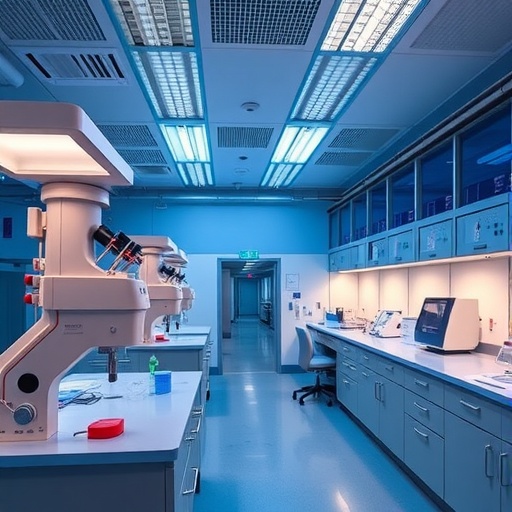
The scientific capabilities of the Single Cell Centre revolve around three major instruments designed for comprehensive cellular interrogation. First, a high-speed cell sorter will enable the isolation of individual cells from heterogeneous populations, facilitating focused downstream analyses. Complementing this, a high-resolution mass spectrometer will provide detailed molecular profiling by quantifying proteins and metabolites at an unparalleled scale. Lastly, an advanced spectral analyzer will dissect cellular constituents through sophisticated light-based interrogation techniques, offering yet another dimension of insight. Together, these technologies constitute a powerful platform for unraveling cellular complexity previously inaccessible in the Lake Constance region and beyond.
The Centre’s ambitions extend beyond mere instrumentation. It embodies a training ground where emerging scientists will gain hands-on experience with single-cell analytical methodologies, bridging the gap between theoretical knowledge and practical expertise. This emphasis on education ensures a pipeline of skilled researchers adept at leveraging these sophisticated technologies, fostering a new generation capable of driving innovation forward in the biomedical sciences.
Professors Florian Stengel and Kathrin Schumann, alongside Dr. Annette Sommershof, spearhead the scientific coordination of the Centre. Their leadership integrates diverse expertise areas, from biochemistry to immunology, allowing the Centre to function as a multidisciplinary hub that advances fundamental and applied research. This collaborative ethos enhances the university’s Molecular Principles of Life research focus, amplifying the impact of collective scientific endeavors while cultivating partnerships with regional healthcare and industry stakeholders.
The infrastructural advancement heralded by the Single Cell Centre aligns strategically with the university’s participation in pivotal collaborative networks. Notably, it interfaces seamlessly with the transregional Collaborative Research Centre 353, dedicated to elucidating cellular decision-making processes during cell death, and the newly formed Collaborative Research Centre 1756, which investigates chemical and biological responses of cells under variable environmental stimuli. These collaborations amplify the Centre’s research scope, facilitating intricate studies on cellular behavior that underpin health and disease.
Beyond human biology, the Centre will extend its analytical scope to plant and animal cells, broadening the scientific horizon. This inclusivity reinforces the Centre’s standing as a versatile research institution, capable of addressing questions across a spectrum of biological disciplines. It supports diverse fields, from agricultural biotechnology to veterinary sciences, strengthening interdisciplinary research and fostering comprehensive biological insights.
Underpinning the realization of the Single Cell Centre is a significant investment from the Ministry of Science, Research and the Arts Baden-Württemberg, backed by the European Regional Development Fund with a budget of approximately 1.8 million euros. This funding underscores the regional and European commitment to elevating scientific infrastructure, with the anticipation that the Centre will catalyze breakthroughs in diagnostics and therapeutics that benefit society at large.
Core facilities like the Single Cell Centre embody a modern research paradigm where sophisticated instrumentation and methodological expertise are centralized, optimizing resource utilization and fostering collaborative innovation. Such platforms provide equitable access to high-end equipment and specialized knowledge not only to university members but also to external entities including healthcare providers and biotech enterprises, facilitating the translation of scientific discoveries into real-world applications.
The advent of single-cell analytics permits a granular understanding of how individual cells within a complex mixture respond to genetic alterations and environmental cues. This capability is transformative for personalized medicine, where treatments can be refined based on the molecular profile of single cells extracted from patient samples. Detecting minute protein changes and delineating cellular reaction pathways enables precision in identifying therapeutic targets and predicting treatment outcomes.
Furthermore, the single-cell approach augments diagnostics by providing the resolution necessary to detect rare cell populations or early molecular changes indicative of disease onset. This level of detail can revolutionize early detection of cancers, autoimmune disorders, and infectious diseases, thereby enhancing patient prognosis through timely intervention.
The establishment of the Single Cell Centre marks a pivotal step in consolidating the Lake Constance region’s position as a leading node in life sciences innovation. By equipping researchers and clinicians with unparalleled tools and fostering an ecosystem of collaboration, the Centre epitomizes the convergence of technology, education, and translational research. Its impact promises to ripple beyond academic boundaries, shaping healthcare delivery and biotechnological innovation for years to come.
Subject of Research: Single-cell analysis of human, plant, and animal cells to elucidate molecular heterogeneity and cellular responses to biochemical and genetic changes.
Article Title: University of Konstanz Launches State-of-the-Art Single Cell Centre to Revolutionize Biomedical Research
News Publication Date: Not specified.
Web References: Not specified.
References: Not specified.
Keywords: Cell biology, single-cell analysis, molecular heterogeneity, personalized medicine, cell sorting, mass spectrometry, biomedical diagnostics, biotechnology, immunology.
Tags: advanced cell analysis technologybiomedical research innovationcellular subtype identificationcutting-edge immunology researchinterdisciplinary biomedical collaborationLake Constance biomedical networkmolecular cell heterogeneitynext-generation life sciences facilitypersonalized medicine developmentsingle cell diagnosticssingle cell research centerUniversity of Konstanz research