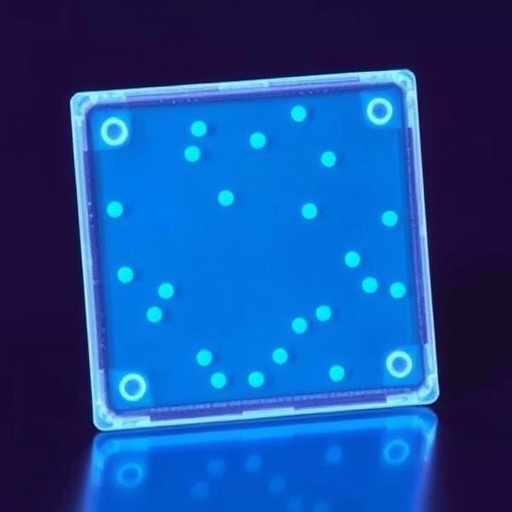
A groundbreaking advancement in environmental pollutant analysis has been achieved by a collaborative research team from the Korea Research Institute of Chemical Technology (KRICT) and Chungnam National University. Traditional methodologies in this domain often necessitate intricate sample pretreatment processes, including filtration, separation, and preconcentration. These steps become particularly problematic when dealing with solid materials like sand, soil, or food residues that can compromise the precision of analytical results. Filtration, designed to remove these solid contaminants, can inadvertently eliminate target pollutants at trace levels, thereby skewing data and reducing the reliability of measurements.
In response to these persistent challenges, Dr. Ju Hyeon Kim of KRICT, alongside Professor Jae Bem You from Chungnam National University, has introduced an innovative microfluidic device. This revolutionary instrument is designed to facilitate direct extraction and immediate analysis of environmental pollutants from solid-containing samples without requiring conventional pretreatment. Unlike traditional techniques that frequently involve cumbersome multistep workflows, this microfluidic solution promises a more streamlined process that could significantly simplify analyses in environmental science.
Environmental samples encountered in everyday life frequently harbor trace quantities of hazardous substances that elude visual detection. Achieving an accurate evaluation of these contaminants necessitates an efficient mechanism for selective extraction and concentration of target analytes. Historically, such tasks have been performed using liquid-liquid extraction (LLE) methods, which, although effective, require substantial volumes of solvents and present challenges for automation. While liquid-liquid microextraction (LLME) emerged as a more efficient alternative, practical applications have been stunted, primarily due to the need for filtration prior to extraction when dealing with samples containing solid particles.
The latest findings by the research team represent a significant leap forward in analytical chemistry. They have successfully devised a microfluidic device equipped with a trap-based mechanism that secures a minute droplet of extraction solution within a microchamber while enabling the continuous flow of the sample solution through an adjacent microchannel. This unique design allows for rapid and selective transfer of targeted analytes from the sample into the extractant, effectively bypassing concerns regarding solid interference. As a result, the device not only increases the speed and efficiency of analysis but also enhances the reliability of the results—critical factors in maintaining high standards in persistent environmental monitoring and public health assessments.
Demonstrating the practicality of their approach, the researchers employed the microfluidic device to successfully detect perfluorooctanoic acid (PFOA)—an emerging contaminant regulated due to growing environmental and health concerns—as well as carbamazepine (CBZ), an anticonvulsant pharmaceutical. Impressively, the device facilitated the direct extraction of CBZ from slurry samples mixed with sand, eliminating the need for prior filtration. PFOA signals were recorded in less than five minutes, with clear identification of carbamazepine achieved through high-performance liquid chromatography (HPLC), paving the way for more timely and efficient pollutant detection in various sample matrices.
Dr. Ju Hyeon Kim articulated the significance of this development, stating that the integration of multiple sample pretreatment processes into a single operation would revolutionize on-site analytical capabilities and automate systems traditionally seen as complex and labor-intensive. The potential applications for this technology are vast, encompassing environmental monitoring, food safety evaluations, and pharmaceutical residue assessments, with significant implications for sectors intimately related to public health.
Dr. Young-Kuk Lee, President of KRICT, further emphasized the societal benefits of this innovative technology. He highlighted its ability to bolster confidence in the reliability of environmental and food safety analyses, areas where precision is paramount due to their direct impact on public health outcomes. This ambitious initiative not only represents a substantial technological advancement in the field but also carries the potential to contribute significantly to the safeguarding of public health amidst growing global concerns about environmental toxicity.
Published as a cover article in ACS Sensors, a prestigious journal recognized for its high impact factor and relevance in analytical chemistry, the study illustrates the promising trajectory of modern analytical techniques. With Dr. Ju Hyeon Kim and Professor Jae Bem You serving as corresponding authors and student researcher Sung Wook Choi as the first author, the research embodies the collaborative spirit that drives innovation in scientific inquiry.
Supported by key initiatives such as the KRICT Core Research Program and the National Research Foundation of Korea, the research epitomizes the commitment of KRICT to pioneering advancements in chemical technologies. Established in 1976, KRICT continues to be at the forefront of addressing pressing challenges in chemistry, material science, and environmental science, aiming to foster advancements that benefit global health and sustainability.
In summary, the introduction of this microfluidic device not only simplifies the laborious processes associated with traditional environmental pollutant analysis but also holds the promise to become a standard tool in labs and field settings alike. As environmental challenges escalate globally, this innovative research serves as a beacon of hope for achieving safer food, cleaner water, and healthier environments, reflecting the importance of scientific progress in shaping a sustainable future.
Subject of Research: Development of a microfluidic-based analytical device for pollution detection
Article Title: Trap-Based Microfluidic Device with Retrievable Droplet for the Analysis of Pollutants from Slurry Solutions
News Publication Date: 26-Dec-2025
Web References: DOI link
References: N/A
Image Credits: Korea Research Institute of Chemical Technology (KRICT)
Keywords
Microfluidics, environmental analysis, pollutant detection, PFOA, carbamazepine, analytical chemistry, KRICT, sustainability.
Tags: collaborative research in environmental sciencedirect extraction methodsenvironmental pollutants analysisfiltration challenges in analysishazardous substance evaluationinnovative environmental technologyKRICT microfluidic chipmicrofluidics in pollution detectionrapid detection of PFAssolid sample analysis techniquesstreamlined analytical processestrace pollutants extraction