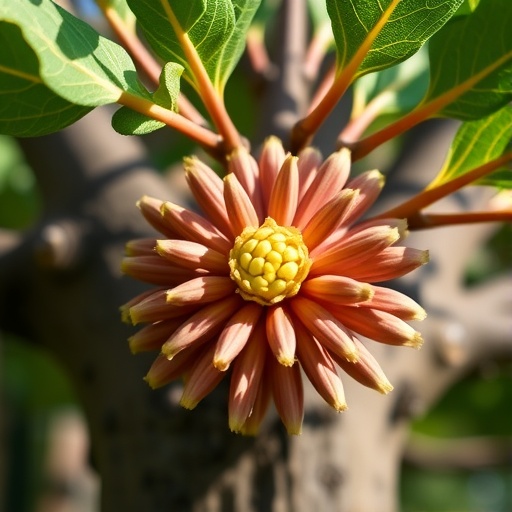
The American chestnut tree, once an integral part of eastern North America’s forest ecosystems, is rising from the brink of extinction thanks to groundbreaking genomic research. For over a century, this majestic tree has been ravaged by the invasive chestnut blight, caused by the pathogenic fungus Cryphonectria parasitica. This infection led to the death of billions of trees throughout the 1900s, drastically altering the landscape and ecology of the region. Recent advancements in genetic research, however, signal a transformative step forward in efforts to restore this key species and restore balance to its natural habitat.
A pivotal study published in the journal Science reveals how modern genomic tools can elevate the efficiency of restoration efforts while preserving the American chestnut’s ecological integrity. Utilizing genomic selection methodologies, which have long been applied in agriculture and animal breeding, researchers can now predict disease resistance in chestnut trees based solely on DNA data. This radical departure from traditional breeding methods empowers scientists to swiftly identify promising seedlings, dramatically shortening the breeding cycle and optimizing the chances of developing resistant trees.
The American Chestnut Foundation (TACF) has spearheaded these efforts, generating hybrids by crossbreeding the American chestnut with Asian varieties that have evolved natural resistance to the blight. Nevertheless, the primary obstacle faced by researchers has been the challenge of balancing desirable traits. The Asian chestnuts, while resistant to the fungus, generally exhibit slower growth and smaller stature. In contrast, American chestnuts grow tall and rapidly, key characteristics that support a diverse array of species within forest ecosystems. Thus, the task was to find a means of integrating resistance without sacrificing the unique qualities that made the American chestnut a keystone species.
By leveraging genomic sequencing data along with long-term data on blight resistance from thousands of hybrid chestnut samples, researchers from TACF and Virginia Tech have demonstrated that it is possible to predict disease resistance with a high degree of reliability. This innovative approach means that instead of waiting several years for trees to mature and be tested in natural conditions, breeders can conduct analyses at the DNA level, enabling them to select the best candidates in a fraction of the time. The findings suggest an exhilarating possibility that the next generation of hybrid chestnuts could possess approximately twice the blight resistance of current populations while retaining about 75 percent of their American chestnut lineage.
Lead research author Dr. Jared Westbrook, the TACF’s director of science, asserts that the organization anticipates these newly bred trees will begin yielding substantial quantities of seeds for restoration within the next decade. This time frame is crucial, particularly because the ecological role of the American chestnut tree is irreplaceable, having historically supported countless organisms and contributed to the overall health of the eastern forest biome.
The investigation also turned a spotlight on rare wild American chestnuts that have withstood decades of fungal infection. These natural survivors occasionally pass on some level of blight resistance, yet further examination is essential to understand whether they possess the necessary levels of resilience and adaptability required for effective restoration at a large scale. The genetic treasures hidden within these rare trees could provide critical insights into the underlying mechanisms of resistance.
Moreover, the research team explored the potential of genetically modified chestnut trees designed to neutralize the toxic compounds produced by the blight fungus. Although early stages in controlled greenhouse environments suggested promise, subsequent field trials revealed inconsistent resistance levels and slower growth rates compared to their non-modified counterparts. Such complexities underscore the challenges inherent in genetic modification and the extraordinary depth of biological interactions that play a role in disease resistance.
To deepen their understanding of the resistance mechanisms at play, researchers at the HudsonAlpha Institute for Biotechnology compiled some of the most comprehensive chestnut genomes analyzed to date. Their findings underscore that resistance to chestnut blight is a highly complex trait, involving numerous genetic variations working in concert rather than a single, uncomplicated genetic determinant. This revelation drives home the point that a successful restoration program will likely need to incorporate multiple generations of carefully selected breeding to yield trees that are both robust and ecologically functional.
In the words of TACF President & CEO Michael Goergen, the journey toward chestnut restoration is envisioned as a “long-term compounding process.” Each generation of trees developed through this genomic approach becomes increasingly adapted to endure not just the blight, but an array of environmental challenges they may face in the future. Unlike efforts aimed at a one-off rescue of the species, this approach promotes an ongoing coordinated effort to improve the resilience of populations, fostering ecological vitality rather than mere survival.
The implications of these findings are far-reaching, extending beyond the scope of the American chestnut restoration. The framework established through this study offers an innovative model for the conservation of threatened tree species across the globe. It demonstrates that by blending the methodologies of systematic breeding programs with the patience often required for ecological restoration, conservationists can cultivate a pathway to rejuvenate the forests of tomorrow.
The value of applying genomic restoration techniques signals a promising shift in the approach toward preserving biodiversity, imparting not just a sense of urgency, but a renewed hope rooted in scientific innovation. As the researchers gather more data and insights, the potential to breathe life back into the American chestnut, once emblematic of the forest’s grandeur, now stands as a beacon for conservation strategies worldwide.
Through a relentless effort that intertwines modern science with age-old ecological wisdom, the path toward restoring the American chestnut and its critical role within eastern North American forests appears to be unfolding, melding the best of genetic advancements with the inherent need for ecological harmony.
The quest to understand and reestablish the American chestnut is not just a story of loss; it is a testament to human perseverance, ingenious scientific breakthroughs, and the powerful resilience of nature when given the tools and time needed to heal.
Subject of Research: Restoration of the American chestnut tree
Article Title: Genomics offers a faster path to restoring the American chestnut
News Publication Date: 12-Feb-2026
Web References: DOI link
References: Not applicable
Image Credits: The American Chestnut Foundation
Keywords
American chestnut, blight resistance, genomic selection, ecological restoration, conservation, genetic modification, biodiversity
Tags: advancements in plant geneticsAmerican chestnut restorationchestnut blight impactCryphonectria parasitica pathologyecological balance restorationforest ecosystem preservationgenomic research in forestrygenomic selection methodologieshybrid breeding techniquesinvasive species managementThe American Chestnut Foundation effortstree disease resistance prediction