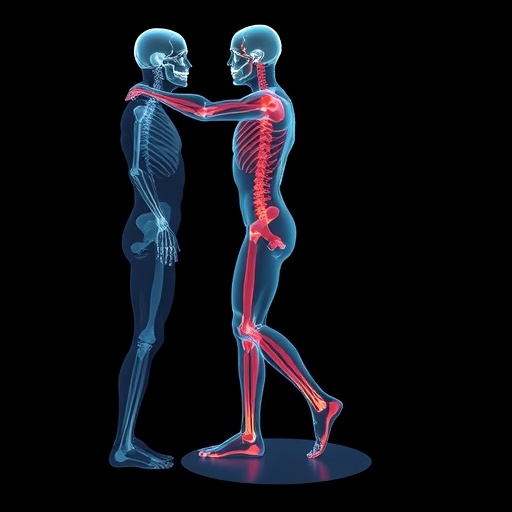
In a groundbreaking study published in BMC Geriatrics, researchers have ventured into uncharted territory by delving into the intricate world of trunk muscle responses during unexpected balance perturbations. The research focuses specifically on two groups of older adults: recurrent fallers and non-fallers. This investigation aims to pinpoint the underlying physiological differences in muscle engagement that could elucidate why some older individuals are more prone to falls than others, a critical issue in geriatric health.
As populations age globally, the phenomenon of falls among seniors has attracted significant attention. It is well-documented that falls can lead to severe consequences, including injuries and increased mortality rates. The study conducted by Liang et al. provides invaluable insights that could pave the way for improved fall prevention strategies. The researchers harnessed innovative techniques, such as wearable ultrasound imaging paired with electromyography (EMG), to capture real-time data on muscle activity and coordination. This method not only increases the reliability of their findings but also redefines the landscape of geriatric research methodologies.
The research team began their investigation by assembling a group of older adults categorized as recurrent fallers and another group comprising non-fallers. By meticulously analyzing the trunk muscle responses during simulated balance disturbances, the study offers a comparative assessment that highlights the unique adaptive mechanisms present in each group. What sets this research apart is its dual approach, employing both ultrasound imaging techniques and EMG, which allows for a comprehensive examination of muscle behavior that traditional methods might overlook.
When unexpected perturbations occur, our body must execute rapid responses to maintain balance. This study reveals that recurrent fallers exhibit significantly different muscle activation patterns in their trunk regions compared to their non-faller counterparts. Such discrepancies could have profound implications, not just for understanding individual vulnerabilities, but also for tailoring interventions aimed at enhancing balance and stability among older adults. The insights gained can inform physical therapy practices, targeting specific muscle groups that may require strengthening or retraining for improved balance control.
The findings further underscore the importance of early identification of at-risk individuals, providing a framework for healthcare professionals to implement proactive measures. Early interventions could lead to improved outcomes for older adults, minimizing the incidence of falls and the associated complications. Additionally, by employing wearable technology, the study exemplifies a shift toward more personalized medicine—one where interventions can be adapted based on real-time physiological feedback.
As the data is analyzed, a fascinating narrative emerges regarding the neuromuscular adaptations in response to balance challenges. The age-related decline in muscle strength and proprioception often results in slower response times, increasing the risk of falls. Interestingly, recurrent fallers show delayed muscle activation, suggesting a compromised ability to respond swiftly to unexpected disturbances. Conversely, non-fallers demonstrated timely muscle engagement, indicating a more robust neuromuscular control system that enhances their stability.
Moreover, the use of wearable ultrasound imaging provides a non-invasive window into the mechanics of muscle function. This approach allows for the monitoring of muscle morphology and functional capacity in real-time, contributing greatly to the understanding of how different muscle groups interact dynamically during balance tasks. The integration of EMG adds another layer of complexity and depth, allowing researchers to not only observe “what” happens but also “how” the muscles communicate and coordinate during pivotal moments of balance recovery.
In terms of practical applications, the implications of this research extend beyond academic curiosity. By correlating trunk muscle response patterns with fall risk, rehabilitation specialists can develop more effective training programs that specifically target balance deficits observed in recurrent fallers. Incorporating the findings from this study, exercise interventions could enhance neuromuscular coordination, proprioception, and muscle strength, ultimately leading to a reduction in fall incidents.
As this study continues to receive attention, it raises critical questions about the intersection of technology, health, and aging. The integration of wearable devices not only provides data-rich insights but also emphasizes the importance of ongoing monitoring as a lifestyle approach for older adults. Encouraging individuals to adopt technology-assisted exercise regimens could promote not just physical health but also psychological well-being, fostering a sense of independence and agency.
The study anticipates the potential for future research to further explore the mechanisms underlying muscle adaptability in various contexts, expanding the knowledge base on preventive health strategies. Researchers are optimistic that these findings will catalyze further investigations into tailored interventions that can be personalized to individual needs, ultimately reducing the burden on global healthcare systems.
The melding of innovative research techniques and real-world applicability marks a significant advancement in the study of falls among older adults. As these findings reverberate through the health care community, they hold the promise of transforming how we view and address the multifaceted issue of falls in an aging population. When coupled with ongoing education and accessible exercise programs, the hope is to significantly alter the trajectory of fall-related injuries, fostering a future where older adults can maintain greater autonomy and health throughout their later years.
Continued interdisciplinary collaboration will be essential in translating these findings into actionable guidelines. By bridging the gap between research and clinical practice, there is a unique opportunity to implement widespread preventive measures that can profoundly impact the quality of life for older adults. As we look ahead, the insights presented by Liang et al. exemplify the vital role empirical research plays in addressing one of the paramount challenges in geriatric health—a challenge that, with continued innovation, is becoming increasingly manageable.
Moreover, the conversation surrounding falls in older adults is part of a larger narrative concerned with aging and quality of life. Public health campaigns aimed at educating both older adults and caregivers about the significance of maintaining balance and preventing falls are crucial. Furthermore, informing communities about the resources available for encouraging active lifestyles can be instrumental in developing supportive environments that empower older individuals to engage in their health proactively.
In conclusion, this pivotal research by Liang and colleagues not only enhances our understanding of trunk muscle dynamics during balance disruptions but also serves as a call to action for interdisciplinary efforts aimed at fall prevention. By highlighting the disparities between recurrent fallers and non-fallers, this study lays the groundwork for future innovations in therapeutic strategies tailored specifically for the aging population, promoting longevity and independence.
Subject of Research: Trunk muscle responses to balance perturbations in older fallers and non-fallers
Article Title: Different trunk muscle responses to unexpected balance perturbations between older recurrent fallers and older non-fallers: a combined wearable ultrasound imaging and electromyography (EMG) study.
Article References:
Liang, HB., Zhu, R.TL., Luo, YY. et al. Different trunk muscle responses to unexpected balance perturbations between older recurrent fallers and older non-fallers: a combined wearable ultrasound imaging and electromyography (EMG) study.
BMC Geriatr (2026). https://doi.org/10.1186/s12877-026-07158-7
Image Credits: AI Generated
DOI:
Keywords: trunk muscle response, balance perturbations, elderly, recurrent fallers, electromyography, ultrasound imaging, geriatric health, fall prevention, neuromuscular control.
Tags: balance perturbations in aging populationsbalance shifts in older adultsconsequences of falls in seniorselectromyography for muscle activityfall prevention strategiesgeriatric health researchinnovative research methodologiesphysiological differences in muscle engagementreal-time data in geriatricsrecurrent fallers vs non-fallerstrunk muscle responseswearable ultrasound imaging in research